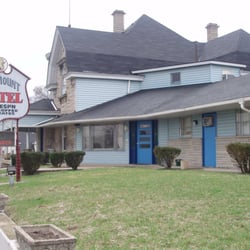
French Lick Springs Villas: Pluto Springs…read more
The French Lick Springs Villas are located adjacent to the resort property of the French Lick Resort and near the West Baden Springs Resort in south central Indiana. The French Lick Springs Villas are two and one-half hours south of Indianapolis by way of Bloomington, IN and one hour and twenty minutes northeast of Louisville, KY. For some the term "Kentuckiana" maybe inclusive of French Lick. The French Lick Springs Villas are located at 8718 West State Road 56, P.O. Box 108 French Lick, IN 47432. The phone number is 812-936-5000. The population of French Lick is about 1,800 people. The French Lick Resort and the West Baden Springs Resort as well as The French Lick Springs Villas are prominent properties in this area. Be certain to contact The French Lick Springs Villas directly because the timeshare property is a HOA, and employees at French Lick Resort may or may not be willing to assist potential guests at The French Lick Springs Villas. Yes, French Lick is the hometown of Larry Bird, and yes, there is a French Lick Resort Casino. French Lick was originally a French trading post built near a spring and salt lick. A fortified ranger post was established near the springs in 1811. The town was founded in 1857.
The French Lick Springs Resort was originally The French Lick Springs Hotel, a grand resort that catered to those who came to partake of the advertised healing properties of the town's sulfur springs. The first hotel was opened in 1845 by William A. Bowles and was an immediate success. The original hotel burned in 1897, but new owner Thomas Taggart, mayor of Indianapolis and chairman of the Democratic National Committee rebuilt the resort on an even grander scale. The resort was originally built because of the location of the "curative" sulfur springs or the "Pluto Springs." Sulfur was known in ancient times and is referred to in the Torah (Genesis). English translations of the Bible commonly referred to burning sulfur as "brimstone", giving rise to the name of 'fire-and-brimstone' sermons, in which listeners are reminded of the fate of eternal damnation that await the unbelieving and unrepentant. It is from this part of the Bible that Hell is implied to "smell of sulfur" (likely due to its association with volcanic activity.) Pompeii was one of the most important cities in the Roman Empire. In the summer of AD 79 the people living in Pompeii and Herculaneum near Vesuvius felt several earth tremors. The most serious of these took place on the morning of 24 August. A few hours later the people heard a tremendous explosion. The steam and gases that had been building up for hundreds of years had finally blown out a gigantic hole at the top of Vesuvius. Vesuvius was now belching out sulfur fumes, and many were poisoned while trying to flee. Of the 15,000 population, an estimated 2,000 died in the disaster.
In the summer of 2012, the Cincinnati Museum Center offered "A Day in Pompeii." Pompeii's archeological treasures rarely leave Italy, and this national touring exhibit marks the first time that these rare treasures came to the region. Room-sized frescos, marble and bronze sculptures, jewelry, gold coins, and hundreds of priceless ancient artifacts join body casts of the volcano's victims, eerily preserved in their final frantic moments. The sulfur spring waters at French Lick lacked the intensity of the sulfur of ancient times. Sulfur in a water supply is easily recognized by its offensive odor. Hydrogen sulfide gas causes the "rotten-egg" or sulfur water smell. Hydrogen sulfide in water causes no known health effects. However, high concentrations do change the taste of the water. Pluto Water was a trademark for a strong laxative natural water product that was very popular in the United States in the early 20th century. Pluto Water's high native content of mineral salts generally made it effective within one hour of ingestion, a fact the company played up in their promotional literature. Company advertisements stated the laxative was effective from a half hour to two hours after ingestion. The water was an extremely popular product. In 1919, it required 450 railroad cars to transport the bottler's output. Pluto Water was bottled at the French Lick Springs, a location with natural mineral springs that was also the source of a competing product, Sprudel Water. Pluto Water was advertised as "America's Laxative" with the slogan "When Nature Won't, PLUTO Will."