Cancel

    Open app

    Search

    Kirkstead Abbey Photos

    Recommended Reviews - Kirkstead Abbey

    Your trust is our priority, so businesses can't pay to alter or remove their reviews. Learn more about reviews.
    Yelp app icon
    Browse more easily on the app
    Review Feed Illustration

    18 years ago

    Helpful 0
    Thanks 0
    Love this 0
    Oh no 0

    18 years ago

    Very interesting place but definately is not the best

    Helpful 0
    Thanks 0
    Love this 0
    Oh no 0

    Verify this business for free

    Get access to customer & competitor insights.

    Verify this business

    The Manor of  Scrivelsby - Edward Dymoke

    The Manor of Scrivelsby

    4.0(1 review)
    8.8 mi

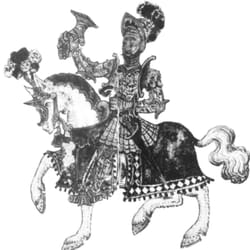
    The Manor is an area although there is a real Manor House I don't know if it the same one. It is…read morehowever historically fascinating as this is where the Kings Champions came from. Queen's Champion - Origins: The office was originally granted to Robert Marmyon, along with the castle and manor of Tamworth and the Manor of Scrivelsby in 1066. From then until the nineteenth century the officer's role was to act as champion for the King at his coronation, in the unlikely event that someone gainsaid the new King's title to the throne. The Champion was required to ride in full armor into Westminster Hall during the coronation banquet, escorted by the Earl Marshal and the Lord High Constable, all in full dress, robes and coronets, and await the challenge to all comers. The King himself could not fight in single combat against anyone except an equal. This trial by combat remained purely ceremonial and had a central place in the coronation banquet. By 1377 the male line of the Marmyons had died out, and in that year the office of King's Champion at the coronation of King Richard II was fulfilled by Sir John Dymoke, who had married Margaret Marmyon, the heiress of the Marmyon family, and so held the Manor of Scrivelsby.later years, the Garter King of Arms read out the challenge, and the Champion threw down the gauntlet at the entrance to Westminster Hall, then again in the middle of the Hall, and lastly at the foot of the Throne, each time repeating the challenge. Each time the gauntlet was recovered by Garter. The Champion was rewarded with a gilt, covered cup, the King or Queen Regnant having first drunk to the Champion from it. It is alleged that the challenge was actually accepted in 1689 by an old woman, supposedly a noted Jacobite swordsman in disguise, who challenged the Dymoke of the day to combat next day in Hyde Park. There is no evidence to support this claim. Equally, rumour reported that in 1764 a white lady's kid glove fluttered down into the Hall, supposedly from a Jacobite. If the Champion fought, and won, he got as his fee the armour he wore, and the horse he rode (the second best in the Royal Mews), both of which were on loan. Charlie Dymoke (gardener)claims to be a decendant. From Wikipedia: Dymoke, the name of an English family holding the office of king's champion. The functions of the champion were to ride into Westminster Hall at the coronation banquet, and challenge all comers to impugn the kings title (see Champion). The earliest record of the ceremony at the coronation of an English king dates from the accession of Richard II. On this occasion the champion was Sir John Dymoke (d. 1381), who held the manor of Scrivelsby, Lincolnshire, in right of his wife Margaret, granddaughter of Joan Ludlow, who was the daughter and co-heiress of Philip Marmion, last Baron Marmion. The Marmions claimed descent from the lords of Fontenay, hereditary champions of the dukes of Normandy, and held the castle of Tamworth, Leicestershire, and the manor of Scrivelsby. The right to the championship was disputed with the Dymoke family by Sir Baldwin de Freville, lord of Tamworth, who was descended from an elder daughter of Philip Marmion. The court of claims eventually decided in favor of the owners of Scrivelsby on the ground that Scrivelsby was held in grand serjeanty, that is, that its tenure was dependent on, rendering a special service, in this case the championship.

    Photos
    The Manor of  Scrivelsby

    See all

    The Pilgrims Fathers Stone

    The Pilgrims Fathers Stone

    5.0(1 review)
    32.6 mi

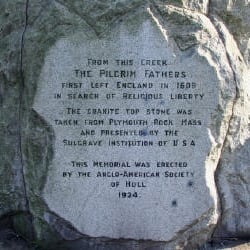
    This is a memorial stone dedicated to the Pilgrims going to America…read more In 1608 the attempt to leave for Holland was made, this time from Killingholme Creek near Immingham where a Dutch ship waited. Men were ferried aboard first, but before the women and children could do so an armed crowd intervened. The Pilgrim Fathers left from the bank of the Humber at a place called Immingham Creek to Holland in 1608. The actual spot was marked by a memorial which was erected in 1924. The granite top stone of the memorial was taken from Plymouth Rock, Mass and presented by the Sulgrave Institution. The memorial was erected by the Anglo-American Society of Hull. The memorial became surrounded by industry as the Immingham dock area expanded and was moved in 1970 to its present site in a small park opposite the church in Immingham. According to Alan Tailby in his book the Pilgrims did hire a boat to take them to Holland from Boston in 1607 but the skipper, after taking their money, betrayed them to the authorities and they were imprisoned for a time. Many of the streets in Immingham are named after the Pilgrims: e.g. Clyfton Crescent and Brewster Avenue. Some 22 million Americans claim descent from the Pilgrim Fathers who sailed in the Mayflower and related crossings. The memorial stone, erected in 1924, on the estuary, was moved in 1970 to near St. Andrew's church because of re-development.When I worked in the archeology department I remember listing this as an SMA. (Sites and Monuments). Many Americans visit it each year.

    Belvoir Castle

    Belvoir Castle

    4.7(7 reviews)
    28.8 mi

    Our children's authors retreat took us on a truly fascinating tour of Belvoir Castle (pronounced…read morelike "beaver," because the English hate the French lmao). From the moment we arrived, the history and grandeur of the place were palpable. Our tour guide was an absolute gem! Her charm and delightful demeanor instantly reminded me of Mary Poppins - a comparison that probably screams "American tourist," but it's the most fitting image I can conjure! This adorable British lady, likely in her 50s with straight blonde shoulder-length hair, was an absolute ray of sunshine. As an art historian, she brought the castle and its inhabitants to life with a wealth of captivating stories and historical insights about the family who still call Belvoir home to this day. We even had the surreal experience of the current Duchess casually walking through our group - a seemingly ordinary brunette woman in a suit, walking barefoot! It truly underscored the fact that this isn't just a museum; it's a living, breathing family home. My favorite story was the one of Charles Cecil John Manners, 6th Duke of Rutland. Our tour guide showed us a portrait of him looking very Mr Darcy-like. She called him very inept and useless, as he was a leader of the House of Commons for only 3 weeks. But what she appreciated about him was the fact that he fell madly in love with a woman and wanted to marry her, but his family thought she wasn't good enough for them. When she got married off to someone else, the duke was so sad, he swore that if he couldn't marry her, then he would never marry at all. He kept his word, and died without ever marrying. He did scandalize society by giving his mistress a yacht in his will when he died. We also had the privilege of seeing the famous Henry VIII painting, a powerful reminder of the castle's rich historical connections. After seeing the painting in history books and the Royal Diaries volume of Elizabeth I (I grew up obsessed with the Royal Diaries published by Scholastic), it was surreal to see this painting in person. The afternoon culminated in a delightful high tea, the perfect way to soak in the atmosphere and discuss all we had learned. Finally, a leisurely stroll through the breathtaking gardens provided a serene and beautiful end to our visit. Belvoir Castle offers a fascinating glimpse into English history and aristocratic life, brought to life by wonderful storytelling and the unique experience of seeing it as a living family home.

    The castle seemed beautiful but we didn't have time for a tour. Indeed we went purely for the…read moreafternoon cream tea. Their website suggests that Belvoir Castle essentially invented this great British concept. To be honest while the location is wonderful and the site is picturesque, the cream tea disappointed. £30 each but while the entire tea room was empty they crammed 5 of us at a single table that would have been fine for 2 or maybe 3 (why not push 2 tables together?). They had to cram the trays together too tightly and hence cram everything together. Because 1 of our group has prawn allergy they removed the prawn option totally for us all (maybe because they had to cram all together on the same plate). This left just 3 types of sandwich and the staff had problems knowing which was which. It seemed to be chicken (nothing special), egg (I hate egg sandwiches) and wafer thin cucumber sandwiches. In terms of the scones, Sainsbury's scones are bigger and tastier. Honestly none of us ate very much. The choice of teas was great and we all had two Pots each. Wouldn't go again sadly.

    Photos
    Belvoir Castle
    Belvoir Castle
    Belvoir Castle

    See all

    St Botolphs Church The Stump

    St Botolphs Church The Stump

    4.0(4 reviews)
    14.2 mi

    St Botolph's church in Boston is also called The Boston Stump, so called because it is one of the…read morelargest parish churches in England, and has the 14th highest tower in England. It has lost of ghostly tales, such as the The Grey Lady, which you can see apparently if you walk around the stump twelve times at midnight and look up to the tower (walking around the stump 12 times you probably would be delirious anyway...) You can climb the 352 stairs up the tower which gives views (and vertigo) across the fens. It really is spectacular, although I don't think you can get to the very top towers now due to restoration work. It used to cost 50p but it has probably gone up quite a bit now!

    Reviewing as a landmark/attraction, not as a church in case that's not obvious. Seems like a nice…read moreand welcoming place though judging from the flyers and whatnot. Anyway; lovely and interesting building, friendly and helpful people, modern gift store with a good variety of items that are both well designed and actually related to the building, including some nice leather bookmarks. Going up the tower is worth it unless you are claustrophobic and/or afraid of heights. I'm a little bit of both but risked it anyway! The steps up the tower are not just steep but also very narrow, which on the way up in particular started to get to me a bit. Coming back down was much better since it's easier to gauge how far you have to go. Views from the top are fantastic and/or terrifying and there's a handy plaque which tells you what the dots you're seeing in the distance are. Or so my husband tells me, I was crouching in the safest corner checking twitter, so I couldn't swear to it.

    Photos
    St Botolphs Church The Stump
    St Botolphs Church The Stump - The Boston Stump

    See all

    The Boston Stump

    Kirkstead Abbey - landmarks - Updated May 2026

    Loading...
    Loading...
    Loading...