Cancel

    Open app

    Search

    Belvoir Castle Photos

    Recommended Reviews - Belvoir Castle

    Your trust is our priority, so businesses can't pay to alter or remove their reviews. Learn more about reviews.
    Yelp app icon
    Browse more easily on the app
    Review Feed Illustration
    Photo of Jo W.
    589
    1265
    11636

    1 year ago

    Helpful 0
    Thanks 0
    Love this 0
    Oh no 0

    3 years ago

    Helpful 7
    Thanks 0
    Love this 4
    Oh no 0
    Photo of Konrad B.
    106
    44
    47

    4 years ago

    Helpful 1
    Thanks 0
    Love this 2
    Oh no 0

    4 years ago

    Helpful 1
    Thanks 0
    Love this 1
    Oh no 0

    17 years ago

    Helpful 0
    Thanks 0
    Love this 0
    Oh no 0

    15 years ago

    Helpful 0
    Thanks 0
    Love this 0
    Oh no 0

    9 years ago

    Helpful 0
    Thanks 0
    Love this 0
    Oh no 0

    Verify this business for free

    Get access to customer & competitor insights.

    Verify this business

    Burghley House - Burghley House

    Burghley House

    4.4(13 reviews)
    35.8 km

    Burghley House is one of the grandest Elizabethan stately homes in the UK, and is surrounded by…read moregardens and extensive parkland. It has been used in over a dozen films and TV productions, including "Pride & Prejudice", "The Da Vinci Code", "Elizabeth: The Golden Age"; and "The Crown". To understand the significance of the house, a little history is helpful; it was built by Sir WIlliam Cecil (1520-1598), later Lord Burghley. He was one of the pre-eminent advisors of the Tudor period, and the closest advisor to Elizabeth I for most of her reign, acting variously as Secretary of State, Lord High Treasurer and Lord Privy Seal. His impressive tomb is in St Martin's church, in nearby Stamford. The house was built to reflect his status, paid for by the wool wealth from the Burghley estates, and his substantial income from the state appointments. As such, it is sometimes referred to as a "Prodigy House", one built on a palatial scale by noble families and courtiers, and capable of housing visiting Tudor and Stuart monarchs and their extensive retinues. The house itself was built between 1555 and 1587, and the exterior is largely faithful to this period. The design reflects the transition from a mediaeval courtyard house, with the Elizabethan desire for symmetry, to the emerging classical tastes of the Renaissance. The profusion of obelisks, turrets, chimneys and pennants is, however, thoroughly Tudor in style, and gives the house its unmistakeable profile. The interiors were not completed at Burghley's death, and reflect the emerging Baroque tastes of the 17th and early 18th centuries. There are 35 major rooms, many incredibly opulent, including those painted trompe d'oeil walls and ceilings by Antonio Verrio in 1697-99. A number of the rooms include stained glass windows, dating from the 16th and 17th centuries. The house also contains an impressive collection of over 300 paintings acquired by the 5th and 8th Earls of Exeter, mostly from Italy, as well as an important collection of Japanese export porcelain from the 17th century, and 18th century English furniture. Tours include the impressive Tudor kitchens, although the route doesn't enter through the main courtyard entrance, so it can be a bit puzzling. Much of the house remains in private occupation, though there is a lot to see in what is open to the public. The audio tours are very helpful at putting the interiors and collections into context, in what otherwise can a feel a slightly overwhelming experience. The gardens include a formal "Garden of Surprises" with a number of water features, a sculpture park, and more extensive parkland, modelled in the 18th century by Capability Brown. You can buy tickets just for the gardens, or a combined ticket for both gardens and the house. I'd leave at least an hour for the house, though we took two hours to go around (it all depends on your appetite for art and architecture). There's a cafe-restaurant in the Orangerie, and a smaller "Garden Cafe". We ate in the latter: it is a little pricey, but I found the food to be a cut above your average sandwich, and they had locally made ice cream as an extra treat.

    It's okay. Very expensive for not great touring…read more Your ticket gets you into the gardens and house but only a very small portion of the home is available for viewing. In this section there are an astounding number of paintings but most are copies or unattributed. The furniture is beautiful. The gardens are pleasant but garden is a loose term. The best part was the mirror maze and the lake overlook but there were sparse plantings and almost no flowers. The orangery is one food option but the food is incredibly esoteric for a small, over priced cafe. The chicken tenders are a mediocre but safe option. Not impressed, wouldn't go back

    Photos
    Burghley House - Garden of Surprises, Burghley House

    Garden of Surprises, Burghley House

    Burghley House - Garden of Surprises, Burghley House

    Garden of Surprises, Burghley House

    Burghley House

    See all

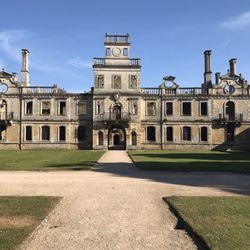
    Kirby Hall - How beautiful Kirby Hall is!

    Kirby Hall

    4.5(2 reviews)
    42.3 km

    Kirby Hall is an amazing place. You can go inside and walk around looking at the sky as there is no…read moreroof in parts of it. A family ticket caost about £12.00 and is well worth it to get a little glimpse of the gradour. The hall has been used in some filming including Jane Austin's Mansfield Park. The gardens ane beutifully kept, there is access for disabled,a small shop,picnic area and toilets

    Although barely more than an uninhabited and ruinous shell, this fine Elizabethan house still…read moredisplays many of the ornate external features that formed part of the original building, which dates from 1570. Kirby Hall was built for Sir Humphrey Stafford, a distant family descendant of the Earls of Stafford, but he died before the work was completed, and the property was sold to Sir Christopher Hatton. Financial difficulties eventually caught up with the family successors, resulting from the cost of continual improvements and maintenance, coupled with the vast sums of money lavished on entertaining. Inevitably, Kirby Hall's importance began to decline during the 18th century, and by the middle of the 19th century this imposing and beautiful family home had been deserted, neglected, and subjected to shameful destruction in order to pay off a substantial gambling debt. Thank fully the national trust have tried to preserve this magnificent home and it really is breathtaking.

    Photos
    Kirby Hall - Inside at Kirby Hall.

    Inside at Kirby Hall.

    Kirby Hall - Wonderful gardens at Kirby Hall!

    Wonderful gardens at Kirby Hall!

    Kirby Hall - Beautiful Kirby Hall!

    See all

    Beautiful Kirby Hall!

    The Pilgrims Fathers Stone

    The Pilgrims Fathers Stone

    5.0(1 review)
    88.3 km

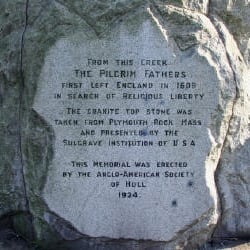
    This is a memorial stone dedicated to the Pilgrims going to America…read more In 1608 the attempt to leave for Holland was made, this time from Killingholme Creek near Immingham where a Dutch ship waited. Men were ferried aboard first, but before the women and children could do so an armed crowd intervened. The Pilgrim Fathers left from the bank of the Humber at a place called Immingham Creek to Holland in 1608. The actual spot was marked by a memorial which was erected in 1924. The granite top stone of the memorial was taken from Plymouth Rock, Mass and presented by the Sulgrave Institution. The memorial was erected by the Anglo-American Society of Hull. The memorial became surrounded by industry as the Immingham dock area expanded and was moved in 1970 to its present site in a small park opposite the church in Immingham. According to Alan Tailby in his book the Pilgrims did hire a boat to take them to Holland from Boston in 1607 but the skipper, after taking their money, betrayed them to the authorities and they were imprisoned for a time. Many of the streets in Immingham are named after the Pilgrims: e.g. Clyfton Crescent and Brewster Avenue. Some 22 million Americans claim descent from the Pilgrim Fathers who sailed in the Mayflower and related crossings. The memorial stone, erected in 1924, on the estuary, was moved in 1970 to near St. Andrew's church because of re-development.When I worked in the archeology department I remember listing this as an SMA. (Sites and Monuments). Many Americans visit it each year.

    Hardwick Old Hall - A view from the front of the house

    Hardwick Old Hall

    4.3(8 reviews)
    50.4 km

    Loved this place! If you can get going on a good day then I would highly recommend if you're…read moreinterested in Elizabethan time history. First you're greeted with beautiful English countryside which is covered in Sheep and little lambs which are great for a quick picture before moving on to see the huge house which you will soon be exploring. This place is part of the national trust, so you can expect it to be well taken care of and and a lot of people about who are more than willing to share their knowledge. We first checked out the old building which is now in ruins, but it still reveals some of the small features which are still preserved such as fireplaces and balcony which gives you a great ire of the entire house and the countryside. After this is the gardens which are fantastic to walk around on a warm day which displays all the beautiful flowers. The house itself has a nice short tour where the guide tells all about the history of the owner, her very interesting history with her granddaughter and more on Mary Queen of Scots who stayed/Imprisoned here. The houses features all appear to be in their original positions and looks, bar a few repairs throughout the years for preservation. Plenty of information to read and people sitting about to answer any questions you need. If you're interested interested in your ElizabethIan style houses, or just want a peak into English history, I would highly recommend!

    A National Trust property, situated near Junction 29 of the M1. Huge Elizabethan house and…read morebeautifully landscaped gardens (including a walled garden, orchards and herb garden), featuring statues etc. The surrounding country park is beautiful - and contains cattle, sheep etc. There's also the remains of Hardwick Old Hall in the grounds (although I think that's owned by English Heritage so you would have to pay separately to look around). A gift shop and tea room are also on site - or take a picnic! National Trust members get in free (you can join when you get there and they refund any admission charges) or it's £9 for adults to enter the house and gardens.

    Photos
    Hardwick Old Hall
    Hardwick Old Hall
    Hardwick Old Hall - The old ruined house next to Hardwick hall

    See all

    The old ruined house next to Hardwick hall

    Crowland Bridge

    Crowland Bridge

    5.0(1 review)
    47.9 km

    Trinity Bridge, Crowland, England was built 1360. This is an unusual 3-way bridge that now sits…read morehigh & dry in the center of Crowland. Sure enough, the River Welland now flows on a dead straight course to the west of the town along what is termed the Deeping High Bank. The Trinity or Triangular Bridge is said to be unique. Certainly, it is unusual and rather special. It stands in the middle of the town, at the junction of North, South, East and West Streets. Before the town was bypassed by the A1073 leading south to Peterborough, it was a familiar landmark for through traffic. It holds at least one mystery the identity of its mysterious carved stone figure, which people still argue about. The story of the bridge goes back to the 7th century when this part of the country was very different a time when England was divided into many kingdoms and when lonely saints found their way to remote islands. Some say it is King Ethelbald, complete with royal orb. Far more likely is that the statue is a representation of God or Jesus holding the world in His hands. If so, it bears a striking resemblance to statues on the surviving west front of the abbey and it is more than likely taken from there and placed in a more lowly position on the bridge. The current bridge dates to the 14th century (built between 1360 and 1390) and replaced previous wooden bridges but the earliest known mention of the bridge is by Ethelbald of Mercia in 716. The early bridge was probably made of timber, and not a trace survives. What we see today has an odd triangular design it has three arches but is one structure hence its name 'Trinity' or three in one. This came about because in those days it stood at the point where the River Welland divided into two streams. One led past the abbey at the water gate on the south side of the abbey site and the townspeople used it for sanitary and sewerage purposes. It drained into the River Nene. The main branch of the Welland meanwhile carried on northwards towards Spalding. These waterways were eventually covered over by the current street pattern. Arched over, they now serve as sewers. The bridge at one time had a large cross at its apex. It may have been used as a platform by preaching monks and as a centre of devotion for pilgrims approaching the abbey. During the Middle Ages it had gentle slopes leading upwards in more recent times steep steps have been substituted. If you are close by it is well worth taking time out to see the bridge and the abbey.

    Photos
    Crowland Bridge
    Crowland Bridge

    See all

    Belvoir Castle - landmarks - Updated May 2026

    Loading...
    Loading...
    Loading...