Cancel

    Open app

    Search

    Thornton Abbey & Gatehouse

    5.0 (1 review)
    Closed Closed

    Thornton Abbey & Gatehouse Photos

    Recommended Reviews - Thornton Abbey & Gatehouse

    Your trust is our priority, so businesses can't pay to alter or remove their reviews. Learn more about reviews.
    Yelp app icon
    Browse more easily on the app
    Review Feed Illustration

    18 years ago

    Helpful 0
    Thanks 0
    Love this 0
    Oh no 0

    Verify this business for free

    Get access to customer & competitor insights.

    Verify this business

    The Pilgrims Fathers Stone

    The Pilgrims Fathers Stone

    5.0(1 review)
    4.5 mi

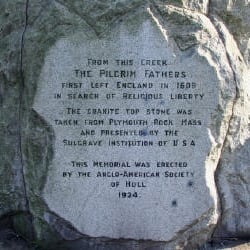
    This is a memorial stone dedicated to the Pilgrims going to America…read more In 1608 the attempt to leave for Holland was made, this time from Killingholme Creek near Immingham where a Dutch ship waited. Men were ferried aboard first, but before the women and children could do so an armed crowd intervened. The Pilgrim Fathers left from the bank of the Humber at a place called Immingham Creek to Holland in 1608. The actual spot was marked by a memorial which was erected in 1924. The granite top stone of the memorial was taken from Plymouth Rock, Mass and presented by the Sulgrave Institution. The memorial was erected by the Anglo-American Society of Hull. The memorial became surrounded by industry as the Immingham dock area expanded and was moved in 1970 to its present site in a small park opposite the church in Immingham. According to Alan Tailby in his book the Pilgrims did hire a boat to take them to Holland from Boston in 1607 but the skipper, after taking their money, betrayed them to the authorities and they were imprisoned for a time. Many of the streets in Immingham are named after the Pilgrims: e.g. Clyfton Crescent and Brewster Avenue. Some 22 million Americans claim descent from the Pilgrim Fathers who sailed in the Mayflower and related crossings. The memorial stone, erected in 1924, on the estuary, was moved in 1970 to near St. Andrew's church because of re-development.When I worked in the archeology department I remember listing this as an SMA. (Sites and Monuments). Many Americans visit it each year.

    Wrawby Post Mill

    Wrawby Post Mill

    4.0(1 review)
    8.5 mi

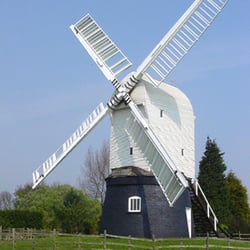
    I miss the sea and the biting East Coast winds..great for windmills…read more Wrawby is a village in North Lincolnshire two miles east of Brigg and close to Humberside Airport on the A18. It is most notable for Wrawby Postmill. The name of Wrawby is first mentioned in the Domesday Book of 1086 as Waragebi and has had many variant spellings including Wraghebi, Wrakebi and Wraby with Wrawby in use from the 15th century. The name is thought to derive from the Old Danish meaning Wraghi's farmstead or village. Most of Lincolnshire- with the exception of the wolds is low-lying country, and its exposed position on the eastern coast of England leaves it open to cold winds, which howl across the North Sea from Russia and northern Europe. It can be chilly, but more often than not the locals can use the elements to their advantage. As early as the 16th Century those living in the fens borrowed the Dutch idea of using wind engines to drain their marshy homeland; and even after the invention of the steam pump, the windmill remains the most effective miller of grain. Wrawby Mill is Lincolnshire's last surviving post mill, built of wood and designed to rotate on a post in order to catch the wind. No one is absolutely certain when it was built, but its construction seems to indicate a date between 1760 and 1790. For most of the 20th century the survival of Wrawby Mill has been in doubt-indeed, in 1961 it was saved from demolition by a band of local people who formed a society dedicated to its preservation. Wrawby Mill was renovated and began milling corn in 1965, and today the society, which cares for it opens the mill to the public throughout the year. It is painted white and can be seen from the road.The restored mill was re-opened in 1965 and ground its first bag of corn in 25 years.

    Photos
    Wrawby Post Mill

    See all

    Barrow Upon Humber - The Castles Barrow on Humber

    Barrow Upon Humber

    3.0(1 review)
    3.1 mi

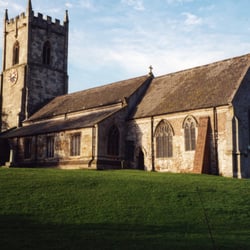
    Many moons ago I looked at buying the old post office in Barrow..it was very cheap and quite large…read morebut woefully delapidated. There is an abundance of historical buildings in the village and in 1974 it was designated a conservation area. Barrow has a mix of 18th and 19th Century houses from all social backgrounds, and was once home to many workers from farms in surrounding villages. It is easily missed as it is on the old road leading from the south of the Humber Bridge.It is however an interesting example of time standing still somewhat. Barrow-upon-Humber's origins have been traced back to at least the 7th Century when a monastery was founded by St Chad. It never grew into a town and was destroyed by Viking raids in the 9th Century. Barrow's strategic importance is illustrated by the huge motte and bailey castle constructed by Drogo de la Beauvriere in the 11th Century. Barrow-upon-Humber Castle is an enormous earthwork motte and bailey, which retains part of its rampart and wet ditch. Built in the Norman plan, the two huge baileys have the large low motte in-between. It is located south of Barrow Haven, by The Beck at West Hann Lane. 12 miles south of Hull on the A63-A15(Humber Bridge)-A1077 or 18 miles north-east of Scunthorpe on the A1077. I went with a friend and we couldn't find it so we randomly knocked on a door and asked. It was behind the house and we wandered around the soggy moat remains. One of the village's most famous sons was John Harrison (1693-1776) (an ancester) who invented the first practical marine-chronometer which enabled sailors to accurately compute their position in the sea. Barrow was once a thriving rope-making and basket-weaving village and in the last century there was a massive population growth leading to the forming of New Holland. Tourist attractions include the Holy Trinity Church, part of which dates back to the 13th Century, and the listed vicarage built in the 1800s. The church was partially restored in 1841 and again in 1856 and a third time in 1869. It seats about 400. The old Congregational Chapel, now a band room, is one of the village's most unusual buildings with its steel sloping roof. Worth a quick visit if you are coming south off the Humber bridge.

    Photos
    Barrow Upon Humber - Trinity Church Barrow upon Humber

    See all

    Trinity Church Barrow upon Humber

    Thornton Abbey & Gatehouse - landmarks - Updated May 2026

    Loading...
    Loading...
    Loading...