Cancel

Open app

Search

Jewry Wall Museum

4.6 (5 reviews)
Closed • 11:00 am - 4:30 pm

Jewry Wall Museum Photos

Recommended Reviews - Jewry Wall Museum

Your trust is our priority, so businesses can't pay to alter or remove their reviews. Learn more about reviews.
Yelp app icon
Browse more easily on the app
Review Feed Illustration

18 years ago

Helpful 0
Thanks 0
Love this 0
Oh no 0

12 years ago

Helpful 0
Thanks 0
Love this 0
Oh no 0

12 years ago

Helpful 0
Thanks 0
Love this 0
Oh no 0
Helpful 0
Thanks 0
Love this 0
Oh no 0

18 years ago

Helpful 0
Thanks 0
Love this 0
Oh no 0

Verify this business for free

Get access to customer & competitor insights.

Verify this business

Guildhall Museum - The Guildhall

Guildhall Museum

4.8(6 reviews)
0.1 mi

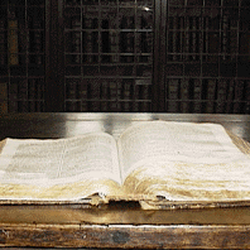
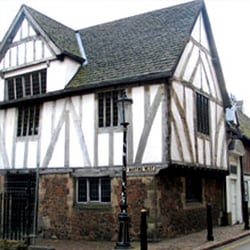
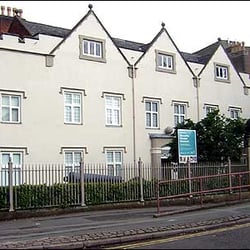
Great building..love it. This building, which dates back to…read more1390, has seen many incarnations. Originally built for the Guild of Corpus Christi, it was extended during the 1400's to include two halls. The Guildhall has been used as the town hall, city library, courtroom, school, and even a museum. The building's interior features exposed wood beams and an elaborate gilded coat of arms. Today, the city uses the structure as a performance venue. When it was a museum I was in there, on a winters day, alone. It has a long sweeping staircase and I started to walk down it saying (out loud) I care not for your fortune, my Lord. I shall never marry you for you are not worthy. etc. When I got to the bottom, standing silently, staring at me, was a school party! I smiles, said hello and rapidly left. Built in stages between the 14th and 16th centuries, the city's most prominent public building was Leicester's first town hall and contains one of the oldest libraries in Britain. It is one of the best preserved timber framed halls in the country, dating back six hundred years. The Guildhall has had many uses and lives. The Great Hall itself was built in about 1390 as a meeting place for the Guild of Corpus Christi (a small but powerful group of businessman and gentry). Over the next hundred years the Great Hall was extended and the two wings at either end added. By the end of the 14th century the corporation of Leicester had begun to meet in the Guildhall. When the Guild was dissolved in 1548 the Corporation bought the buildings for the sum of £25 15s 4d! In 1632 the Town Library was moved into the East Wing of the Guildhall from St Martin' s Church. It is the third oldest public library in the country. At about the same time the ground floor of the West Wing was refurbished as the Mayor's Parlour. The Great Hall was often used as a courtroom and a jury Room was created above the Mayor's Parlour. The Guildhall was also used regularly for theatrical performances, banquets and civic events. With the growth of the town and the expansion of local government functions in the 19th century it became increasingly clear that, as a town hall, the Guildhall was far too small. After much debate a new Town Hall was built on Horse Fair and opened in 1876. For the next fifty years the Guildhall was used for several purposes including the headquarters of the local police and a school. It became very dilapidated and there were even calls for its demolition as an eyesore! Fortunately, the council decided to restore the building and following a major renovation programme it was opened to the public as a museum in 1926. It is reputed that William Shakespeare appeared here. In recognition of this, the television company, Maya Vision, brought the Royal Shakespeare Company to perform at the Guildhall as part of its 2003 series for the BBC, 'In Search of Shakespeare,' written and narrated by the historian, Michael Wood. Part of the Shakespeare legend is that Shakespeare first came across the tale of King Leir whilst appearing at the Guildhall and this inspired him to write his own play King Lear. There is, however, no actual evidence to support this, although the legend of King Leir is often associated with Leicester. Today, The Guildhall is best known as an excellent performance venue, attracting acts from across the country, and as a museum where visitors can step back in time and come face to face with 'Crankie Gemmie' and 'Emma Smith', two of Leicester's notorious pick-pockets who can be found lurking within the Victorian police cells. The Guildhall is reputedly Leicester's most haunted building - five ghosts have been reported in total. Because of its reported hauntings, it has appeared on various TV programmes, most notably being investigated on Living TV's 'Most Haunted'. Derek Acorah and David Wells, immediately sensed the presence of Victorian era pick pockets, policemen and an 'evil presence' in the cell area. Footsteps were heard in the library roof space, two duelling men were sensed in the Great Hall and many of the crew felt sick in the area of the cells. Members of the public can also investigate the ghostly goings on at the Guildhall as it has become a popular place for several paranormal companies who hold overnight events there. The most frequent visitor is the White Lady, a name given to the phenomenon though she is very rarely seen. The ghost makes her presence known by moving the heavy Tudor furniture around the library and by opening doors once they have been locked and bolted. On numerous occasions, staff and police have been called out in the evening to attend to burglar alarms which have been triggered by an unseen presence. The White Lady also has a soft spot for the large Bible which is situated on the main table within the library. Staff will often close the Bible in the evening only to find that in the morning it is back open in exactly the same place as the night before. No one

The Guildhall is quite interesting in that it has been many things, the old town hall, a theatre, a…read moreschool and a police station!! There are lots of different bits you can explore including the cells and the haunted library! They put on lots of concerts and ghost hunts there and also you can get married there! Normally though, just to look around it's free to get in and they run lots of craft days for the kids. Something for everyone really, I only mark it down as disabled access isn't great for the top floors (not really their fault as it's such an old building) and there are not many displays to look at, apart from in the cells, it's all about the building!

Photos
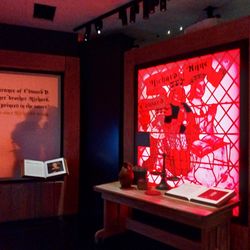
Guildhall Museum - The ghosts bible

The ghosts bible

Guildhall Museum - Interior

Interior

Guildhall Museum

See all

New Walk Museum & Art Gallery

New Walk Museum & Art Gallery

4.3(10 reviews)
0.7 mi
•£

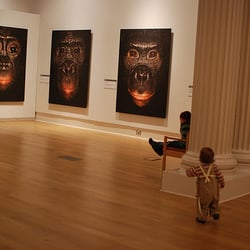
Apart from the beautiful building and the setting of New Walk itself many a happy, relaxing hour…read morecan be spent here. New Walk Museum and Art Gallery is situated along the historic New Walk . In 1849 the Literary and Philosophical Society formally presented to the town its various collections, which have grown and developed over the last 150 years into one of the premier collections and museums in the Midlands spanning the natural and cultural world. The museum has a coffee shop, is a venue for a wide variety of musical performances and is even licensed to host wedding ceremonies. New Walk Museum has been the inspiration for many people including Lord Attenborough and Sir David Attenborough, who pursued their love of art and natural history as a result of spending their formative years as regular visitors to the galleries. Leicester's oldest museum. Permanent exhibitions include: Wild Space is an exhibition that investigates what we mean by the word 'biodiversity'. By looking at different species and the habitats in which they live we can see how vital they are to the well being of the planet. The Mighty Dinosaurs Walk in the footprints of giants and discover the awesome power of these fascinating creatures and their sea going cousins the plesiosaurs and ichthyosaurs. Watch out for the mighty Rutland Dinosaur and the 'Barrow Kipper'. Leicestershire's Rocks Leicestershire stands over rocks of many different ages and types, some of which are 600 million years old. Discover Leicestershire's rocks and explore a wide variety of fossils and minerals. Ancient Egyptians Step back in time and explore a civilisation that has lasted for 3,000 years. Come face to face with ancient Egyptians and find out how they lived and died. Mummies, coffins, gods and treasures greet you in the darkened corners of the tunnels. World Arts The new World Arts gallery provides insights into the vast range of human creativity and skill which has gone into making and decorating objects across the world. 'Our World Through Art' displays a regularly changing selection from Leicester's permanent collections featuring artworks from the 16th to the 21st centuries. Showing the brightest and best of the permanent collection, key works range from powerful 20th-century artists such as Francis Bacon, Peter Doig and the Old Masters to new, vibrant works from African-Caribbean and South Asian artists. Plus changing temporary exhibitions. Well worth a visit when in Leicester.

The New Walk Museum and Art Gallery, located a short walk from Leicester train station (helpful…read moresigns will point you to it) is a small "mix & match" place which includes displays on archaeology (both dinosaurs and Egyptian history), nature and fine arts. Entry is FREE and photography is allowed. The best part is the natural history display, which is very nicely presented. The Egyptian artefacts will not impress more knowing visitors, and are of main interest only to kids. If you've ever been to a proper Egyptian mummy exhibition (like the one at the British Museum in London), you will almost certainly be disappointed by what Leicester has to offer. The art collection, I'm afraid, is small and almost entirely forgettable. Most of the few dozen paintings on show (in one single large gallery, plus a very minor "modern" art display in the adjacent room) are second-rate genre paintings from the 18th and 19th centuries. Though officially called "the Victorian collection", they had to fill up the space with some seventeenth century art as well, none of it remarkable. Only a handful (like about 4) paintings are minor works by major artists of their time, like Edmund Blair Leighton or Alfred Sisley. The rest are by mostly unfamiliar artists. The "modern" collection does have paintings by Stanley Spencer and L.S. Lowry, but only one each. My advice: If you're mobile, take the train to Birmingham, or even Derby, and visit their art galleries, which have more interesting works on show. Their collections are superior to this one - in the case of Birmingham Art Gallery, MUCH superior. The New Walk Museum is of interest to locals and kids (When I visited on a Tuesday it was overflowing with the small fry). Adults from farther away need not bother!

Photos
New Walk Museum & Art Gallery

See all

Newarke Houses Museum & Gardens - Newarke Houses

Newarke Houses Museum & Gardens

4.0(1 review)
0.2 mi

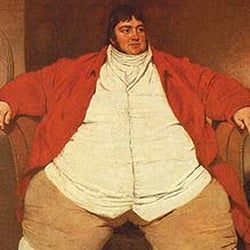
AGAIN It is not in Leicester Sq it is in Leicester and I put it on the map plus the postcode!!!…read more Leicester has a wealth of museums all worth visiting. Newarke Houses Museum, is composed of two historic houses, Wygston's Chantry House and Skeffington House, and tells the story of 20th century Leicester and the history of the Royal Leicestershire Regiment. 'The Tigers'. Regimental life through the eyes of ordinary soldiers and of the people at home and explores how they were affected by war. Discover a recreation of a First World War trench, complete with sounds and smells, highlighting the stoicism and bravery of those involved. The objects on display span the 1600s to 1960s and include 'tools for the job', letters home, 'bounty',uniforms, weapons, souvenirs, letters, campaign stories and personal recollections. William Wygston, Leicester's richest citizen, built Wygston's Chantry House around 1511. It became an urban gentry house after chantries were abolished in 1547 and is the only Elizabethan urban gentry house that survives in Leicestershire. Skeffington House is likely to have been built around 1583 by Sir Thomas Skeffington. Originally a one room deep stone building, it has been altered and made bigger over the centuries. Many different people have used, lived in, changed and extended these buildings over the centuries without doubt, they have a fascinating story to tell. Have a look and see how these two houses, built in different times, now fit together as one building The new displays include room settings from the 1950s and 70s, a cinema experience, a collection of toys from Tudor to present day and a play area for children to try various games. Two dedicated community galleries tell the story of 'Moving Here' and settling in Leicester. There is also a new gallery for Leicester's famous son Daniel Lambert. Born in Leicester in 1770, Daniel Lambert worked as the gaoler in the Bridewell prison and was a much-admired national character. Gaining a reputation as a kind and humane man, he became a celebrity due to his remarkable size of 52 stone 11 pounds (more than four average sized men). Discover Daniel's clothes, furniture and personal items. Some highlights are: Street Scene Based on the Wharf Street area of Leicester in the 1940s where it was said you could buy 'everything from a pin to an elephant'. Open seven days a week offering credit or 'tick', and serving as a local meeting place, these shops were central to the lives of people who often struggled to get by on low incomes. a 1950s street scene that includes the Jolly Angler public house, a grocer and a pawnbroker, with sounds and conversations from the times. The story of Leicester at War is told, including what happened on the home front and the history of the Regiment through personal stories, including a recreation of a First World War trench with sound and lighting. Also discover the history of Newarke Houses and the surrounding area. A variety of different techniques tell these stories, including oral histories, archive film, computer interactives and newly acquired objects. The Panelled Room: An Evening in 1645 Built in 1583, the Panelled Room is in the oldest part of Skeffington House. It is laid out using historic furniture and shows how it might have looked in 1645 during the 'Siege of Leicester' in the English Civil War. Ghosts: The figure of a man dressed in an Elizabethan style costume has been seen at Newarke Houses. The figure appeared out of the wooden panelling in the Gimson Room and disappeared through an adjacent wall. A mysterious shadow, with a distinct human form, has also been seen in the area. On more than one occasion, staff have moved to one side to let a figure through only to realise that no one was there. A figure in a long, dark cloak has also been seen at the top of the main staircase walking towards the window. Once, when repairs were being made in the building, a postcard holder rotated on its own, throwing all of the cards out on the floor. Although the figure is mainly seen in the area of the Chantry House, its identity remains a mystery. Gardens: The area around Newarke Houses was built as a religious precinct by the Earl of Lancaster and Leicester. It was called 'New Work' (hence Newarke) todistinguish it from the older buildings of the Castle and St Mary de Castro Church. The area has a rich and interesting history, intertwined with visits by legendary names such as Geoffrey Chaucer and Richard III. It was in this area during 1645 that the Parliamentarians fought the Royalists during the 'Siege of Leicester'. The holes in the north garden wall were gun loops where muskets were positioned. You can discover more of the history of the area at the museum. The picturesque museum gardens are laid out to show the development of small English gardens through the introduction of new plants over the last thousand years. Allow plenty of time to look round.

Photos
Newarke Houses Museum & Gardens - View from Newarke Houses

View from Newarke Houses

Newarke Houses Museum & Gardens - Daniel Lambert

Daniel Lambert

Newarke Houses Museum & Gardens

See all

Belgrave Hall and Gardens - Gothic Bed I adore it.

Belgrave Hall and Gardens

4.0(1 review)
1.8 mi

Another way of escaping the city in Leicester. Most of my escape places are also free…read more The Hall (Grade II* listed) is in the midst of two acres of serene walled gardens that are open to the public. The gardens were an important aspect of the Hall in Victorian times (a status symbol that showed the family's wealth). Belgrave Hall provides an oasis of peace and quiet in a busy city. It was built in the early 18th century, in what was then a small village 3 miles from the town of Leicester. Now city traffic passes, almost unnoticed, just beyond the garden walls. In its current role as a museum, the rooms have been designed to appear as they may have been decorated and used in Victorian times, with the contrasting lifestyles of an upper middle class family and domestic servants. This period was when the Ellis family was resident. The beautifully laid out natural room settings create the feeling of having just missed the occupants of the house. Edmund Cradock, a 'nouveau riche' hosiery merchant, built the Hall between 1709 and 1713 and died soon after its completion. Ellis and his wife Priscilla moved to the Hall with eight of their eleven children seven daughters and their youngest son. The family lived there with their servants the cook, housekeeper, parlour maid,aid-of-all-work, coachman and gardener. The Ellis sisters bought the Hall from their brother in 1868, after he inherited it from their father. Upon the death of the last remaining Ellis sister in 1923, the Hall was sold. Little is known of the next owners, the Simons. The Vann's who lived there from 1767 to 1844, ran a thriving hosiery business from the Hall, employing the local framework knitters as outworkers. They gave generously to many local charities, including Leicester's first free school. John Ellis, who purchased Belgrave Hall in 1845 and his family were also noted for their good work in the community. Ellis, a wealthy businessman, was responsible for bringing the railways to Leicester in 1833. In 1936, the estate was sold to Leicester City Council for £10,500 around a third of its actual value. A number of statues and monuments from lost gardens in Leicestershire are now situated within the gardens. The rock and water garden, botanic garden, eco garden and glasshouses compliment the older, formal grounds. Refurbishment work carried out in 2005 included improved access to the gardens. The rooms show how a house of the period worked in great detail. Free admission.

Photos
Belgrave Hall and Gardens - A reclaimed statue in gardens

A reclaimed statue in gardens

Belgrave Hall and Gardens - Belgrave Hall

Belgrave Hall

Belgrave Hall and Gardens

See all

Jewry Wall Museum - museums - Updated May 2026

Loading...
Loading...
Loading...