Great Central Railway Photos




Recommended Reviews - Great Central Railway
Start your review...



1 year ago


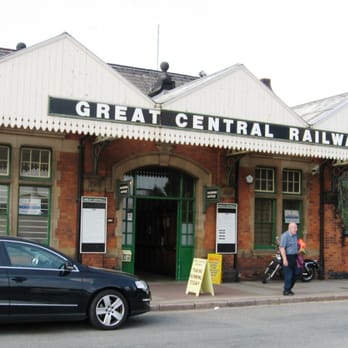
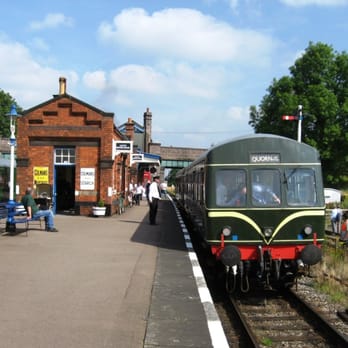
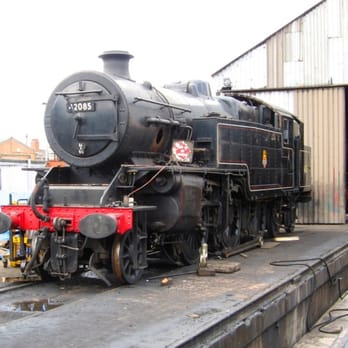
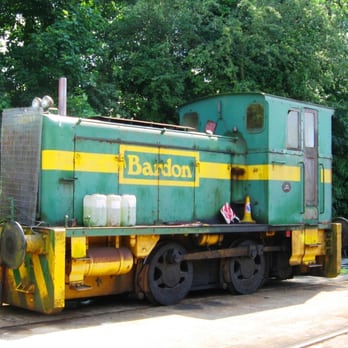
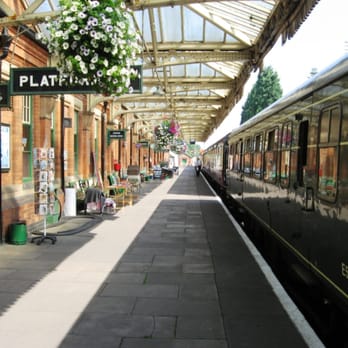
The Great Central Railway is generally regarded as one of the best of the UK's heritage steam railways. It is unique in preserving a former section of a main line, and having double track running, recreating the great age of steam-hauled expresses. (Other preserved lines tend to be former branch lines). Its history goes back to the mid-19th Century, and the vision of Edward Watkin. He envisaged a railway running from Manchester and Sheffield in the north of England, and via a new high speed main line, built to the European loading gauge, through London to Dover and then under the Channel Tunnel and thence to France. And all this in the 1860s. Watkin was Chairman of the Manchester, Sheffield and Lincolnshire Railway, Chairman of the South Eastern Railway connecting London with Dover, and also the Metropolitan Railway. A new line was built to link these various companies, and the 'London Extension' from Sheffield down to the Metropolitan line in London. It was the last main line built into London (until the Channel Tunnel link), opened into Marylebone Station in 1899. It was renamed the 'Great Central Railway' and quickly became famous for its fast and comfortable expresses. Alas, the Channel Tunnel vision had to wait nearly another century before becoming reality, but in the meantime the Great Central had become a victim of the 1966 cuts in British Railways, and was the only complete main line to be closed - ironically, the most modern and the only one built to the European gauge. In 1969 some enthusiasts got together to reopen part of the line, and trains started running again in 1973. The railway now runs from Loughborough to the northern outskirts of Leicester. It has a large collection of steam locomotives, from every pre-1947 company as well as British Railway standard designs, and a wide range of preserved diesel trains and railcars which help recreate the early 1960s feel. The stations are delightful: Loughborough recreates a large, busy town station of the early 1960s, Quorn & Woodhouse recreates the railway in wartime of the 1940s, and Rothley, the Edwardian period. Quorn & Woodhouse and Rothley are both excellent examples of the Great Central's standard design of small stations with a single island platform. The line is double track from Loughborough to Rothley, allowing a real taste of how a mainline railway would have felt in the 1960s. It runs through rolling countryside and passes on two viaducts over part of the lovely Swithland Reservoir. All stations have some form of refreshment facilities, and there is a souvenir shop and bookshop at Loughborough. Apart from the trains, additional attractions include the locomotive shed and workshops at Loughborough, and at Rothley the Ellis tearoom and miniature railway, as well as workshops of the Railway Vehicle Preservation group, who aim to preserve rolling stock such as carriages. Their pride is two sets of Travelling Post Offices, and they organise week-ends demonstrating the old automatic mail drop-off and pick-up system, made famous by the 1950s film 'The Night Mail'. The current southern terminus is Leicester North, just south of the site of the former Belgrave & Birstall station. There are plans to extend both further south into Leicester, and northwards to join up with a section of line still extant towards Ruddington and the outskirts of Nottingham. At present there is a gap of over 300m between the two sections, with an embankment and several bridges missing. As you would expect, the line is extraordinarily popular with 'children of all ages'. They run a number of special 'themed' days, some suitable for the die-hard enthusiast, (eg Travelling Post Office demonstration) and others orientated more towards children (eg Thomas the Tank Engine days and Santa Specials). As it is a full working railway, children must be appropriately supervised, and the locomotive shed is messy underfoot - stout footwear would be a good idea, and it is not really suitable for small children. Full details of access and parking can be found on the Line's website. read more




18 years ago
17 years ago

18 years ago
14 years ago
More info about Great Central Railway












Why does Yelp recommend reviews?
1 review that is not currently recommended
The reviews below are not factored into the business's overall star rating.
18 years ago
Great Central Railway - massmedia - Updated May 2026
Browse Brands
Browse Articles
People who viewed Great Central Railway also viewed

The National Brewery Centre
7 reviews

Newstead Abbey Museum
6 reviews

New Walk Museum & Art Gallery
10 reviews
£

Pickford's House Museum
7 reviews

Nottingham Castle Museum and Art Gallery
4 reviews

Guildhall Museum
6 reviews

Charnwood Museum
5 reviews

Jewry Wall Museum
5 reviews

National Space Centre
28 reviews

D.H. Lawrence Birthplace Museum
2 reviews