Cancel

Open app

Search

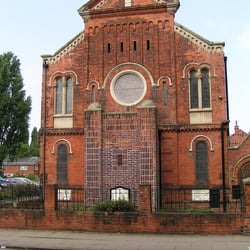
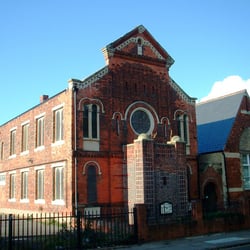
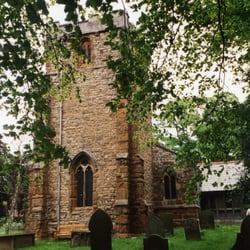
St Edith's Church

4.0 (2 reviews)

St Edith's Church Photos

Recommended Reviews - St Edith's Church

Your trust is our priority, so businesses can't pay to alter or remove their reviews. Learn more about reviews.
Yelp app icon
Browse more easily on the app
Review Feed Illustration

18 years ago

Helpful 0
Thanks 0
Love this 0
Oh no 0

18 years ago

I havn't been here but again ive been recommended so I will be going

Helpful 0
Thanks 0
Love this 0
Oh no 0

Verify this business for free

Get access to customer & competitor insights.

Verify this business

The Sikh Gurdwara

The Sikh Gurdwara

3.0(1 review)
21.7 mi

I once worked here and spent a New Years Eve as it was then the Railway Club. It stood empty a…read morewhile but the diversity of the community in the town grew and it now has a new use. The Sikh Gurdwara (Temple) developed during the period of 1992/1993. The main donations for the purchase of the building and its conversion came from Sikh communities in neighbouring cities. Although the community in Grimsby was fairly small, they managed to collect enough donations to start a thriving Sikh Temple which is situated in Railway Street. An extension was built in 1997 to add a Community Hall and Library; this was made possible through a substantial grant from the Lotteries Fund and a significant grant from the local council. The first Sikh family arrived in Grimsby around 1983 to run a grocery store in a village after seeing the property advertised in the National Press. This then expanded to more Sikh families taking the opportunity to run similar businesses in the Grimsby area. In the early 1990's Sikh Doctors started practising in Grimsby and this expansion of the professional community continued for severalyears. Currently the Sikh community, of Grimsby, numbers approximately 175 people mostly working within the NationalHealth Service as Doctors, Dentists,Opticians, etc. The congregation meets every Sunday from 10.30am until 2pm; this is when meals (Langar) are served, cooked by volunteers. Those assembled eat together in the Gurdwara. There are many other functions held in the Gurdwara throughout the year. Visitors are welcomed to services.

Sir Moses Montefiore Synagogue

Sir Moses Montefiore Synagogue

5.0(1 review)
21.4 mi

This is a beautiful building which, when I was lecturing in Local History, I was invited to visit…read more The Ark was opened and it's beautiful objects beheld. The windoes are lovely too making the inside a myriafd of reflected lights. In 1276 when Grimsby was only a small settlement, valued only for the tidal creek of the River Humber, there was mention of 'the Jew, Ben of Grymesby' (sic) which demonstrates the length of time members of the Jewish faith have been living in the area. The Jewish cemetery, which I didn't realise existed, in Grimsby, was consecrated by the Reverends J.Goldsmith and B. Rosengard in March 1886,and the foundation stone for the Sir Moses Montefiore Synagogue in Heneage Road, which still stands as a Grade II listed building, was laid in July 1885, with the Synagogue finally opening in 1888. The synagogue in Grimsby is situated in Heneage Road, which at one time was close to the centre of the busy fishing industry. Not far away was the fish docks and the corporation docks, and it would have been surrounded by housing. It certainly would have been within 2000 cubits of many of the population in accordance with Jewish Law of the Sabbath. Members of the Jewish community have served on both Cleethorpes and Grimsby Councils and in 2001 President of the Synagogue Leo Solomon (who was once my music and maths teacher..I was in his choir)was made an Honorary Freeman of the Borough of North East Lincolnshire for his involvement in community issues. It still has a regular attendance.

Photos
Sir Moses Montefiore Synagogue

See all

Lincoln Cathedral - Lincoln Cathedral in Lincoln, England.

Lincoln Cathedral

4.8(30 reviews)
10.7 mi

Absolutely stunning cathedral, steeped in history and tradition. Finding the Imp was fun and the…read moretours are great. I have taken the tour twice now during my two visits. The first tour was great and moved at a very good pace. Lots of fun, unknown tidbits. The second tour was unfortunately hard to hear and very slow paced, so we didn't see as much. I went to Lincoln by myself the first time, and brought my husband and kids the second. Either way, the cathedral is gorgeous and lovely to visit. I'm not sure if the coffee shop/cafe is officially part of the cathedral. When I visited last year (2023), we had afternoon tea and was blown away! It was all very lovely! But this year (2024), it was pretty disappointing. I brought my teenagers for tea and the cakes and sandwiches were cut over half the size. Barely a bite worth. We will have to try somewhere else for tea next time we visit.

Lincoln Cathedral is a stunning cathedral with a dominant presence in Lincoln. It is near the high…read morepoint of the old medieval city, on a hill in largely flat country, and it is exceedingly tall, being considered for some yeas to have been the tallest building in the world. The architecture is a mix of older Romanesque and later Gothic architecture, giving an unusual facade in particular. It has an historic font, visceral tomb of Queen Eleanor, wife of Edward I, who died in Lincoln, as well as tomb of St. Hugh. They offer roof top tours as well.

Photos
Lincoln Cathedral - The sunlight flowing through the Stainglass windows into the cathedral

The sunlight flowing through the Stainglass windows into the cathedral

Lincoln Cathedral - Lincoln Cathedral, seen from outside the close, in Lincoln, England.

Lincoln Cathedral, seen from outside the close, in Lincoln, England.

Lincoln Cathedral - Ceiling of Lincoln Cathedral in Lincoln, England.

See all

Ceiling of Lincoln Cathedral in Lincoln, England.

Spital on the Street

Spital on the Street

3.5(2 reviews)
8.9 mi

I guess this is off the beaten track and maybe only interesting to historians but it is very…read moreattractive and the whole tiny hamlet is interesting. THE HOSPITAL CALLED 'SPITTAL ON THE STREET' The ancient Roman Road from Lincoln City to the Humber, Ermine Street, forms the eastern boundary of the parish and runs through the hamlet of Spital.(A15) north of Caenby Corner. Still standing is the Chapel of St Edmund..a medieval chapel with painted glass and is now re-aquiring some of the objects taken from it. The area has almshouses (dating from 1390) in Spital Green, the Quarter Sessions houses (built in 1592), the old coaching inn (now derelict) from 1680, and the chapel itself. The area outside the chapel boasts a physic garden designed by Joe Nicholson, and adjacent is an orchard being re-planted with old varieties of apple and pear trees. The hospital called 'Spittal on the Street' was built in 1396 by Thomas Aston, a canon of Lincoln, and connected with the chapel of St. Edmund, where a chantry had been founded in 1343 by John Vendour, vicar of Thimbleby. Thomas Aston also obtained permission from the pope to appropriate to the new hospital the churches of Little Carlton and Skellingthorpe, of which he was patron. A warden and a certain number of poor persons were to be maintained in the hospital, which was to remain under the patronage of the dean and chapter of Lincoln. This house was not suppressed among the hospitals generally. The chapel of St Edmund stands at the northern edge of the site formerly occupied by the hospital.It has been bought by Dr David Markham of Nottingham University and he is restoring it. He travels around giving lectures on The Knights Templar and others to draw attention to it and raise funds. He does have open days or will open up and give a talk to parties.

Lovely pretty building, nice to go and seeread more

Wellow Abbey

Wellow Abbey

4.0(1 review)
20.8 mi

Wellow Abbey is long gone. So this is for my ghost guide and a bit of history…read more The abbey of Wellow was founded, like the priory of Dunstable, by King Henry I and dedicated to St. Augustine and St. Olaf. During the Scottish wars of Edward II the abbot was required to supply the king with wheat, malt, and sheep to the value of £18, and had £12 10s. 8d besides exacted from him, but these sums were repaid by Edward III. The house was seriously in debt in 1325, and a secular was appointed to take charge of its affairs for awhile and again, in 1359, arrangements had to be made by the bishop to reduce the expenses of the canons' maintenance. Later on, in 1372, the abbot, John Utterby, was accused of having sold, alienated, and dissipated the goods of the house and brought it almost to ruin. There are wonderful accounts of Bishops Visitations about the kept women and the washing of underwear etc which are really very funny. In 1534 Robert Whitgift, the abbot, with ten canons, signed the acknowledgement of royal supremacy. The abbey at this time had a clear revenue of only £95; it consequently fell within the range of the first Act of Suppression. It was dissolved before Michaelmas, 1536. I have held the abbey seal in my hand when I worked in Archeology. A later Victorian House was built on the site. This was the HQ of the RAFA. Before that it was a private house. This is where the ghost tales begin. The family often saw monks and knights. Much was dug up in the garden of a knightly interest. They also regularly heard a carriage come down the drive and pull up at the front door but no-one was there. Ok my personal stuff. A few years ago I had a shop on Abbey land very close to the abbey. It was always cold in there even on the hottest day and once I thought I saw a monk as I looked up from reading. I also did the same in the car park..look up and he was gone. I had afireplace from the building..bought on demolishion. A few times I woke to a monkly shape that immediately vanished. Did he come with the fireplace. The weirdest was..visiting grimsby as a child..the boy next door and I loved to explored. We crawled under the hedge into the abbey grounds. We sat with our feet in the pond and watched a frog on the lilypads. 2 days later we went back and there was no pond but a small open air swimming pool. The monks had a pond.

All Saints

All Saints

5.0(1 review)
19.6 mi

This village and parish lies south of Barnetby le Wold and northwest of Caistor…read more I went here to my cousins wedding. It was in the church and the reception in the grounds and the church hall held the food. Wonderful outdoor reception. The church is similar to many in the area but I pretty much missed the wedding entirely..all I saw were the tombs: and erk my cousin noticed..said Yyou don't expect it in a hamlet like this do you? One of the brasses had a hole cut in where a name was removed..disgraced family member? Anyway the tombs and history of the people. All Saints contains monuments and effiges of the TYRWHITT and SKIPWORTH families. One TYRWHITT tomb dates to 1581. Of old Lincolnshire stock, Robert Tyrwhitt inherited a tradition of service to the crown: his grandfather had been a knight of the body and his father, who received his knighthood at Tournai, was an outstanding figure in his shire. Through his grand-mother Tyrwhitt could claim to be linked by marriage with Henry VIII's mistress Elizabeth Blount and their son the Duke of Richmond. Tyrwhitt was brought up at court. An esquire of the body by 1525, he was an early and large recipient of monastic lands, especially in his own shire: between 1536 and 1547 he acquired some two dozen grants and leases from the augmentations. His first acquisition had been the dissolved monastery of Stainfield in Lincolnshire, which was suppressed on the orders of the King despite a recent decision in favour of its exemption. It was such episodes which provoked the Lincolnshire rebellion. Tyrwhitt's father was one of the subsidy commissioners first attacked by the rebels, and as soon as news reached the court he himself was despatched with orders for John Hussey, Lord Hussey. His part in the suppression of the rebellion and of the Pilgrimage of Grace is scarcely to be disentangled from that of his many namesakes. The dissolution of Stainfield was promptly carried through, and after leasing them in 1537 Tyrwhitt was granted the house, site and 662 acres of land in fee in the following year.In 1536 Bardney Abbey was threatened with closure and forfeiture of all assets by King Henry VIII, a fate to be met by all the abbeys and priories in the country around this time. Six monks from Bardney, implicated in the rebellion, were hanged, drawn and quartered at Lincoln in Mar 1537. After the Lincolnshire Rising, the monastery surrendered to the King and was dissolved in 1538. Following the Dissolution the land was acquired by Sir Robert Tyrwhitt. He demolished the church and used the stone to convert the other monastic buildings into a fine house for himself and his family. He moved into the abbot's lodgings and converted the cloister into a walled garden. The rest, he left to fall into ruin. By 1540 Tyrwhitt's advance at court saw him promoted to be a gentleman of the privy chamber and acting vice-chamberlain on the King's side. He survived a rebuke by the Privy Council in Sep 1540 for being one of those guilty of causing a disturbance in the presence chamber, and he was given custody of several royal properties previously under Cromwell's charge. In 1542 he obtained, jointly with Thomas Manners, Earl of Rutland, a grant of the priory of Belvoir, and also of Eagle in Lincolnshire, which had been a commandery of the Knights Templars, who had it of the grant of well Haughe, King Stephen; and from whom it had passed to the Hospitalars Tyrwhitt was elected first knight for Lincolnshire to the Parliament of 1545 The monuments of Sir Robert Tyrwhitt of 1581 and his wife Elizabeth Oxenbridge are in Bigby church. The twenty two children of Sir Robert and Elizabeth can be seen around the base of the monument, and what is described as a large hairy man can be clearly seen laid across Sir Robert's feet. Also Bridget MANNERS Died: 24 Jul 1604: Buried: Bigby Church The tomb of Sir George Manners and his wife Anne : He went to court at the age of thirteen to be one of Queen Elizabeth's maids of honor. This was a good appointment, especially since at this age Bridget's only accomplishment was her ability to play the lute. Her mother was reluctant even to buy her the appropriate clothes; but the Bridget Hussey, Countess of Bedford, who had been the wife of the second Earl of Rutland, her grand father, and after whom lady Bridget was named, was so charmed with Bridget that she decided to sponsor the girl in spite of her deficient education. To make a long story short, although Bridget's family persisted in believing that she would disgrace them all, the Countess of Bedford's confidence in her proved justified; Bridget eventually became the Queen's carver, a post of high honor. Thus her patron protected her interests much more objectively and much more strongly than Bridget's own mother would have. Had the girl remained at home, she have remained ignorant, uneducated, and unmarriageable.

Photos
All Saints
All Saints
All Saints

See all

St Edith's Church - religiousorgs - Updated May 2026

Loading...
Loading...
Loading...