Cancel

Open app

Search

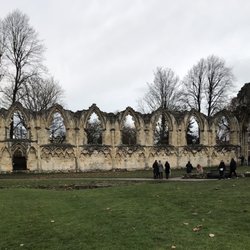
Wellow Abbey

4.0 (1 review)

Wellow Abbey Photos

Recommended Reviews - Wellow Abbey

Your trust is our priority, so businesses can't pay to alter or remove their reviews. Learn more about reviews.
Yelp app icon
Browse more easily on the app
Review Feed Illustration

18 years ago

Helpful 0
Thanks 0
Love this 0
Oh no 0

Verify this business for free

Get access to customer & competitor insights.

Verify this business

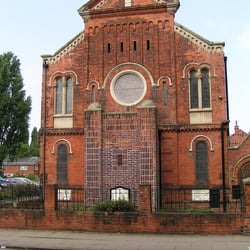
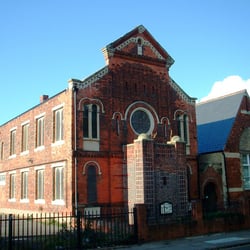
Sir Moses Montefiore Synagogue

Sir Moses Montefiore Synagogue

(1 review)

This is a beautiful building which, when I was lecturing in Local History, I was invited to visit…read more The Ark was opened and it's beautiful objects beheld. The windoes are lovely too making the inside a myriafd of reflected lights. In 1276 when Grimsby was only a small settlement, valued only for the tidal creek of the River Humber, there was mention of 'the Jew, Ben of Grymesby' (sic) which demonstrates the length of time members of the Jewish faith have been living in the area. The Jewish cemetery, which I didn't realise existed, in Grimsby, was consecrated by the Reverends J.Goldsmith and B. Rosengard in March 1886,and the foundation stone for the Sir Moses Montefiore Synagogue in Heneage Road, which still stands as a Grade II listed building, was laid in July 1885, with the Synagogue finally opening in 1888. The synagogue in Grimsby is situated in Heneage Road, which at one time was close to the centre of the busy fishing industry. Not far away was the fish docks and the corporation docks, and it would have been surrounded by housing. It certainly would have been within 2000 cubits of many of the population in accordance with Jewish Law of the Sabbath. Members of the Jewish community have served on both Cleethorpes and Grimsby Councils and in 2001 President of the Synagogue Leo Solomon (who was once my music and maths teacher..I was in his choir)was made an Honorary Freeman of the Borough of North East Lincolnshire for his involvement in community issues. It still has a regular attendance.

Old Clee

Old Clee

(2 reviews)

Old Clee is great for interacting and work due to the multiple shops and a factory!For children…read morethere is plenty of space to play loads of different sports and a school.

Old Clee is a village..odd to review a village? Well it is now swallowed up between Grimsby and…read moreCleethorpes but still feels like a village. It was once tidal and reading will and inventories for here shows it was a prosperous place, full of yeoman farmers and fishermen, and in the 1600's several had valuable bibles and could read. The houses around the church are interesting. Dutch gable ends built by overseers of the Dutch community draining the lands. Also an amazing Turor stile manor with barley stick chimmneys. Fletcher Christian (of The Bounty) is said to come from here. It is lanes and quite amid the noise of the neighbouring areas. I was part of an archeological dif here but no significant finds. The main focal point is Old Clee Church. The 2nd Oldest Building in Grimsby. Holy Trinity and Saint Mary. The Saxon Tower dates back to c1050AD, and was designed to warn locals of Viking invasion. It was once administered by Wellow Abbey in Grimsby and the Bishops Visitation reports at the time are really funny to read (NO history isn't stuffy!) where the monk taking services whiines and complains of not liking leaving his monastary and the walk of about 2 miles was bad and he got hungry etc. No shops or cafes etc but the church is usually open to look around and the architecture is worth a look too. Look for the stone of the witches head on the tower. Sometimes I can see it and sometimes I can't. I think she pops out.

The Sikh Gurdwara

The Sikh Gurdwara

(1 review)

I once worked here and spent a New Years Eve as it was then the Railway Club. It stood empty a…read morewhile but the diversity of the community in the town grew and it now has a new use. The Sikh Gurdwara (Temple) developed during the period of 1992/1993. The main donations for the purchase of the building and its conversion came from Sikh communities in neighbouring cities. Although the community in Grimsby was fairly small, they managed to collect enough donations to start a thriving Sikh Temple which is situated in Railway Street. An extension was built in 1997 to add a Community Hall and Library; this was made possible through a substantial grant from the Lotteries Fund and a significant grant from the local council. The first Sikh family arrived in Grimsby around 1983 to run a grocery store in a village after seeing the property advertised in the National Press. This then expanded to more Sikh families taking the opportunity to run similar businesses in the Grimsby area. In the early 1990's Sikh Doctors started practising in Grimsby and this expansion of the professional community continued for severalyears. Currently the Sikh community, of Grimsby, numbers approximately 175 people mostly working within the NationalHealth Service as Doctors, Dentists,Opticians, etc. The congregation meets every Sunday from 10.30am until 2pm; this is when meals (Langar) are served, cooked by volunteers. Those assembled eat together in the Gurdwara. There are many other functions held in the Gurdwara throughout the year. Visitors are welcomed to services.

St Giles Church

St Giles Church

(2 reviews)

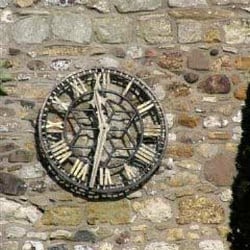
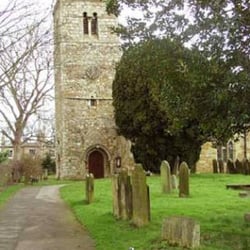
When I worked in archeology I was sent out, one summer, to photograph churches and their surrounds…read morefor the sites and monuments records. This one was the prettiest and most peaceful I saw. I found it very sad though as, sitting on a bench at the rear of the church, all the graves in the first row were of children and babies. A delightful spot for them never the less. I also noted the remains of a medieval (probably) moat signs around rectory. The Anglican parish church is dedicated to St. Giles. Parts of the church are of Saxon origin. St Giles is the oldest building in Grimsby with a tower said to date back to 1042. The nave is medieval but the chancel is more recent. The North Aisle was constructed as recently as 1955 yet has been tastefully integrated into the whole. St Giles is set in a tree lined churchyard in the old village of Scartho and is an oasis of calm in what is now a busy suburb. Normally open to visitors on Friday and Saturday mornings. Well worth a visit. Services on Sundays as well. The graveyard is always open for visitors. The name Scartho is from the Old Scandanavian Skarth+haugr, or mound near a gap. It appeared as Scarhou in the 1086 Domesday Book. Scartho is both a village and parish just south of Grimsby.Bradley parish borders on the west, Clee parish is to the east and Waltham parish is to the south. The area of the parish is about 1,300 acres. This area consists of two very distinct areas separated by Scartho Road. To the west are tree-lined avenues with houses and bungalows in the 'Garden Suburb' style with render and metal windows. To the east is the original core of Scartho, centred on St. Giles Church and the Rectory. Both areas have substantial mature trees and original winding street patterns The A16 trunk road passing south from Grimsby runs through the the village. There are five War Memorials within this village which is fast being swallowed up in urban development. A lot for such a tiny place but so close to RAF dtations and the docks. Memorial to the bomb dropped by a Zeppelin in Pinfold Lane. World War 1 & 2 Memorials in St. Giles Church. Oak carved altar table in St. Giles Church. Memorial to the bomb dropped by Zeppelin in St. Giles Churchyard. Clock in Saxon Tower In the churchyard, surrounded by all the gravestones is a tall shaft of polished red granite surmounted by an urn, standing on a plinth of granite. This memorial to the day that the People of Scartho were spared from injury, when a stick of bombs were dropped from a zeppelin, was erected by a Joseph Grantham and unveiled on Thursday 23rd of September, 1920, almost four years from the day that the raid occurred, which was the 24th September, 1916. The church clock is also from this time. The rector of the St Giles church has prepared a visitors guide to the church, and within is the information that the church clock was presented to the parish by Joseph Grantham in 1921 in thanksgiving for the preservation of the village from destruction, and, as a tribute to those who were killed during the 1914-1918 war. The German bomb that struck the churchyard in 1916 badly damaged the roof of the church that half of it had to be renewed and all the windows restored. However, the ancient tower survived intact, so that the church bells could be rung the next morning for the moring service. Presented by Jos Grantham to Scartho Church 1921

a gorgous church ,was married here fifteen years ago and still go to look quite frequently, a…read morebeautiful church full of spectaculer windows and it is everything you would imagine of a church quite ,peaceful,relaxing and you are always made to feel welcome,the grounds are always kept immaculate the area is nice and peaceful and you feel at peace and at ease where people always say hello and smile and you dont feel out of place

St Margarets Church

St Margarets Church

(1 review)

Why has Qype insisted on heading this as being in Louth? It…read moreis SOMERSBY quite a way from Louth!! Somersby, Lincs, 15th Century Church dedicated to St Margaret. The Father of the Poet Laureate Alfred Lord Tennyson was a Rector here and is buried here. Dr Tennyson wrote and delivered complex sermons to the mystification of his parishioners. He suffered from savage manic depression, epilepsy and alcoholism. Life at Somersby could be absolutely miserable. Alfred, Lord Tennyson (1809-02) born in Somersby educated Louth, Somersby and Trinity College Alfred succeeded to fame and fortune as the Poet Laureate to Queen Victoria. After his death on October 5 1892 he was buried in Poets' Corner at Westminster Abbey. His birthplace, the Old Rectory, (they don't like you standing looking) remains opposite the church in the Lincolnshire Wolds, hilly and picturesque country reminiscent of the Cotswolds west of Oxford. The Lincolnshire Wolds are deservedly known as Tennyson Country. Here the great poet lived for his first 28 years, with his parents and 10 siblings in the rectory at Somersby (now private), and began his poem ''In Memoriam.'' Tennyson Research Centre in Lincoln holds the most significant Tennyson archive in the world. Lincolnshire Archives holds the wider family's social and business papers. Somersby Rectory, across the lane from the church and where the eleven Tennyson children grew up, is now a private house. Although it was rebuilt and improved before the Tennysons moved in, Dr Tennyson enlarged the house and in 1819 built the 'Gothic Hall' (completely rebuilt in 1973 to correspond as closely as possible to the original.) In 1824, Dr Tennyson complained that there were 23 people sleeping in the house suggesting there must have been about 10 servants a big establishment for a country rector and a small house. The church is an ancient sandstone (Spilsby sandstone, locally referred to as greenstone, because it is partly composed of the mineral glauconite, which weathers to a definite green colour.) building and dates from the 15th century built some time before 1612 and restored in 1863-5. The church only seats about 80 people.. The interior was renovated in the middle of the 19th century and the roof remained thatched until the turn of the 20th century. Parts of the original church remain and centuries of weather have necessitated repairs, accomplished with contrasting, but pleasing, red brick. There is not much stained glass but some of it nevertheless dates from 1407 too; look out for two small window panels, one of which bears the arms of Crowland abbey with which Albinus had connections. There is also an interesting font bearing a rare carved Pieta. Original, too, is the south door with part of a Saxon shield nailed to it. One important extra, however, is the extremely rare churchyard cross, still complete and surmounted by a crucifix. Inside there is a fine George III Royal Arms and another more comprehensive Tennyson display including a marble bust of the poet. One of Tennyson's most popular poems was The Brook. Written in 1855, it is widely regarded as referring to the River Lymm which, in its infancy, is only a narrow stream at Somersby. I think I wrote before in my Hubbards Hills review that the brook there is the more likely place..here it really babbles and is known to have been a favourite place of the young man.

Wellow Abbey - religiousorgs - Updated May 2026

Loading...
Loading...
Loading...