Cancel

Open app

Search

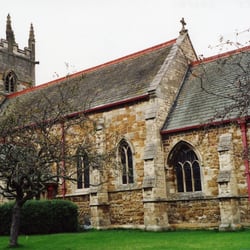
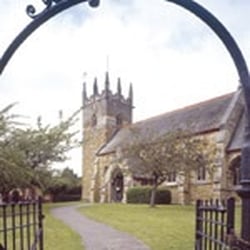
St Giles Church

3.5 (2 reviews)

St Giles Church Photos
Recommended Reviews - St Giles Church

Your trust is our priority, so businesses can't pay to alter or remove their reviews. Learn more about reviews.
Yelp app icon
Browse more easily on the app
Review Feed Illustration

18 years ago

Helpful 0
Thanks 0
Love this 0
Oh no 0
Helpful 0
Thanks 0
Love this 0
Oh no 0

Verify this business for free

Get access to customer & competitor insights.

Verify this business

The Sikh Gurdwara

The Sikh Gurdwara

3.0(1 review)
2.6 mi

I once worked here and spent a New Years Eve as it was then the Railway Club. It stood empty a…read morewhile but the diversity of the community in the town grew and it now has a new use. The Sikh Gurdwara (Temple) developed during the period of 1992/1993. The main donations for the purchase of the building and its conversion came from Sikh communities in neighbouring cities. Although the community in Grimsby was fairly small, they managed to collect enough donations to start a thriving Sikh Temple which is situated in Railway Street. An extension was built in 1997 to add a Community Hall and Library; this was made possible through a substantial grant from the Lotteries Fund and a significant grant from the local council. The first Sikh family arrived in Grimsby around 1983 to run a grocery store in a village after seeing the property advertised in the National Press. This then expanded to more Sikh families taking the opportunity to run similar businesses in the Grimsby area. In the early 1990's Sikh Doctors started practising in Grimsby and this expansion of the professional community continued for severalyears. Currently the Sikh community, of Grimsby, numbers approximately 175 people mostly working within the NationalHealth Service as Doctors, Dentists,Opticians, etc. The congregation meets every Sunday from 10.30am until 2pm; this is when meals (Langar) are served, cooked by volunteers. Those assembled eat together in the Gurdwara. There are many other functions held in the Gurdwara throughout the year. Visitors are welcomed to services.

Old Clee

Old Clee

5.0(2 reviews)
2.0 mi

Old Clee is great for interacting and work due to the multiple shops and a factory!For children…read morethere is plenty of space to play loads of different sports and a school.

Old Clee is a village..odd to review a village? Well it is now swallowed up between Grimsby and…read moreCleethorpes but still feels like a village. It was once tidal and reading will and inventories for here shows it was a prosperous place, full of yeoman farmers and fishermen, and in the 1600's several had valuable bibles and could read. The houses around the church are interesting. Dutch gable ends built by overseers of the Dutch community draining the lands. Also an amazing Turor stile manor with barley stick chimmneys. Fletcher Christian (of The Bounty) is said to come from here. It is lanes and quite amid the noise of the neighbouring areas. I was part of an archeological dif here but no significant finds. The main focal point is Old Clee Church. The 2nd Oldest Building in Grimsby. Holy Trinity and Saint Mary. The Saxon Tower dates back to c1050AD, and was designed to warn locals of Viking invasion. It was once administered by Wellow Abbey in Grimsby and the Bishops Visitation reports at the time are really funny to read (NO history isn't stuffy!) where the monk taking services whiines and complains of not liking leaving his monastary and the walk of about 2 miles was bad and he got hungry etc. No shops or cafes etc but the church is usually open to look around and the architecture is worth a look too. Look for the stone of the witches head on the tower. Sometimes I can see it and sometimes I can't. I think she pops out.

St Margaret's Church

St Margaret's Church

4.0(1 review)
3.2 mi

Laceby lies at the juncion of the A46 and A18, approached from Grimsby by turning right off the A46…read morebefore reaching Laceby Crossroads. The church is in the village centre, near the market place. I have been to funerals here and to family weddings and a more beautiful setting could not be imagined for a wedding. Laceby is an old old Viking village (Lus-BY) is steeped in history and contains many monuments dedicated to historic people. Although Grimsby is now much larger than Laceby, many years ago the Baron of Laceby sent his army into Grimsby and took over the town, taking prisoner the high officials and putting them in dungeons in Laceby! The Anglican parish church is dedicated to St. Margaret and is built from Ancaster stone. It may date back, in total, to prior to 1424, some time in the late Norman period. It seats about 300 from the days when all the village went to church on a Sunday. In 1583, the rector of this church, John WHITGIFT was appointed as Archbishop of Canterbury by Queen Elizabeth I. He had been born at Grimsby in 1530. St Margaret's church stands prominently in the centre of the village. The tower and the nave date from the 11th century and other Norman features include the doorway inside the porch with two window openings either side, dedicated to St John and St Margaret. Records show that a church and a rector have been at Laceby since 1172. The lower part of the tower dates from this period, and carries a ring of five bells. 19th century restoration and additions were made by James Fowler. John Whitgift, Archbishop of Canerbury in the reign of Queen Elizabeth I , was rector from 1572 - 77 and also Dean of Lincoln Catherdral. He is commemorated in stained-glass windows in the vestry and chancel. I annually spent many a happy hour, as a child visiting relatives, at the church garden fete which was in the grounds of the vicarage. A huge victorian building with massive gardens. No longer happens I believe. I oddly lectured on cemetaries and public health in the area..tried to make it gory and amusing all at once..a bit of trivia for those interested about here.(abbreviated:) Article in the Grimsby Observer and Humber News 24th June, 1874 LACEBY: From statements made concerning this parish it would seem that its sanitary condition is in a most alarming state.some startling disclosures in regard to the neglect of sanitary precautions at Laceby, in consequence of which the village is rarely free from disease. He found two cases of typhoid fever, the sufferers being both of the butchers. There had been eight interments in six weeks, and the inhabitants of some of the houses surrounding the churchyard bitterly complained of its state. There had been eleven deaths in nine weeks in a population of about 1000, that the fever was hushed up by the doctors, and again called his attention to the state of the churchyard In discussion it was mentioned that an order had already been issued from the Home Office for the closure of the churchyard as a burial ground on the 24th December next The Chairman said it was their duty to put an immediate stop to such practices Mr W Iles said when the weather was wet and warm too the ooze from the churchyard was dreadful. It was explained that the surface had been lowered 2ft 6 in or 3 ft, and that the remaining soil was saturated with decomposing animal matter. As to fever never being free of the place, he knew from certain and reliable information that there had been 100 cases of typhoid fever in the village in one year, and if it was not of a low kind to cause deaths it would create pauperism. Tuesday, July 28, 1874 Bad Condition of Laceby Churchyard. Some time previously, during work of restoration of the church, soil had been removed from the churchyard to a depth of 2ft 6in, and it was declared that further soil had been removed since. This was, indeed, admitted by the Rector. It was this removal of soil that had led to unsanitary conditions as it meant that many of the buried bodies were now much nearer the surface than was desirable. A Mr Watson, druggist, of Laceby told the committee that he had noticed a bad smell on the north side of the churchyard when soil was removed. He took up a handful of earth, found it was heavy and did not really look like soil. He carried it away and boiled it and a froth collected round the pan. The experiment put him against his food for some days afterwards..(wonder if he used the same pan for food?) A Mr Youhill expressed the belief that the removal of soil at the time the church was restored was injurious, and was still so. While walking over the churchyard he put his foot on a grave and it slipped into a coffin This coffin was not more than four inches from the surface. John Audiss, who had been gravedigger from 1869 to 1872, said he resigned the job because he dug up many skulls and skeletons. Once when digging a grave, and about three feet down, the side of

Photos
St Margaret's Church

See all

St Giles Church - churches - Updated May 2026

Loading...
Loading...
Loading...