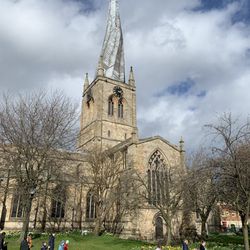
St mary's Church Photos


Recommended Reviews - St mary's Church
Start your review...



18 years ago
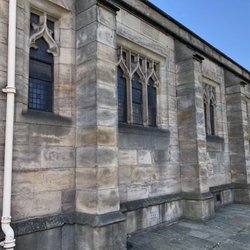
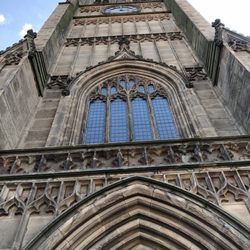
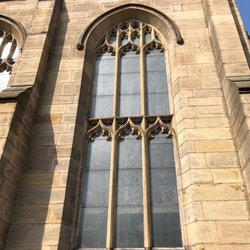
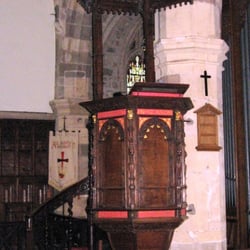
St Mary's is a Minster..known as a mother church. Often known as Stow-in Lindsey. I find this church absolutely wonderful and was fascinated by many quirky things the best being what looks like a viking ship scatched onto a wall.so The church contains some ancient graffiti. It is believed that the rough scratching of this oared sailing ship dates from the 10th or 11th century. It is the earliest representation of such a vessel in England. In Roman times Stow was known as Sidnacester and lies along the B1241 road. Its large parish church named Minster Church of St Mary, Stow in Lindsey (known locally as Stow Minster), which is one of the oldest churches in the United Kingdom. In 1091 Remigius (of Lincoln Cathedral) re-founded it as an abbey and brought monks to it from Eynsham and described the church as having been a long time deserted or ruined. In five years his successor had transferred the monks back to where they came from and St Mary's became a Parish Church. Visitors to St Mary's Church in Stow (8 miles West North West of Lincoln) may wonder why such a large church is set in such a small village. Without doubt this church is of major architectural importance. Though Stow may have been larger than it is now it has always been a small hamlet yet it was the centre of a large block of estates belonging to the Saxon Bishops of Dorchester on Thames.In about 975 Bishop Aelnorth built a church to serve as a Mother Church or Minster for the Lincolnshire part of his diocese. It was a sort of Cathedral, (like Beverley Minster although that is much grander) because part of the bishops household of priests lived at Stow and administered this part of the diocese. The memory of this period gave rise to the tradition that Stow was the Mother Church of Lincoln Cathedral. It may be legend but it is possible that a Saxon church stood hereabouts even before Aelfnoth's building. As St Etheldreda (c.630-679) rested at a place called ' Stow ' while travelling from Northumberland to her eventual refuge at Ely. Her ash staff, planted in the ground, is said to have miraculously burst into leaf to provide her with shelter. The church of 'St Etheldreda's Stow ' (later renamed Stow St Mary) was built to commemorate the event at a later date. This legend is illustrated in a Victorian stained glass window high up on the north wall of the chancel, to the left of the altar. The ' Stow ' where the saint rested, however, may in fact have been a place of the same name near Threekingham in southern Lincolnshire . Bishop Aelfnoth's work can be seen in the lower parts of the transepts and of the crossing. However his church was destroyed by fire, the debris of which, including molten lead, has been discovered under the floors. The church was rebuilt by Bishop Eadnoth II (1034-1050). The fabric shows evidence of a number of fires Later it was enriched and endowed by Leofric, Earl of Mercia and his well-known wife, Lady Godiva. YES she was real! But parts fell down until in the fifteenth century a new tower was built to replace the Saxon one, which was partly demolished, and the roofs lowered. By the middle of the nineteenth century the condition of the church was deplorable, and it was even suggested that it should be demolished and a 'convenient parish church' built in its place. Revd. George Atkinson, raised money for repairs. The church was thoroughly restored by the architect, John Loughborough Pearson, who was later to design Truro Cathedral. There have been a lot of changes since, in fact the church fell into disrepair at some point in its history. Finally the Victorians completely re-furbished the Church. (not always good) They even placed a new roof line on the building. A new Vestry was added in the early 1990's and skeletons and a 13th century floriated Cross slab of limestone was found in pieces. Just my thought but maybe it was broken up at the reformation as many altar stones are found as door steps or bridges across streams. Well worth a visit and also go to St Edith, Cotes..up the road to see the rood screen. read more

18 years ago