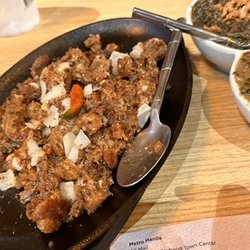
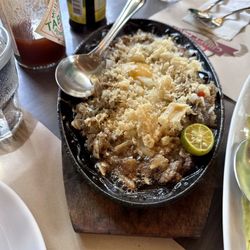
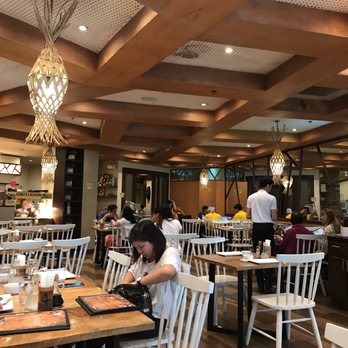
Hukad Photos


Recommended Reviews - Hukad
Start your review...


9 years ago
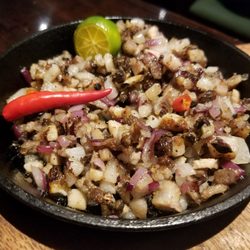
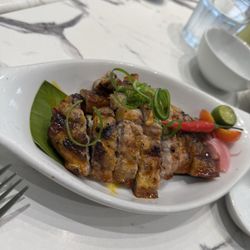
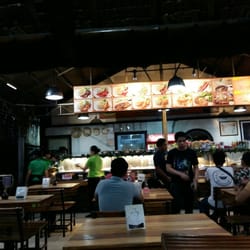
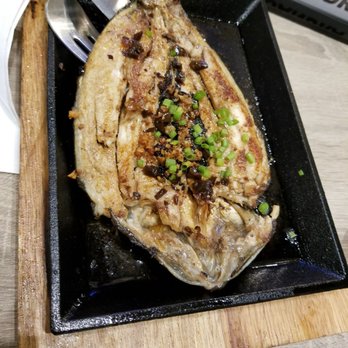
Came here to eat while visiting the venice mall. Its right on the outskirts of the mall not accessible from the inside. Theres plenty of seating inside and tv screens showing the games. Their known for their lechon but unfortunately i didnt have any. Rather we tried their sinigang, bangoose, fried calamari and their eggrolls with a side of white rice. Food was ok. Calamari was crispy, the eggroll with the sauce was flavorful. The fish had no mest to it, but what i had of it tasted pretty good. The soup was warm and hit the spot. The reason for a lost of a star was because they got out soup order wrong. Therr was no protein in it. And when we asked for the meat in it, they actually made an entire new order that we didnt need cuz we already had the soup. Thankfully they didnt charge us for the second soup. Service was slightly slow in that they kept foegetting our requests, and we had to ask several times for the same thing. The food was good though but i am excited to try other food spots there as well read more




8 years ago
The food was good! I enjoyed the adobong pusit, my parents enjoyed their lechon and bulalo soup. The staff needed to be more attentive - we initially ordered 1 unli rice and we were given plain rice. Turned out the servings were big so we just got that plain rice and cancelled their unli rice. They also didnt have regular coke. read more


10 years ago

10 years ago
More info about Hukad
North Triangle
G/F, Trinoma Mall
Quezon City, 1100 Abra
Philippines
Quezon City
Directions
02-6215334
Call Now
Hours
Payment methods
Food & Alcohol
Indoor Amenities
Outdoor Amenities
Other Amenities