Cancel

    Open app

    Search

    Haunting Tales - Lexington's Ghost Tour

    4.7 (3 reviews)
    Closed Closed

    Haunting Tales - Lexington's Ghost Tour Photos

    More like Haunting Tales - Lexington's Ghost Tour

    Recommended Reviews - Haunting Tales - Lexington's Ghost Tour

    Your trust is our priority, so businesses can't pay to alter or remove their reviews. Learn more about reviews.
    Yelp app icon
    Browse more easily on the app
    Review Feed Illustration

    3 years ago

    Helpful 0
    Thanks 0
    Love this 0
    Oh no 0
    Photo of Rosie F.
    38
    45
    15

    7 years ago

    Helpful 0
    Thanks 0
    Love this 0
    Oh no 0
    Photo of Josh B.
    123
    5
    0

    7 years ago

    Helpful 0
    Thanks 0
    Love this 0
    Oh no 0

    Verify this business for free

    Get access to customer & competitor insights.

    Verify this business

    Lexington Carriage - Keats and Yeats are on your side / A dreaded sunny day / So I meet you at the cemetery gates

    Lexington Carriage

    4.7(13 reviews)
    0.2 mi

    What a great way to explore downtown Lexington. Trotting down the street, hearing the clip-clop of…read morehorse hooves on the cobblestone, seeing important buildings and monuments, hearing the tour guide talk about the history of this Virginia town -- it's all very romantic. The horses are well-taken-care of and seem happy. No beefaroni in these horses' diets. But the horses who pulled out carriage did like getting apple Pop Tarts as treats, which was cute. The carriage tour goes all around downtown Lexington, and we saw the old hospital, cemetery, two universities, historic houses and lots more. The pace of travel is slow, so you have lots of time to look around and ask questions. Our tour guide was very knowledgeable about the history of Lexington, and answered all of our questions. Afterward, you get to pet the horses and take pictures with them. I would definitely recommend this carriage tour to someone visiting Lexington for the first time.

    Plan Ahead - Beautiful Town, But Limited Carriage Availability…read more I was really looking forward to exploring the downtown area by carriage--it looked like such a charming way to see this quaint and lovely town. Unfortunately, I didn't realize the carriage service closes early and requires advance tickets. They only have one carriage, so it's not like other cities where multiple carriages run in rotation and you can wait for the next one. It was disappointing to miss out, especially since the experience seemed fantastic. I'm sure it would've been a 5-star ride had I been able to go. Just a heads-up to future visitors: book ahead if you're hoping for a carriage ride--don't count on just walking up.

    Photos
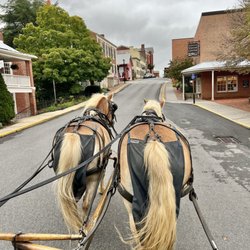
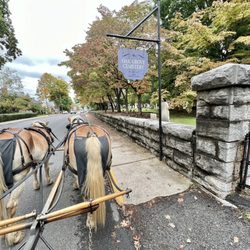
    Lexington Carriage - Trotting down the road

    Trotting down the road

    Lexington Carriage - Whatta view

    Whatta view

    Lexington Carriage - Off we go

    See all

    Off we go

    Museums At Washington And Lee University

    Museums At Washington And Lee University

    4.7(19 reviews)
    0.2 mi

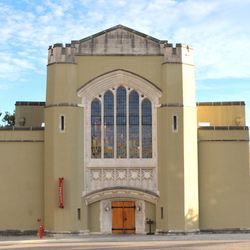
    This university has a unique historical niche. The name really is what it sounds like, and the…read moreuniversity has a several exhibitions memorializing George Washington and Robert E. Lee. Most notable is the university's chapel and Lee memorial, which had a volunteer out to explain the history (and the fact that the museum was being renovated so there wasn't a ton to see). Several other buildings were within walking distance, including one which housed exhibitions of porcelain, and some interesting pictures of mines with brightly colored chemicals. The individual museums were not large, but the combined experience is worth stopping to take a look at. There is no charge to enter and there is a small circle dedicated to museum parking.

    Absolutely jaw dropping experience. I am a hugeeee civil war buff and seeing this in person was…read moreamazing. You enter the chapel doors and see Lee's bodice. You are able to walk around it and take pictures. Downstairs is his crypt and office. And outside the door downstairs is all the information about Traveller! Here's some history! It was 1861, Lee was in the mountains of West Virginia commanding a small Confederate force that would suffer defeat in the Battle of Cheat Mountain; this earned him the nickname "Granny Lee" because people thought he was afraid to shed blood. Here he met Captain Joseph M. Broun, quartermaster of the 3rd Infantry of Wise's Legion, mounted on a steed that would eventually become Lee's famous warhorse Traveller. The original owner named the horse Jeff Davis after the Mississippi senator who would become President of the Confederacy; but when Broun bought the horse for military service he renamed him Greenbriar. Before Lee had an opportunity to acquire the horse, he was sent on orders to the Palmetto State. Captain Broun's company was also later transferred to the Lowcountry. As fate would have it, he met Lee again at Pocotaligo. Immediately recognizing "his colt," the general still showed such a fancy for the horse that the junior officer realized he had little choice but to offer it up as a gift. Lee declined, saying he would gladly purchase the animal. Broun let Greenbriar go for the same price at which he purchased him: $175, or approximately $4,500 in today's currency, but the General added a tip of $15 to compensate for the depreciation of Confederate money. Lee named him Traveller. At the 2nd Battle of Bull Run, Traveller spooked and threw his master down against a stump. Lee broke both hands and finished out the campaign in an ambulance, or with a courier leading his horse. But, more generally, Traveller was noted for bravery and, at times, soldiers had to literally surround him and grab the reigns to keep him from plunging ahead with their commander onto the front lines of battle. In his final years, Lee served as President of Washington College in Lexington, Virginia. Traveller was allowed to graze about the campus, but so many star-struck students stole hairs from his mane and tail that Lee complained in a letter to his daughter, "He is presenting the appearance of a plucked chicken." In the fall of 1870, Lee suffered a stroke and died two weeks later. For the funeral procession, Traveller was saddled up and decked out with black crepe. He led along behind the ammunition cart bearing Lee's casket. Within a year, Traveller stepped on a rusty nail and contracted tetanus. He was shot to end his misery. Traveller was initially buried behind the main buildings of the college, but was unearthed by persons unknown and his bones were bleached for exhibition in Rochester, New York, in 1875/1876. In 1907, Richmond journalist Joseph Bryan paid to have the bones mounted and returned to what was now Washington AND Lee University. The skeleton was periodically vandalized there by students who carved their initials in it for good luck. In 1929, the bones were moved to the museum in the basement of the University Chapel, where they stood for 30 years, deteriorating with exposure. Finally in 1971, Traveller's remains were buried in a wooden box encased in concrete next to the chapel a few feet away from the Lee family crypt inside, where his master's body rests. The stable where he lived his last days, directly connected to the Lee House on campus, traditionally stands with its doors left open; this is said to allow his spirit to wander freely. When the 24th president of the university violated this tradition, he caught so much flack from the community that he had to have the doors repainted in a color he called "Traveller's Green," just so he could redeem himself.

    Photos
    Museums At Washington And Lee University
    Museums At Washington And Lee University
    Museums At Washington And Lee University

    See all

    Stonewall Jackson House - The Jackson House

    Stonewall Jackson House

    4.3(32 reviews)
    0.0 mi

    I've visited here thrice over 2 decades and learn something new every time. I went on a Saturdsy in…read moreearly April was was unreasonably warm at 80 degrees. Our tour guide Wanda was informative. A family with 4 children between ages 3 to 8 were the others on my tour. The parents indicated that they were being home schooled which to me explained their good behavior and genuine interest in history. Understandably, the presentation was geared to the 4 children which I was fine with. The adjoining museum holds a surprising amount of Jackson paraphernalia, and the attendants were most helpful. Heard of Stonewall Jackson but interested in Major Jackson the family man and husband? Then check this out!

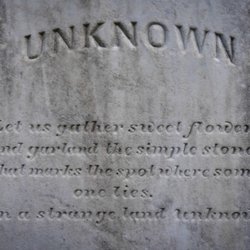
    I did not visit the house but I stopped and reviewed this wonderful historical marker that is…read moreplaced outside. It's worth pointing out that we're in the south and Virginia fought for the Confederacy which may be a problem for some. The marker has the same text on both sides, reading "Virginia Military Institute instructor Maj. Thomas J. Jackson (1824-1863) and his second wife, Mary Anna Morrison (1831-1915), bought this house in 1858. Built ca. 1801, this typical middle-class dwelling was the only house Jackson ever owned. Enslaved African Americans Amy, Hetty, George, Cyrus, and Emma worked and lived on the property. Jackson left Lexington in April 1861 to fight for the Confederacy. Later known as "Stonewall," he became a lieutenant general. Mary Anna Jackson moved to North Carolina but owned this house until 1906, when it became the community hospital. The house has been a museum since 1954 and is listed on the National Register of Historic Places." This is marker number Q-11-a and was erected by the Department of Historic Resources in 2021. [Review 19589 overall - 1426 in Virginia - 560 of 2023.]

    Photos
    Stonewall Jackson House - A painting bought in Niagara Falls where he'd honeymooned

    A painting bought in Niagara Falls where he'd honeymooned

    Stonewall Jackson House - The Jackson House Historical Marker, Lexington

    The Jackson House Historical Marker, Lexington

    Stonewall Jackson House

    See all

    VMI Museum - We are in Memorial Hall, 2nd Floor.

    VMI Museum

    4.6(7 reviews)
    0.5 mi

    Having been here thrice over a the previous 2 decades, there is always something interesting to…read moresee, yet I must admit that my favorite is always Jackson's stuffed horse, Little Sorrel, Jackson's raincoat when shot, and his uniform and other belongings. There is a small bookstore with a decent selection of Civil War books, VMI merchandise, etc. I'd purchased the ticket at the Jackson House which I'd visted earlier. Overall, it was a memorable experience and I'll probably return on a future visit

    Omg this is such a gem! Please keep this museum open and alive! Between little Sorrel and Stonewall…read moreJackson's raincoat, I was in absolute awe! Here's a lil history lesson: "Little Sorrel" A Morgan horse, 15 hands tall, captured in Harper's Ferry by Stonewall Jackson's army in 1861. Originally intending to give the horse to his wife, Jackson paid the quartermaster $150 for the gelding, naming him "Fancy." But after riding the horse, Jackson found the animal's gait so pleasing he remarked, "A seat on him was like being rocked in a cradle." Deciding to keep the horse for himself, it quickly became known as "Little Sorrel" once Jackson began using it as his regular mount. Jackson was riding Little Sorrel when wounded on May 2, 1863 at the battle of Chancellorsville. The horse remained on the battlefield after Jackson was removed and was later found by 2 artillery soldiers, neither of whom recognized it as Jackson's horse. One of the soldiers rode the horse for several days until it was discovered to be Little Sorrel, at which point the horse was turned over the Gen. J.E.B Stuart. He in turn gave the animal to Anna Jackson, who took Little Sorrel with her to North Carolina to live at her father's farm. In 1883, Anna donated Little Sorrel to the Virginia Military Institute (VMI), where the animal was permitted to leisurely graze the parade grounds for the next two years. The horse was then relocated to the Confederate Soldiers' Home in Richmond, Virginia, where he died at the age of 36 in 1886. As s Little Sorrel advanced in age, he couldn't stand. Soldiers fabricated a sling to support the gelding when he had visitors; however, this sling broke which sent Little Sorrel tumbling to the ground where he broke his neck. Following the animal's death, the Soldiers' Home contracted a taxidermist named Frederic Webster to preserve Little Sorrel's remains. Webster mounted the hide on a framework of plaster, keeping the animal's skeleton for himself "as part payment for my service," and donated to the Carnegie Institute in Pittsburgh, in 1903. In 1949, the hide was returned to VMI where it remains on display to this day. That same year, the horse's skeletal remains were also donated to VMI, but stayed in storage until 1997. On July 20, 1997, 111 years later, Little Sorrel's bones were cremated and ceremoniously buried in a grave in front of Stonewall Jackson's statue. Dirt had been gathered from every battlefield where master and mount had fought, and spectators were allowed to throw a handful of it into the faithful horse's grave, which was surrounded by wreaths of apples and carrots. He is one of only two horses ever to be preserved from the Civil War. The other is Sheridan's Winchester.

    Photos
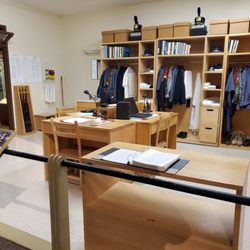
    VMI Museum - Replica of VMI Barracks room.

    Replica of VMI Barracks room.

    VMI Museum
    VMI Museum

    See all

    Haunting Tales - Lexington's Ghost Tour - historicaltours - Updated May 2026
    Loading...
    Loading...
    Loading...