I. still believe I could've been a good lawyer, but Cardozo doesn't give it's ENTIRE student body…read more enough hands on trainng,wants way too much tuition and doesn't care about grads who aren't placed in lucrative jobs immediately upon graduation-'-, except to improve the schools ratings and pay more $ to the place that treated them like a number.
When I went, the school and library were both CLOSED on the sabbath, and there was not yet an internet letting me work remotely (Back then, West Law was on something called Meade Data General), so remote research was impossible)
Eva Hanks and Steven Nemerson showed up to class drunk on a regular basis.
I made the mistake of briefing every case, reading hornbooks, taking hindreds if not thousands of pages of notes, and, upon the advice of faculty, eschewing Gilbert's and Emmanuels' study guides.
If your professor is enebriated or indifferent, then those study guides are not just your best option-- THEY ARE YOUR ONLY OPTION.
When the exam is given, the results depend upon 1.how able you are to rip apart a hypothetical and 2. what you have committed to short term memory. If you don't have time to review your notes, then you might as well not have taken any.
This is especially true if you try to put together a study group from people you just met but didn't "buy in". Others formed a group from friends they knew from college or atleast before law school. I did all my outlines from briefs and notes taken in class and was at a competitive disadvantage with groups who had more time to study other peoples' work. CRAM, REGURGITATE AND MOST LIKELY FORGET HALF OF IT.
I asked why we don't have more document preparation classes, and I was told "this is not a trade school". Why not combine the two: Theory and practice? (There was nothing theoretical about making the tuition payments while drivng a cab and waiting for an eviction notice!)
When I went, Cardozo had a ONE CREDIT CPLR COURSE, while St. John's devoted SIX credits to it. The CIVIL PRACTICE LAWS AND RULES are essential, and a prerequisite to motion practice and litigation in NYS.
They were treated as an afterthought-- as was a TWO credit UNIFORM COMMERCIAL CODE course, supposedly encompassing NINE ARTICLES including Sales, Secured Transactions, Financial Contracts.
The beginning of what was the schools' INNOCENCE PROJECT (which I admire) selected law review and students who had previous experience. So where was I supposed to get my experience?
The placement office catered to law review,entertainment law journal members, and the rest of us got to pour through loose-leaf binders. My first job after graduating after securing my own internship after 1L? Homeless.
Go in with your eyes open, have connections, and a study group beforehand, buy Hornbooks, Gilbert's and Emmanuel's before you enter. I amassed $34k in debt, which is 2/3s of one year's tuition today. If they don't help place you, it might as well be $10 million
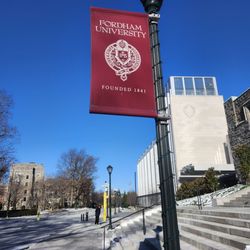
Remember, locally, you are competing against NYU, FORDHAM, COLUMBIA, and BROOKLYN, which all have national reputations and active, helpful, well placed alumni. These schools, like St. John's have a HIGHER BAR PASS RATE. I was told that Cardozo didn't emphasis state specific black letter law, just "multistate". That's great if all grads could be absorbed into faculty positions.
You may think you are bottom second tier, or top third tier, but you have no more "pull" than Hostra, New York Law School (which isn't even affiliated with a university) or Touro (which atleast prepares you for practice). Every year the school invites it's orphaned alumni to pay to attend a function at the Mandarin Oriental, or some other swanky location to simultaneously honor a grad who used his father's money to set up a solo practice (because HE couldn't be placed) and ask us to talk up the school and contribute to a fund to pay public interest internship salaries for current students. The school stops short of admitting that it can't get them a decent paying Summer internship.
Remember, these schools all get paid UPFRONT and risk NOTHING .
The amount of debt you will graduate with, not offset by the lucrative internships offered to Columbia 1Ls and 2Ls, equals half the price of a house in many parts of the country. That maybe a house you pay for but can't move into.
If you pursue a CPA, which does not require a graduate degree, or have a STEM major, you are much better off.
Even accounting and STEM majors can get a good job before having to get a professional license. Accounting grads can become certified auditors, and their employers may pay for the prep course.
A big four accounting firm might pay for you to pursue a JD at night.
I hope this third-rate corporate mill has opened up a night school.