Cancel

Open app

Search

Floods Photos

Recommended Reviews - Floods

Your trust is our priority, so businesses can't pay to alter or remove their reviews. Learn more about reviews.
Yelp app icon
Browse more easily on the app
Review Feed Illustration

18 years ago

Helpful 0
Thanks 0
Love this 0
Oh no 0

Verify this business for free

Get access to customer & competitor insights.

Verify this business

The Pilgrims Fathers Stone

The Pilgrims Fathers Stone

5.0(1 review)
28.7 mi

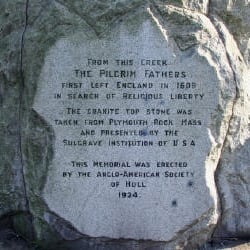
This is a memorial stone dedicated to the Pilgrims going to America…read more In 1608 the attempt to leave for Holland was made, this time from Killingholme Creek near Immingham where a Dutch ship waited. Men were ferried aboard first, but before the women and children could do so an armed crowd intervened. The Pilgrim Fathers left from the bank of the Humber at a place called Immingham Creek to Holland in 1608. The actual spot was marked by a memorial which was erected in 1924. The granite top stone of the memorial was taken from Plymouth Rock, Mass and presented by the Sulgrave Institution. The memorial was erected by the Anglo-American Society of Hull. The memorial became surrounded by industry as the Immingham dock area expanded and was moved in 1970 to its present site in a small park opposite the church in Immingham. According to Alan Tailby in his book the Pilgrims did hire a boat to take them to Holland from Boston in 1607 but the skipper, after taking their money, betrayed them to the authorities and they were imprisoned for a time. Many of the streets in Immingham are named after the Pilgrims: e.g. Clyfton Crescent and Brewster Avenue. Some 22 million Americans claim descent from the Pilgrim Fathers who sailed in the Mayflower and related crossings. The memorial stone, erected in 1924, on the estuary, was moved in 1970 to near St. Andrew's church because of re-development.When I worked in the archeology department I remember listing this as an SMA. (Sites and Monuments). Many Americans visit it each year.

The Manor of  Scrivelsby - Edward Dymoke

The Manor of Scrivelsby

4.0(1 review)
15.6 mi

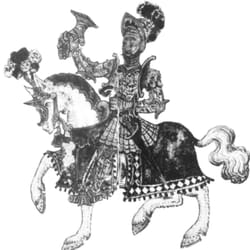
The Manor is an area although there is a real Manor House I don't know if it the same one. It is…read morehowever historically fascinating as this is where the Kings Champions came from. Queen's Champion - Origins: The office was originally granted to Robert Marmyon, along with the castle and manor of Tamworth and the Manor of Scrivelsby in 1066. From then until the nineteenth century the officer's role was to act as champion for the King at his coronation, in the unlikely event that someone gainsaid the new King's title to the throne. The Champion was required to ride in full armor into Westminster Hall during the coronation banquet, escorted by the Earl Marshal and the Lord High Constable, all in full dress, robes and coronets, and await the challenge to all comers. The King himself could not fight in single combat against anyone except an equal. This trial by combat remained purely ceremonial and had a central place in the coronation banquet. By 1377 the male line of the Marmyons had died out, and in that year the office of King's Champion at the coronation of King Richard II was fulfilled by Sir John Dymoke, who had married Margaret Marmyon, the heiress of the Marmyon family, and so held the Manor of Scrivelsby.later years, the Garter King of Arms read out the challenge, and the Champion threw down the gauntlet at the entrance to Westminster Hall, then again in the middle of the Hall, and lastly at the foot of the Throne, each time repeating the challenge. Each time the gauntlet was recovered by Garter. The Champion was rewarded with a gilt, covered cup, the King or Queen Regnant having first drunk to the Champion from it. It is alleged that the challenge was actually accepted in 1689 by an old woman, supposedly a noted Jacobite swordsman in disguise, who challenged the Dymoke of the day to combat next day in Hyde Park. There is no evidence to support this claim. Equally, rumour reported that in 1764 a white lady's kid glove fluttered down into the Hall, supposedly from a Jacobite. If the Champion fought, and won, he got as his fee the armour he wore, and the horse he rode (the second best in the Royal Mews), both of which were on loan. Charlie Dymoke (gardener)claims to be a decendant. From Wikipedia: Dymoke, the name of an English family holding the office of king's champion. The functions of the champion were to ride into Westminster Hall at the coronation banquet, and challenge all comers to impugn the kings title (see Champion). The earliest record of the ceremony at the coronation of an English king dates from the accession of Richard II. On this occasion the champion was Sir John Dymoke (d. 1381), who held the manor of Scrivelsby, Lincolnshire, in right of his wife Margaret, granddaughter of Joan Ludlow, who was the daughter and co-heiress of Philip Marmion, last Baron Marmion. The Marmions claimed descent from the lords of Fontenay, hereditary champions of the dukes of Normandy, and held the castle of Tamworth, Leicestershire, and the manor of Scrivelsby. The right to the championship was disputed with the Dymoke family by Sir Baldwin de Freville, lord of Tamworth, who was descended from an elder daughter of Philip Marmion. The court of claims eventually decided in favor of the owners of Scrivelsby on the ground that Scrivelsby was held in grand serjeanty, that is, that its tenure was dependent on, rendering a special service, in this case the championship.

Photos
The Manor of  Scrivelsby

See all

Crowland Bridge

Crowland Bridge

5.0(1 review)
49.0 mi

Trinity Bridge, Crowland, England was built 1360. This is an unusual 3-way bridge that now sits…read morehigh & dry in the center of Crowland. Sure enough, the River Welland now flows on a dead straight course to the west of the town along what is termed the Deeping High Bank. The Trinity or Triangular Bridge is said to be unique. Certainly, it is unusual and rather special. It stands in the middle of the town, at the junction of North, South, East and West Streets. Before the town was bypassed by the A1073 leading south to Peterborough, it was a familiar landmark for through traffic. It holds at least one mystery the identity of its mysterious carved stone figure, which people still argue about. The story of the bridge goes back to the 7th century when this part of the country was very different a time when England was divided into many kingdoms and when lonely saints found their way to remote islands. Some say it is King Ethelbald, complete with royal orb. Far more likely is that the statue is a representation of God or Jesus holding the world in His hands. If so, it bears a striking resemblance to statues on the surviving west front of the abbey and it is more than likely taken from there and placed in a more lowly position on the bridge. The current bridge dates to the 14th century (built between 1360 and 1390) and replaced previous wooden bridges but the earliest known mention of the bridge is by Ethelbald of Mercia in 716. The early bridge was probably made of timber, and not a trace survives. What we see today has an odd triangular design it has three arches but is one structure hence its name 'Trinity' or three in one. This came about because in those days it stood at the point where the River Welland divided into two streams. One led past the abbey at the water gate on the south side of the abbey site and the townspeople used it for sanitary and sewerage purposes. It drained into the River Nene. The main branch of the Welland meanwhile carried on northwards towards Spalding. These waterways were eventually covered over by the current street pattern. Arched over, they now serve as sewers. The bridge at one time had a large cross at its apex. It may have been used as a platform by preaching monks and as a centre of devotion for pilgrims approaching the abbey. During the Middle Ages it had gentle slopes leading upwards in more recent times steep steps have been substituted. If you are close by it is well worth taking time out to see the bridge and the abbey.

Photos
Crowland Bridge
Crowland Bridge

See all

Oxburgh Hall / National Trust - Near the entry gates/walkway to the hall

Oxburgh Hall / National Trust

5.0(1 review)
52.9 mi

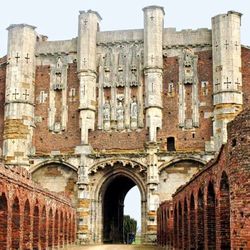
Oxburgh Hall is a place that shouldn't be missed when visiting the area. It sits within a moat and…read moreis a great example of English brick gatehouses of the 15th century. It was originally built circa 1482 by Sir Edmund Bedingfeld and has been continuously occupied by the family ever since. There have been several upgrades as well over the years...centuries. There are Victorian additions that were added later in the 1800's like the terracotta chimneys and windows along with amazing gardens to name a few. It has always been used as a home, and not a fortress. The home has seen the War of the Roses, survived a fire and near demolition prospects and still stands. It is truly an amazing place to visit and I'm happy it's under the care of the National Trust. The hall is known for its "Priest hole". In the event of a raid a priest could hide in the wall and couldn't be found. This is open to the public, whereas most like it are closed. That makes this is a fantastic historical opportunity alone. I must say, it is a little unsettling to go into the hole and you definitely get the idea of how the priest must have felt. The home is also known for the needlework on display by Mary, Queen of Scots while imprisoned in England and Bess of Hardwick. You can also tour the Kings Room where King Henri VIII stayed when visiting. Photos are not allowed inside...darn it, but you are welcome to take pictures of the grounds and such. You can obtain books and postcards in the gift shop. This review was overdue and I simply can't believe that I didn't finish it. But I'm even more surprised that no one else has reviewed this place when it is so extraordinary. It shouldn't be missed if you are in the area. If you are a history buff like us, then you'll truly enjoy it. Gee Whiz info...the name is pronounced: "OX bru" Note: I also recommend becoming a member of the National Trust. They do great things and keep history alive. Whether you are from or live in the UK or just visiting from outside the country...it's well worth it and goes to a great cause...it's a win/win for all!

Floods - landmarks - Updated May 2026

Loading...
Loading...
Loading...