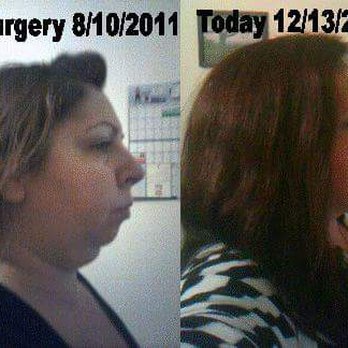
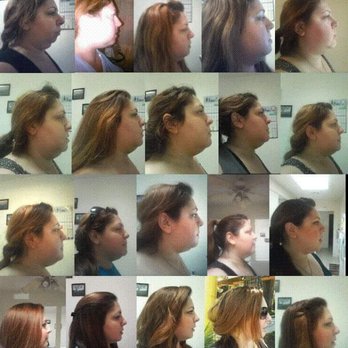
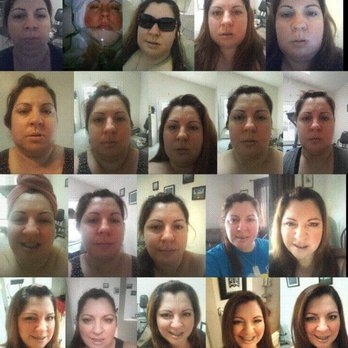
I want to be fair because there are things Dr. Stringer clearly does well. From a purely surgical/mechanical standpoint, my healing has been excellent. At about 3 months post-op my bite is good, I have had no infection or major healing complication, and I can eat almost anything except very hard foods. He is clearly a very experienced surgeon, which is probably why he is so highly regarded.
Unfortunately, my experience with the aesthetic outcome and postoperative communication has been extremely disappointing.
Before surgery, there was essentially no meaningful discussion about what my lower jawline could look like afterward. At my first visit he told me he would "straighten out" my jawline. At no point was I warned that I could be left with large gaps/step-offs along the inferior border of my mandible or an irregular, visibly bumpy jawline that might later require contouring, grafting, fillers, or custom implants to restore a smooth lower border.
Inferior-border irregularities and step-off deformities after mandibular osteotomies are recognized issues in maxillofacial surgery. Had I been told my anatomy or planned movements could leave me with this result, I would have wanted to discuss how to minimize it and what options would exist afterward. If I had been told he does not perform contouring or address these defects, I would have seriously considered another surgeon.
When I brought up the uneven, bumpy jawline during follow-ups, I was told that "nobody has a straight jawline." I found that extremely dismissive. Of course a natural jawline is not ruler-straight, but a natural jawline also does not have obvious postoperative step-offs and contour irregularities. Instead of acknowledging what I was seeing and discussing solutions, I felt as though I was being made to believe it was normal anatomy or that I was unreasonable for caring about it.
I have since consulted another maxillofacial surgeon who specializes in contouring and custom implants. He told me these step-offs are common and can be treated with contouring, implants, or fillers. That is the kind of comprehensive approach I expected: not just fixing the bite and airway, but also addressing the visible facial result. I am not asking to look like Brad Pitt. I am asking for a normal-looking jawline. The frustrating part is that I may now have to spend thousands upon thousands of dollars elsewhere to address an aesthetic problem I was never properly warned about.
Dr. Stringer has not offered to correct the contour problems himself and told me he has never done contouring. His position is essentially that "muscle wins over bone" and things will smooth out over time. Some soft-tissue improvement may happen, but my gaps are close to 13 mm on each side. From what I have read in the medical literature, large gaps do not always remodel into a smooth inferior border, and residual step-offs can remain.
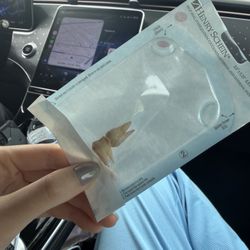
There is also a separate issue on my right side involving a loose bone fragment that now projects below the inferior border of my jaw. A resident worked on that side. I cannot know exactly what happened in the OR, but I do know the fragment was visible on my early postoperative imaging and was not discussed with me. Dr. Stringer later acknowledged it and offered to remove it, but I declined because I did not want another procedure while still healing.
What bothers me most is that something I could later feel and clearly see on imaging was not identified and explained to me earlier. To this day, we have never sat down together and gone through the CBCT in detail. In contrast, the surgeon I saw for a second opinion reviewed my scans with me on a large screen, explained the anatomy, and discussed treatment options in detail.
My postoperative visits with Dr. Stringer have also been some of the coldest and shortest medical follow-ups I have experienced. Most visits consist of checking my bite and little else. There has been very little discussion about how I am healing, eating, feeling, whether I am happy with the result, or concerns about my jawline, chin, swelling, numbness, or soft tissue. For surgery this major -- surgery that changes both function and a person's face -- I expected far more comprehensive follow-up. I have had to dig through medical literature myself just to understand what I am seeing.
Dr. Stringer seems extremely focused on skeletal movement and whether the bite works. From that perspective, I understand why he is considered technically skilled, and my healing has honestly been remarkably smooth. But orthognathic surgery does not happen underneath an invisible face. Jaw shape, inferior-border contour, symmetry, and the overall facial result matter enormously to the person who has to live with it.
My experience is that the functional side of surgery was handled very well, but the aesthetic consequences were not adequately discussed beforehand and my concerns afterward have not been taken seriously. read more