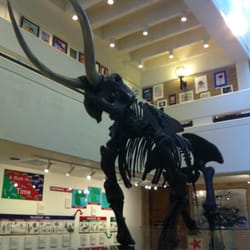
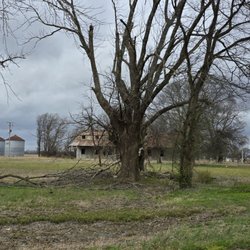
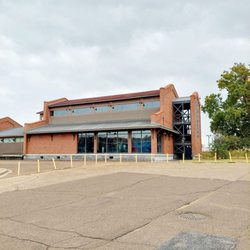
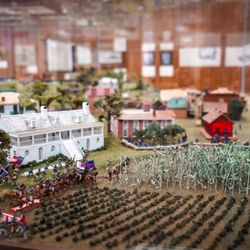
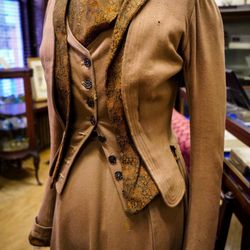
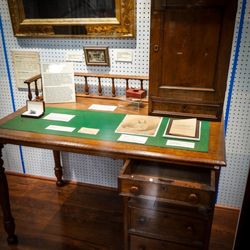
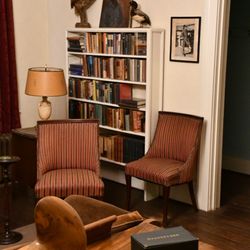
Absolutely loved this museum. So much history, especially Civil war history which is my favorite!…read moreThis is definitely a diamond in this town.
Ok,... random history lesson to go along with it!
Thomas Carmichael Hindman, Jr. was a voice for Arkansas's secession and was essentially Arkansas's most prominent Fire-Eater. When Arkansas voted 65-5 to secede in May 1861, Hindman resigned from the U.S. Congress and recruited a regiment in Helena. He requested the state government for muskets, clothing, and 10 days of rations so that his men could "fight for our country." By September 1861, Hindman was promoted to the rank of brigadier general and soon participated in the disastrous Kentucky Campaign, followed by the Battle of Shiloh, where he was slightly wounded.
After his recovery, Hindman was promoted to Major General and appointed commander of the Trans-Mississippi Department to prevent an invasion by the Union troops led by Samuel Curtis. Events in Arkansas had taken a terrible turn, and when Hindman arrived in Little Rock, Arkansas, he found that his command was "bare of soldiers, penniless, defenseless, and dreadfully exposed" to the Federal Army that was approaching.
Hindman commenced a campaign of misinformation designed to mislead Federal authorities about the strength of the state's defenses. He also diverted Texas troops bound for Virginia for use in the defense of Arkansas. This confused the Federal authorities, causing them to divert from the capital and instead move to Helena.
By August 1862, the authorities in Richmond decided to replace him (due to locals and political opponents complaints) with Theophilus H. Holmes. Hindman convinced Holmes to give him a field command in northern Arkansas. Hindman managed to intercept the Federal army while it was divided into 2 parts. Rather than attack the divided pieces, Hindman entrenched himself at Prairie Grove, Arkansas, allowing the Federal forces to recombine and assault him.
After Prairie Grove, Hindman was transferred across the river and participated in the Battle of Chickamauga alongside his friend Pat Cleburne. After being wounded in the neck at Chickamauga, Hindman and his legion continued to fight along with the Army of Tennessee against General William Tecumseh Sherman, across north Georgia from the First Battle of Dalton to the Battle of Kennesaw Mountain. On July 4, 1864, at Kennesaw Mountain he was struck in the eye by a tree limb and fell off his horse. Hindman suffered severe injuries that left him unfit for service and made him have to recouperate. Afterwards, he applied for a transfer to the Trans-Mississippi Department. His request was denied, but Jefferson Davis offered a leave of absence until he had fully recovered from his "physical disability". Hindman set out for Texas and arrived in San Antonio and settled there with his family for the time being.
By May 1865, Confederate generals in New Orleans signed a document detailing terms of surrender. Hindman refused to surrender and, along with many other ex-Confederates, he crossed the Rio Grande into Mexico and sought asylum. He engaged in coffee planting and attempted to practice law. By April 1867, he was confident enough to return to Arkansas and apply to President Andrew Johnson for a pardon. Hindman's application was one of the few denied.
At around 9:30 on the night of September 27, 1868, Hindman was assassinated by unknown assailants who fired through his parlor window while he was reading his newspaper with his children. The musket shots hit Hindman in the jaw, throat and hands, and he died 8 hours later due to significant blood loss, ending the life of Arkansas' highest ranking Confederate military officer.
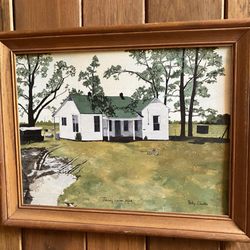
Before his death, Hindman gave a farewell speech from the porch of his house. He told listeners to "unite their courage and determination to bring peace to the people." "I do not know who killed me; but I can say, whoever it was, I forgive him." "I forgive everybody, and hope they will forgive me." Afterwards, he was too weak to continue speaking, and he sat down on a lounge. He remained there until he died early next morning. Hindman's assassins were never caught.