Cancel

    Open app

    Search

    Circo e Villa di Massenzio

    4.5 (2 reviews)

    Circo e Villa di Massenzio Photos

    Circo e Villa di Massenzio Reviews in Other Languages

    Verify this business for free

    Get access to customer & competitor insights.

    Verify this business

    Ostiense District Street Art District - Centrale Montemartini (pic taken in 09/30/2023) museum located in the Ostiense district

    Ostiense District Street Art District

    4.8(6 reviews)
    3.8 kmTestaccio, Ostiense

    You know what they say.."Rome more, worry less" ;) and this is exactly what we did (my hubby and I)…read morewhile staying in the Ostiense district when visiting Rome (Sept. 29,2023 - Oct. 4,2023) for the 1st time. We stayed at an Airbnb located on Via Del Porto Fluviale & just wanted to share a few helpful tidbits of the nearby sights - 1.) street art & murals - There are so many awesome murals painted on nearby buildings including the "Wall of Fame" by JB Rock, which is one of the most photographed street art in Ostiense. There are walking tours to see all of the murals/street art. The "Wall of Fame" mural is located behind Via Ostiense (see videos included in this review) 2.) Basilica of Saint Paul Outside The Walls (Basilica Papale di San Paola Fuori Le Mural) - Ancient basilica from 4th century, w/ the tomb of Saint Paul. This is a must-see basilica! (See pics in this review of this beautiful site) and it is free to visit 3.) Centrale Montemartini - Ancient sculpture museum located inside a former power plant...very budget friendly & away from the crowds (see pics included in this review) 4.) best gelato! - Gelateria La Romana - Via Ostiense This neighborhood felt safe at all times & was located very close to many restaurants & even the train station. To sum it up, would definitely recommend for others to stay in and/or visit the Ostiense Street Art District. Till next time, Rebecca visiting from Austin, Texas (United States)

    I love finding little hidden spots in new cities; the things which you could so easily miss but are…read moreworth seeking out. So, on my last night in Rome, I made sure to pass by this street art on Via Galvani. It's striking, and if you're nearby, worth wandering over to see. Still, if you're staying farther out, make a day of it; there is lots to do in the Testaccio 'hood. I stayed there for the duration of my time in Rome and really loved the area. The MACRO Museum of Contemporary Art is really nearby if you're feeling hungry for more creativity, and local hotspot Porto Fluviale is a great place to eat and drink. Awesome!

    Photos
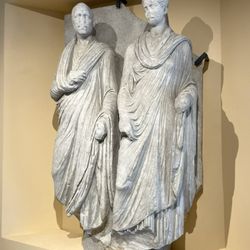
    Ostiense District Street Art District - Exhibit at the Centrale Montemartini - ancient sculpture museum inside of former power plant (09/30/23)

    Exhibit at the Centrale Montemartini - ancient sculpture museum inside of former power plant (09/30/23)

    Ostiense District Street Art District - Exhibit at the Centrale Montemartini - ancient sculpture museum inside of former power plant (09/30/23)

    Exhibit at the Centrale Montemartini - ancient sculpture museum inside of former power plant (09/30/23)

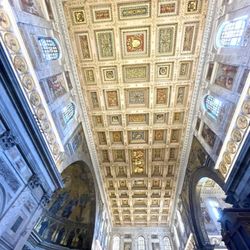
    Ostiense District Street Art District - Inside of the Basilica of Saint Paul Outside The Walls (pic taken on 09/30/2023)

    See all

    Inside of the Basilica of Saint Paul Outside The Walls (pic taken on 09/30/2023)

    Foro Romano - Replica of the former buildings

    Foro Romano

    4.5(269 reviews)
    4.8 kmAventino, Centro Storico

    So much history here. It was hard for me to imagine what once was an empire to be neglected into…read moreruins but that is what happens when empires fall and there is no money for maintenance. People pillaged and plundered these buidings and repurposed the material to build other things elsewhere. This is located right next to the colosseum and you can get a combined admission ticket to see both. FYI that there are metal detectors and scanners at the security checkpoint. I got a lot of steps in that day! Many of the paths here to not connect so need to double-back much of the time. Five stars!

    Some countries have ghost towns, dusty abandoned places where you might find an old gas station or…read morea closed mill. Italy has the Roman Forum, an awe-inspiring collection of ruins, the remains of the heart of ancient Rome. Founded in the 8th century BC, the Forum was the center of city life until around the 6th century AD. Temples and government buildings, a thriving marketplace, a compound of vestal virgins. Meetings and speeches, trials and gladiator battles--this place was happening over two thousand years ago. The Forum fell into disrepair, the temples and shrines abandoned by the 8th century. It was ruthlessly dismantled and exploited, especially during the Italian Renaissance, when its materials were extracted for building projects. Like, for example, St. Peter's Basilica. Seems like a mistake to convert downtown ancient Rome into a marble quarry, but hindsight 20/20 and all that. What remains standing in 2025 is absolutely incredible. The ruins are well preserved and quite legible, at least with the help of a guide (we took a Forum and Colosseum tour with Crown Tours, which I'd highly recommend). It was downright surreal walking around those grounds, imagining the life of ancient Rome. I mean Julius Caesar hung out here, among buildings he had erected. If you're visiting Rome for the first time, I'm sure you're planning to hit the Colosseum. Don't miss the Roman Forum while you're there. It's just as amazing, a unique, transporting journey into the rich depths of history.

    Photos
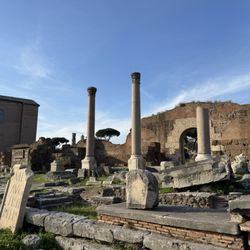
    Foro Romano - The Roman Forum at dusk

    The Roman Forum at dusk

    Foro Romano
    Foro Romano

    See all

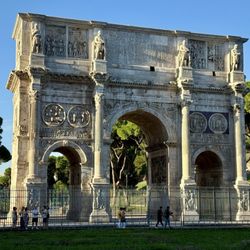
    Colosseo - Arch of Constantine

    Colosseo

    4.6(1.1k reviews)
    4.6 kmAventino

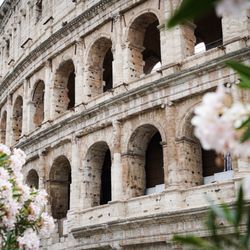
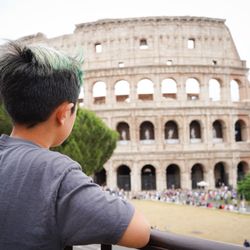
    The Colosseum is the most incredible thing I've ever seen on this planet. Nothing prepares you for…read morestanding in front of it in real life. The scale, the power, the history, everything about it is absolutely breathtaking. You can feel the history the moment you step inside. Knowing what happened there centuries ago gives you literal shivers. It's emotional, intense, and awe-inspiring all at once. Every stone tells a story, and it makes you feel so small in the best way possible. This is not just a landmark, it's an experience that stays with you forever. If you come to Rome and don't see the Colosseum, you missed everything. Rating: 10/10 -- unforgettable, unreal, legendary

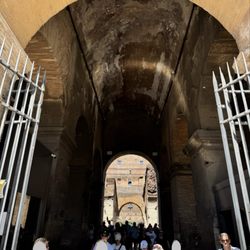
    Holy shit, the Colosseum. It's one of the craziest things I've ever seen, a massive historical…read moremarvel, a monument to human ingenuity and cruelty, the highs and lows of our entire existence. You have to see it before you die. No photograph, no movie, can fully conjure the real thing. Its scale, its majesty, the psychic bridge it provides to a violent and fascinating past. Standing in the Colosseum is about as close as I've gotten to time travel. We booked a three-hour tour with Crown Tours, covering the Forum, Palatine Hill, and the Colosseum. This was definitely the way to go. I loved both the simplified logistics and the live, on-site history lesson. That said, if you're not the guided tour type, the Colosseum does kind of speak for itself. We went around noon on a Friday during low season, when it was busy but nowhere near peak crowding. I imagine a summertime visit with kids would be pretty uncomfortable. But the Colosseum is worth a fair amount of physical suffering. Maybe not being mauled and eaten by lions, but definitely a little body odor and heat. The Colosseum is both the largest standing amphitheater in the world and the largest ancient amphitheater ever built. These may be the least surprising facts I've ever read on Wikipedia. The place is named for its colossal size, and honestly that alone would make it worth visiting. The size, though, is maybe its third or fourth most notable feature. The architecture is iconic. I was about to start describing it, but everyone knows what the Colosseum looks like: it looks like the Colosseum. It looks both more and less like the Colosseum up close and from within. I don't remember the striations in the travertine walls from any history books. The interior is breathtaking. Our guide sat us down and we gawked at the tiered seating and arena of this enormous world wonder, a place that once accommodated some 50,000 spectators for any given event, where an estimated 400,000 people and a million animals met violent ends. It's kind of wild that any of this was a) allowed and b) how people got their kicks, but the enthusiasm for brutality is comprehensible enough in 2025. I know exactly who would be in the stands with popcorn, watching people whose lives hold no value for them fighting to the death. Our tour ended on the ground floor of the Colosseum, and we wandered the upper level on our own, looking down at the arena and the exposed underground, which required its own ticket and didn't seem to have many visitors. We visited the gift shop and bought a postcard for our kids, though I don't quite know how to explain this place to our five- and three-year-old sons. I hope to bring them in person one day, when they're older and more knowledgeable about the ways of the world. There might be heat, there might be crowds, but they'll have to see the Colosseum.

    Photos
    Colosseo - Four floor levels, height = Washington Monument. Seating was based on social status, wealth, and gender. Women on the top tier. Smh :(

    Four floor levels, height = Washington Monument. Seating was based on social status, wealth, and gender. Women on the top tier. Smh :(

    Colosseo
    Colosseo

    See all

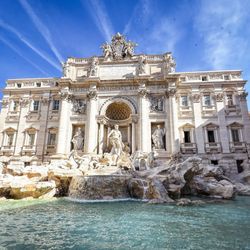
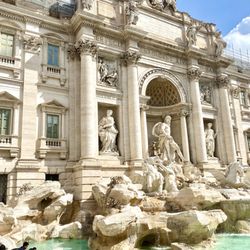
    Fontana di Trevi - Fontana di Trevi. Just amazing.

    Fontana di Trevi

    4.5(976 reviews)
    6.0 kmCentro Storico

    If you visit early, you are able to get very nice pictures in the front and you won't have to pay…read more I recommend 6am ish, we had great lighting and even if there was a small crowd you just wait your turn and can get good pictures without waiting too long. I think they clean the fountain on monday and friday mornings so avoid those days. Another thing to note is that I never felt like I was at risk with pickpockets. There was always enough room and no one was acting strange.

    One of those things you just have to do, and it holds up. The fountain itself is genuinely…read morespectacular up close, bigger and more detailed than pictures do it justice, and seeing it in person is worth the chaos that surrounds it. And there is chaos: the piazza is packed at pretty much any hour of the day, so go in prepared for a crowd rather than hoping to find a quiet moment. You can pay a small fee to get down to the basin level for a closer look, and the line to do so can be long during peak hours. We found that arriving just before dinnertime cut the wait considerably; most of the daytime crowds had thinned out and we were through quickly. If your schedule has any flexibility, that window is worth targeting. The view from the piazza above is free and still solid, and getting down to the edge is not required, but a neat bonus.

    Photos
    Fontana di Trevi - Trevi !! So many memories

    Trevi !! So many memories

    Fontana di Trevi - @6:15am Tuesday morning crowds were already forming!

    @6:15am Tuesday morning crowds were already forming!

    Fontana di Trevi - Trevi Fountain, Roma

    See all

    Trevi Fountain, Roma

    Ghetto Ebraico - Dinner in the Jewish Quarter

    Ghetto Ebraico

    4.4(9 reviews)
    5.5 kmCentro Storico

    Should have posted previously…read more.. A darling neighborhood to stroll and should be added to any Tiberina itinerary since it's so close. Wonderful history to explore.

    Jews have lived in Rome for over two thousand years. Their presence in Rome predates Christianity…read more It is probably the oldest continuous Jewish community outside of the Israel and the Middle East. Written records trace the Jewish community as early as 161 BC when Judah Maccabee sent envoys to Rome. For hundreds of years, Jewish families coexisted with their neighbors. They worked as bakers, butchers, physicians, money lenders and craftsmen. As the friction between the papacy and the Jewish community in the 1500s escalated, walled off Jewish ghettos were created following the model in Venice. The Roman Ghetto was established as a result of Papal bull Cum nimis absurdum mandated by Pope Paul IV on 14 July 1555. The bull required that the 2,000 Jews who lived in Rome at the time to live in the ghetto, which was not only walled off, but the gates were also locked from the outside at night to keep them in. The Jewish community was also forced to pay 300 Roman scudi for the construction of the wall and gate. The location was prone to flooding and quite undesirable. By the late 1580s, roughly 3,500 inhabitants were living in inhuman conditions. During the plague of 1656, 800 of the ghetto's 4,000 inhabitants died. The bull revoked almost all the rights of the Jewish community. It placed many restrictions on Jews including prohibition on property ownership (even within the ghetto), not being allowed to provide medical care to Christians and compulsory Catholic sermons on the Jewish Shabbat. Life in the ghetto was harsh filled with poverty, epidemics, such as plague, cholera and malaria, diseases due to lack of fresh water and overcrowding. Roman Jews were limited to unskilled jobs such as pawn brokers, fish mongers or ragmen. Many Christians hated the Jews because they were allowed to "lend" money throughout Rome and Europe. Jews had to wear a yellow cloth if they left the ghetto. The yellow veil worn by Jewish women matched the color worn by Roman prostitutes. During Christian feasts they were forced to run naked or be ridden by the Romans as a way to entertain the Romans. They had to petition for the privilege annually to live in their homes and swear loyalty to the Pope at the Arch of Titus which celebrated the Roman sack of Jerusalem in 70 AD. As in most of Rome, there was no fresh water in the ghetto. When the Pope decided to use the old aqueduct system to provide fresh water via a series of fountains designed by Giacomo della Porta, a fountain was due to be placed at Piazza Giudea, the site of a market, inside the ghetto. However, Muzio Mattei used his influence to have the fountain, the Fontana delle Tartarughe (Turtle Fountain), located in the Piazza Mattei instead in front of his residence. Outraged, della Porta changed the design of the fountain so that it provided a small trickle of water to the Mattei family. In 1888, the ghetto walls were torn down. In 1904, the Great Synagogue of Rome and a number of apartment buildings were erected on the site. The Roman Ghetto was the last remaining ghetto in Western Europe until ghettos were reintroduced by Nazi Germany in the 1930s. Today, the Jewish Quarter is a thriving community filled with delicious Kosher restaurants, street musicians and shops. The Great Synagogue in Rome has a very visible square dome and a Jewish Museum. Look for the stumbling stones scattered along the cobblestone streets that remember Roman Jews who were murdered during the Holocaust and a tribute to Stefano Tache Gay who was murdered at the age of two as the synagogue was attacked on Shabbat in 1982. Sit at a sidewalk cafe for lunch or dinner. Try the Jerusalem artichokes and pistachio crusted sea bass at Renato al Ghetto and the pizza and pasta at Ba'Ghetto Milky. Delicious! Thank you to Mircea from GURU Tours who shared the rich history and secret sites of the Jewish Quarter during an amazing, and free, night tour. Highly recommended if you like history and cultural insights.

    Photos
    Ghetto Ebraico - Note the square dome on the synagogue

    Note the square dome on the synagogue

    Ghetto Ebraico
    Ghetto Ebraico - The Great Synagogue in Rome

    See all

    The Great Synagogue in Rome

    Circo e Villa di Massenzio - landmarks - Updated May 2026

    Loading...
    Loading...
    Loading...