Ghetto Ebraico Photos


Recommended Reviews - Ghetto Ebraico
Start your review...


Reviews With Photos


The jewish ghetto was in existence for half of '500 to much of the 800, tying inside thousands. Become a veritable city within a city, like it or not, today is very nice to walk through its streets and relive a little the history that permeates its important walls. One of the 'attractions', if it can be defined like that, the most unusual of Rome, looking for the a truer than prepackaged view of the city. -------------------------------------------------------------------------------- Il ghetto ebreo fu in vigore da metà del '500 a gran parte dell'800, vincolando al suo interno migliaia di persone. Diventata una vera e propria città nella città, volenti o nolenti, oggi è molto bello passeggiare per le sue strade e rivivere un po' la storia che impregna le sue importanti mura. Una delle 'attrazioni', se così si può definire, più inusuali di Roma, per uno sguardo sulla città più vera che preconfezionata.


1 year ago

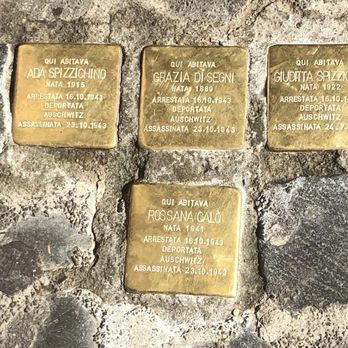
Jews have lived in Rome for over two thousand years. Their presence in Rome predates Christianity. It is probably the oldest continuous Jewish community outside of the Israel and the Middle East. Written records trace the Jewish community as early as 161 BC when Judah Maccabee sent envoys to Rome. For hundreds of years, Jewish families coexisted with their neighbors. They worked as bakers, butchers, physicians, money lenders and craftsmen. As the friction between the papacy and the Jewish community in the 1500s escalated, walled off Jewish ghettos were created following the model in Venice. The Roman Ghetto was established as a result of Papal bull Cum nimis absurdum mandated by Pope Paul IV on 14 July 1555. The bull required that the 2,000 Jews who lived in Rome at the time to live in the ghetto, which was not only walled off, but the gates were also locked from the outside at night to keep them in. The Jewish community was also forced to pay 300 Roman scudi for the construction of the wall and gate. The location was prone to flooding and quite undesirable. By the late 1580s, roughly 3,500 inhabitants were living in inhuman conditions. During the plague of 1656, 800 of the ghetto's 4,000 inhabitants died. The bull revoked almost all the rights of the Jewish community. It placed many restrictions on Jews including prohibition on property ownership (even within the ghetto), not being allowed to provide medical care to Christians and compulsory Catholic sermons on the Jewish Shabbat. Life in the ghetto was harsh filled with poverty, epidemics, such as plague, cholera and malaria, diseases due to lack of fresh water and overcrowding. Roman Jews were limited to unskilled jobs such as pawn brokers, fish mongers or ragmen. Many Christians hated the Jews because they were allowed to "lend" money throughout Rome and Europe. Jews had to wear a yellow cloth if they left the ghetto. The yellow veil worn by Jewish women matched the color worn by Roman prostitutes. During Christian feasts they were forced to run naked or be ridden by the Romans as a way to entertain the Romans. They had to petition for the privilege annually to live in their homes and swear loyalty to the Pope at the Arch of Titus which celebrated the Roman sack of Jerusalem in 70 AD. As in most of Rome, there was no fresh water in the ghetto. When the Pope decided to use the old aqueduct system to provide fresh water via a series of fountains designed by Giacomo della Porta, a fountain was due to be placed at Piazza Giudea, the site of a market, inside the ghetto. However, Muzio Mattei used his influence to have the fountain, the Fontana delle Tartarughe (Turtle Fountain), located in the Piazza Mattei instead in front of his residence. Outraged, della Porta changed the design of the fountain so that it provided a small trickle of water to the Mattei family. In 1888, the ghetto walls were torn down. In 1904, the Great Synagogue of Rome and a number of apartment buildings were erected on the site. The Roman Ghetto was the last remaining ghetto in Western Europe until ghettos were reintroduced by Nazi Germany in the 1930s. Today, the Jewish Quarter is a thriving community filled with delicious Kosher restaurants, street musicians and shops. The Great Synagogue in Rome has a very visible square dome and a Jewish Museum. Look for the stumbling stones scattered along the cobblestone streets that remember Roman Jews who were murdered during the Holocaust and a tribute to Stefano Tache Gay who was murdered at the age of two as the synagogue was attacked on Shabbat in 1982. Sit at a sidewalk cafe for lunch or dinner. Try the Jerusalem artichokes and pistachio crusted sea bass at Renato al Ghetto and the pizza and pasta at Ba'Ghetto Milky. Delicious! Thank you to Mircea from GURU Tours who shared the rich history and secret sites of the Jewish Quarter during an amazing, and free, night tour. Highly recommended if you like history and cultural insights. read more


We never seem to look down in our travels, but we should especially in the Jewish Ghetto of Rome. You may spot something glinting on the pavement. A little brass cobblestone or plaque set into the pavement outside an old door. We set out to find these brass plaques. We were on an adventure, and we did find them. What is really fascinating is to understand the "Why." These plaques are engraved and were placed to tell the story of who lived here, their name, where they were arrested and what happened to them. It was the idea of a Berlin artist, Gunter Demnig, back in 1993. His goal was to commemorate the lives lost by Jews, Roman gypsies, political prisoners, homosexuals and others to German National Socialism and the Nazi concentration camps of World War II. There are many "pietre d'inciampo," (stolpersteines in German or stumbling blocks in English) all over the world and all over Rome, not only in the Jewish Ghetto. It was truly a moving experience. read more


5 years ago

The jewish ghetto was in existence for half of '500 to much of the 800, tying inside thousands. Become a veritable city within a city, like it or not, today is very nice to walk through its streets and relive a little the history that permeates its important walls. One of the 'attractions', if it can be defined like that, the most unusual of Rome, looking for the a truer than prepackaged view of the city. -------------------------------------------------------------------------------- Il ghetto ebreo fu in vigore da metà del '500 a gran parte dell'800, vincolando al suo interno migliaia di persone. Diventata una vera e propria città nella città, volenti o nolenti, oggi è molto bello passeggiare per le sue strade e rivivere un po' la storia che impregna le sue importanti mura. Una delle 'attrazioni', se così si può definire, più inusuali di Roma, per uno sguardo sulla città più vera che preconfezionata. read more


8 years ago
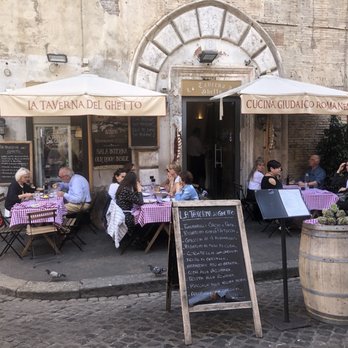
With antisemitism on the rise, it is so important to remember the history of the Jews, all they have endured, and all they have given to their communities throughout the world. The Jewish ghetto of Rome has changed tremendously, so taking the tour through the Jewish Museum was a wonderful way to understand what was. The historical events and facts will sadden you and blow your mind; take note of the Solpersteine- tiny gold squares in the sidewalks in front of many of the buildings, reminding us of the Holocaust victims that lived in those very buildings and never came back. But not all is heavy in this historic ghetto; the museum and the synagogue are fabulous. As I walked through the streets and heard the school children singing in Hebrew, my heart swelled. My nose was filled with the smells of delicious kosher Italian food (I love witnessing the joining of cultures and enjoying the culinary results!), and soon my belly was full, too. I definitely recommend a visit to this neighborhood but I'll reiterate that a bit of help to understand what you are looking at is a must. I took the museum's tour and appreciated having a person I could ask questions of and such, but I bet there are also great walking tours through the Rick Steves app. read more