Cancel

    Open app

    Search

    Bourley and Long Valley

    5.0 (1 review)

    Bourley and Long Valley Photos

    Recommended Reviews - Bourley and Long Valley

    Your trust is our priority, so businesses can't pay to alter or remove their reviews. Learn more about reviews.
    Yelp app icon
    Browse more easily on the app
    Review Feed Illustration
    Photo of David J.
    96
    2344
    11912

    6 years ago

    Helpful 0
    Thanks 0
    Love this 0
    Oh no 0

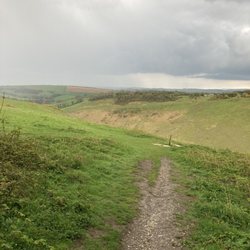
    Devils Dyke - Footpath and friends after the rain.

    Devils Dyke

    4.8(9 reviews)
    40.6 mi

    We took the 77 bus to it's last stop at Devil's Dyke and took footpaths through fields of cows and…read moremagnificent views of the farm lands below, the sea in the distance and frolicking lambs. We got caught in a rain storm and made our way to the pub by the bus stop. Locally made Gin, delicious leek and potato soup with duck paté and bread, made the rain a blessing. It's wonderful, that in 20 minutes you can travel from the gaudy honky-tonk of the pier to such a peaceful and natural setting.

    The curiously named Devil's Dyke is one of the most scenic spots on the South Downs Way. Just five…read moremiles north of Brighton it's easily accessible even when you're not walking the path. It now belongs to the National Trust so car parking fees apply but you can also get the bus up to the Dyke from Brighton in the summer months. The views are fantastic, and on a clear day you can even see as far away as the Isle of White. Its a great location for walking, mountain biking, zorbing of paragliding; or just a picnic if you are feeling a little more sedate. There is a pub if you fancy a pint and an ice cream van most of the year round. Legend has it that the dyke was formed by the Devil to drown the parishioners of the Weald, but scientists tell us that is was formed naturally during the last ice age. However it was formed, the end result is the longest, widest and dryest dry valley in the UK and it's absolutely stunning.

    Photos
    Devils Dyke - The back of Devil's Dyke and near the pub.

    The back of Devil's Dyke and near the pub.

    Devils Dyke - Devil's Dyke

    Devil's Dyke

    Devils Dyke - Cows grazing in the dyke

    See all

    Cows grazing in the dyke

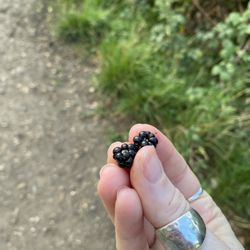
    Hampstead Heath - Sooo many berries along the trail's edge

    Hampstead Heath

    4.6(122 reviews)
    35.1 miHampstead Heath

    This is London's version of Central Park only much grander and more natural and rustic feeling…read more Think wild blackberries along the trail's edge, three ponds, dogs galore, picnics around every corner, tennis courts, fenced in kids areas and more. The 300+ hectares (looks up conversion ) Also features woodlands, meadows, grassy lawns and paved trails. It's a London treasure and certainly worth a stroll and picnic. The surrounding neighborhood is filled with beautiful homes and fun shops.

    Given my slight fetish for nature and all things fantasy, Hampstead Heath was my very first…read moreexperience in a real London park where I realized I felt more at-home here than in any tropical beach. As such, this ginormous park/ part-forest holds a special place in my heart. The best times of the year to roam its rolling landscape- which isn't always the easiest to walk through given its steep hills- is between late Spring and the Fall months, as the leaf-laden trees add a lush and secluded feel to its denser areas; it's kind of like stepping into a fairy tail. If you've never been, make sure you keep track of where you came in, as it can be pretty easy to get lost here the first few times, and all that walking can get pretty exhausting if you're not used to it. I do love me a little adventure, though; and there are uglier places to be lost in. Once it stops raining for a few weeks and the mud becomes hard enough to sit on, this spacious park becomes a hot-spot for picnicking and sunbathing; especially during the weekends. So, bring a blanket, some food, and maybe a dog, and you have yourself the perfect Sunday. A huge plus is the restaurants and pubs near the Parliament Hill Fields entrance to the park, where you can get everything from food and booze, to gelato and coffee (the good stuff); so even if you're too lazy to cook- like me- your wallet's got you covered. Keep in mind, driving and parking in London sucks, and this place is no different. The number 88 bus takes you right to one entrance of the park, and I'm sure there are others on the other side that can get you close enough to walk the rest of the way. It doesn't get much easier.

    Photos
    Hampstead Heath
    Hampstead Heath
    Hampstead Heath

    See all

    A walk from Barnham to Hunston along the old Portsmouth to - Crossing the Barnham-Bognor line, looking north towards Barnham. Trains are quite frequent, but visibility is good. Just out of

    A walk from Barnham to Hunston along the old Portsmouth to

    5.0(1 review)
    30.2 mi

    This walk runs from Barnham to Hunston and largely follows the route of part of the Portsmouth to…read moreArundel Canal. It takes in very gentle landscapes, much of it flat farming land, but also small sections of woodland and hedgerow. In summer, there is an abundance of wild hedgerow flowers, insect and bird life. The walk is almost entirely level, and there are steps to climb some short slopes. It is usually reasonably dry (depending on the weather, of course!). Wear walking boots, long trousers and a shirt, as in summer heavily overgrown paths can mean 2m high nettles and brambles! (A walking stick comes in handy to beat back the undergrowth). Where the canal has disappeared, you walk across fields, which can also make for uneven surfaces. The walk is about 9km long and takes 3 hours or so at a steady pace, and the footpath is well signed throughout. There are no opportunities to stop for refreshments, however, for the first 7km, so take water and some snacks with you. You also need to be fit enough to walk for this distance comfortably. It is entirely on OS Landranger Map 197, as are all map references. The impetus for the construction of the canal was the Napoleonic War in the opening years of the 19th century. Goods going from London to the naval dockyards at Portsmouth usually went by ship and followed the coastal sea route, and were vulnerable to French raids. The canal was part of a route built to provide an inland alternative. The first part of the canal crossed Portsea island to connect Portsmouth to Chichester Harbour. A second canal ran from Chichester Harbour into Chichester, and from a junction at Hunston another arm ran to Ford and the river Arun, which was used to navigate north to Pallingham. There, barges used the older Wey and Arun canal to strike north towards London. Construction began in 1818 and was completed in 1823, but the undertaking was never a commercial success: the Napoleonic wars had ended, coastal shipping had resumed and the advent of the railways from 1846 onwards provided unbeatable competition. With the exception of the section to Chichester, which survived until 1906 (and is currently partly navigable and being restored), the rest of the canal was abandoned as early as 1850. However, enough artefacts remain to make it enjoyable both to walk and to see some industrial archaeology many parts are still 'in water', although very heavily overgrown. From Barnham station, turn right, walk under the railway bridge and turn right again at the fabulous Murrell Arms pub. A plaque on the wall gives some history of this wonderful ale-house, built in 1750 and licensed since 1866. Walk a mile south west to St Mary's church, which dates from mediaeval times. To your left, just before the church, follow the new cycle-track for a few hundred metres until you come a sloping flint wall above two brick walls either side of a depression: closer inspection reveals this to be the site of the Hollinsworth swing bridge over the canal (at OS 957034). (The excavated depression is the site of the waterway). Turn right and follow the signed footpath this is the former tow-path of the canal. Just further along, by a farm, are the clear remains of the Stewart swing bridge, and part of the canal bed here may be in water. (Confusingly, the cast iron arms of the Hollinsworth bridge are laid out on the grass, here). Further along, it's clear the canal ran on an impressive embankment, although the far side has been removed. The path then goes over a small stream and through a short wood to cross the Barnham to Bognor Regis railway line at OS 950035. Take care crossing! Beyond the railway, another short section of woodland follows, with the canal clearly visible on the right. The path then becomes a small lane with high hedges either side, and traces of the canal disappear until after you have passed Lidsey sewage works. (Just past the works are the scant remains of an aqueduct over a small stream). The footpath then crosses the A29, at OS 938032, and now the canal is on the left (south) side. The path here and further along may be heavily overgrown in summer. After 300m the path passes a house on the left and becomes a 3m wide grassy path with a tall hedge on the right. Ignore the fork to the right, and continue straight ahead again, the canal (still on your left) may be in water here. This section carries on for nearly 1km, until we reach another canal embankment, again heavily wooded, where the path narrows for 150m. Here it crosses a small river - the Adingbourne Rife ('rife' is a Sussex dialect word for stream). In winter, with less plant growth, the remains of the aqueduct carrying the canal over can clearly be seen. After another 100m, we find that, sadly, the embankment has been removed and we now have to continue on the right of way across large fields for 1km until we climb slightly to walk through a further few hundred metres of woodland to reach the little lane at
    Photos
    A walk from Barnham to Hunston along the old Portsmouth to - The wooded section between the end of the embankment and the railway line.

    The wooded section between the end of the embankment and the railway line.

    A walk from Barnham to Hunston along the old Portsmouth to - The Walnut Tree Inn at Runcton

    The Walnut Tree Inn at Runcton
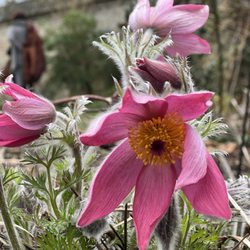
    A walk from Barnham to Hunston along the old Portsmouth to - Tufted Vetch (Vicia cracca) is a common sight along the walk.

    See all

    Tufted Vetch (Vicia cracca) is a common sight along the walk.

    Bourley and Long Valley - hiking - Updated May 2026

    Loading...
    Loading...
    Loading...