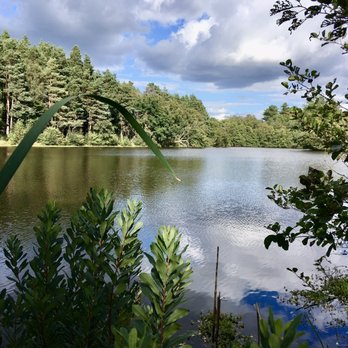
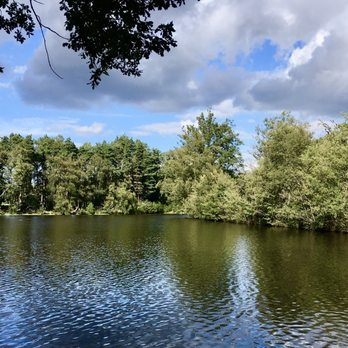
Bagshot Heath (also known as Bagshot Common) forms part of the larger area known as Surrey Heaths, and is excellent for walking and cycling. Deceptively close to London, you can soon find yourself in quiet woodland, with a lake, streams, and surrounded by wildlife. It's a great place to unwind.
It forms part of the Broadmoor to Bagshot Woods and Heaths Area of Special Scientific Interest, stretching all the way from Bagshot to the southern edge of Bracknell, encompassing over 4,000 acres. It is a mix of classic heathland, with conifer plantations, deciduous woodland, and areas of lowland peat bog, a rarity in the south east. The area is home to internationally important populations of woodlark, Eurasian nightjar and Dartford warbler, and is a nationally important areas for dragonflies and damselflies. At ground level, autumn brings a fantastic array of fungi (although not for picking, being an SSSI).
The heath is criss-crossed with paths, ranging from wide tracks to narrow footpaths: the area known as Swinley Forest has 15 miles of world-class mountain biking routes, and was a candidate for the mountain biking in the 2012 summer Olympics (losing out to Hadleigh Farm in Essex, which had better access). There are three trails: red (8 miles, difficult); Blue (6 miles, moderate) and Green (1 mile, easy), and area of freebiking.
Highlights across the area include the Rapley Lake, a small but picturesque reservoir, but the forest clearings provide some great views. If you walk across the heath and over Surrey Hill, you can walk all the way to Bracknell, where there is a Discovery centre (and parking) and Caeser's Camp, the remains of an impressive Iron Age hillfort. The so-called "Devil's Highway" crossing the northern part of the heath is the former Roman Road from London to Silchester.
Access from the Bagshot end is easiest via Vicarage Lane, adjacent to St Ann's Church in Bagshot. There is limited street parking, but it is only a short (10 minute) walk from the centre of Bagshot. read more