Baltimore Maritime Museum Photos


You might also consider


More like Baltimore Maritime Museum
Recommended Reviews - Baltimore Maritime Museum
Start your review...



The museum itself is not well labeled. The building is labeled as the Historic Ships in Baltimore... Visitor Center... Inner Harbor Water Taxi Terminal. They ALMOST lost a star for this. There was TONS of history to learn (both through reading and hands on experiences) over the distance of 4 piers. For your ticket price you get to explore the USS Constellation, USS Torsk, Lightship Chesapeake, USCG Cutter 37, and the Seven Foot Knoll Lighthouse. You even get to collect embossed stamps on your "boarding pass" when you visit each location which was super fun! The lighthouse doesn't have a cool embossed stamp but they have a stamp of their own...you just need to ask for it. read more




12 years ago
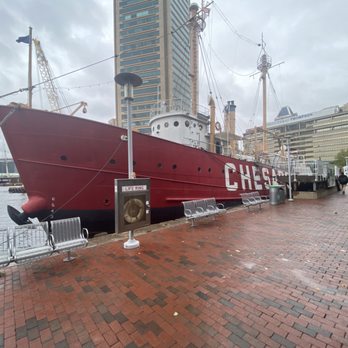
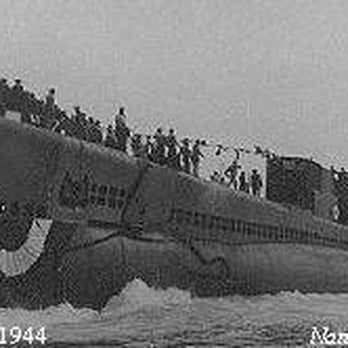
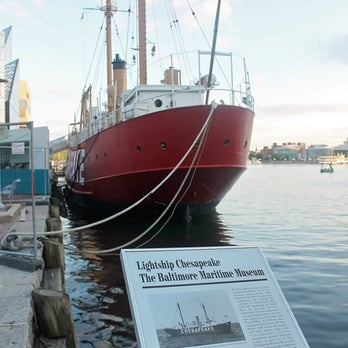
It's sad that there are no reviews but I'm guessing a lot of people don't take the tours? Why? Because you can see the boats when you visit the Inner Harbor for free. I did see a few on TripAdivser. I think it would be interesting to check them out but I don't know if I'd make it a priority. They are a GREAT addition to the Inner Harbor, especially because the rest of it is commercial restaurants, tourists, pan handlers and lots of shopping. Can you tell I wasn't a fan? I was told by lots of people you gotta see the Inner Harbor! But why? When I'm exploring a city, I'm more into experiencing history and tasting local cuisine, not shopping at H&M and thumbing through books at Barnes and Noble. If I lived here or had lots of time, I might give it more of a chance but it was very busy, very touristy and very commercial. I'm also glad I didn't fork over the funds for the extremely expensive parking. I found street parking a few blocks away near Little Italy for free. I think I was only allowed like three hours but that was sufficient time for me. I walked around the Inner Harbor, got the pictures I wanted, checked out a few stores and headed out. However, seeing the ships of the Baltimore Maritime Museum was a nice touch. And I've heard the aquarium is worth it! Find info. below about each ship: Lightship 116 - now called Chesapeake - was built for the U.S. Lighthouse Service in 1930. For the next 40 years, she served as a floating lighthouse and communications platform. Her first duty station was Fenwick Island, Delaware. In 1933, she first assumed the name Chesapeake, from her new position off the coast of Virginia at the entrance to Chesapeake Bay. She was redesignated WAL-538 in 1939, when the Lighthouse Service was absorbed by the U.S. Coast Guard. In 1942, shortly after the U.S. entered World War II, Chesapeake was given light armament, painted battleship gray and moved to Sandwich, Massachusetts to serve as an Examination Vessel. After the war, she returned to the Chesapeake station. She ended her service at the Delaware Bay station in 1970. The USS Torsk (evil shark looking one) (SS-423) is part of the historic fleet of Historic Ships in Baltimore and is one of two Tench Class submarines still located inside the United States. It is nicknamed the "Galloping Ghost of the Japanese Coast." In 1945, Torsk made two war patrols off Japan, sinking one cargo vessel and two coastal defense frigates. The latter of these, torpedoed on 14 August 1945, was the last enemy ship sunk by the U.S. Navy in World War II. USS Constellation, constructed in 1854, is a sloop-of-war and is the last sail-only warship designed and built by the US Navy. During the Civil War, Constellation performed largely diplomatic duties as part of the US Mediterranean Squadron. She was flagship of the African Squadron from 1859-1861. In this period she disrupted the African slave trade by interdicting three slave ships and releasing the imprisoned Africans. After the Civil War, Constellation saw various duties such as carrying famine relief stores to Ireland and exhibits to the Paris Exposition Universelle. After being used as a practice ship for Naval Academy midshipmen, Constellation became a training ship in 1894 for the Naval Training Center in Newport, Rhode Island, where she helped train more than 60,000 recruits during World War I. Decommissioned in 1933, Constellation was recommissioned as a national symbol in 1940 by President Franklin Roosevelt; by this time the ship had become widely confused with her famous predecessor of 1797. She spent much of WWII as relief (i.e. reserve) flagship for the US Atlantic Fleet, but spent the first six months of 1942 as the flagship for Admiral Ernest J. King and Vice Admiral Royal E. Ingersoll. After the war, Constellation was again decommissioned on 4 February 1955, and stricken from the Naval Vessel Register on 15 August 1955 - 100 years and two weeks from her first commissioning. She was taken to her permanent berth - Constellation Dock, Inner Harbor, Baltimore, Maryland. USCGC Taney is a United States Coast Guard High Endurance Cutter, notable as the last ship floating that fought in the attack on Pearl Harbor, although Taney was actually moored in nearby Honolulu Harbor not Pearl Harbor itself. She was named for Roger B. Taney , who was at various times: US Attorney General, Secretary of the Treasury, and Chief Justice of the Supreme Court. She is also one of two Treasury-class (out of seven total) Coast Guard Cutters still afloat. Serving her country for 50 years, the Taney saw action in both theaters of combat in World War II, serving as command ship at the Battle of Okinawa, and as part of fleet escort in the Atlantic and Mediterranean. She also served in the Vietnam War in Operation Market Time. Taney also patrolled the seas working in drug interdiction and fisheries protection and participated in the search for Amelia Earhart. read more





9 years ago