Cancel

    Open app

    Search

    Accenture

    4.0 (1 review)
    Closed Closed

    Accenture Photos

    Accenture Reviews in Other Languages

    Verify this business for free

    Get access to customer & competitor insights.

    Verify this business

    Cementerio de la Recoleta - Family Duarte Mausoleum.  Finally resting place of Eva Peron.

    Cementerio de la Recoleta

    (96 reviews)

    Recoleta

    From Wikopedia: "La Recoleta Cemetery (Spanish: Cementerio…read morede la Recoleta) is a cemetery located in the Recoleta neighbourhood of Buenos Aires, Argentina. It contains the graves of notable people, including Eva Perón, presidents of Argentina, Nobel Prize winners, the founder of the Argentine Navy, and military commanders such as Julio Argentino Roca. In 2011, the BBC hailed it as one of the world's best cemeteries, and in 2013, CNN listed it among the 10 most beautiful cemeteries in the world." My words: I love to visit old cemeteries and this one is a very spectacular. Ever since the show {Evita} opened in the West End of London in 1979, it brought light to both Evita and Buenos Aires to me. I also knew that one day I would be able to visit. That day was now. BA was an amazing place and finally going to the Casa Rosado just paved a path to visiting Evita's family mausoleum. I was not familiar with Recoleta Cemetery nor the amount of people who are interred here. I did watch some you tube movies about visiting here and while it really helped, it did not prepare me for the overall scope of this place. In conclusion... this place is beautiful and the stories that go with many of the sites are just amazing and even haunting. Remember that there is an entry fee and a line which moved very quickly. I truly recommend having a guide to explain the monuments and stories as it adds so much more to the sites. KUDOs to the team and guides at Cementerio de la Recoleta

    A small group of us decided to trek 2.5 miles across the city of Buenos Aires to visit El…read moreCementerio on a hot Saturday morning. The primary objective was to find the resting place of Eve Peron (Evita). We arrived about 2 hours after they opened and there was a small queue outside. The queue moved quickly. They have maps at the payment counter. Once inside we were all amazed by the size, design and layout of the cemetery. Initially, we started by wandering through the paths and viewing the designs of the various family mausoleums. Then we focused and found our way over to the Familia Duarte mausoleum, where Eva Peron is said to be. It wasn't difficult to find but there was a queue to venture down the correct path to view it. After that we were nearly ready to depart. We meandered a bit more to visit others as we made our way towards the exit. A reasonable excursion that is worth the visit if such things interest you. I think that 2 hours would be more than enough time. Pay for the guided tour if you really want to know details and history.

    Registro Civil - #GUSIAN

    Registro Civil

    (7 reviews)

    San Nicolas

    I had to help out an underage relative get some paperwork so we both came to this government office…read moreto pick it up. She had some issues getting the online appointment set up so I was able to step in and do it. It was a useful experience to get a feel of how things work. Two weeks was the earliest appointment we could get, which I think it's not great but also understandable. Our appointment was at 2 PM and there's a little machine where you can enter your info and confirm your presence. Afterwards, it's a short wait until you see your number up in the screen and get to talk to a clerk. My only problem with the place was mostly the service of the person behind the desk tasked with giving us the paperwork. They have weird, strange rules that are arbitrary and that, if you complain enough (because they really don't make much sense, such as they telling you to go to another registro civil... just because) they'll give you the paperwork anyway. It was unnecessary, as they just had to print out what we needed, so I don't understand why they were adamant on us going elsewhere to get it, when our appointment was in that registro civil in particular. It wasn't super crowded at that time, I think that those going with online appointments don't have to wait much. The place looks modern and clean. I would criticize the unnecessary roughness of the clerk, but this still is heaps better than in my native third circle of hell- I mean, conurbano.

    AreaTres Soho - Una inspiradora charla en @areatresworkplace sobre emprender socialmente

    AreaTres Soho

    (7 reviews)

    Palermo

    AreaTres was exactly what I needed while living in Buenos Aires for 2 months. The internet in…read moreArgentina is not dependable, so I had peace of mind using any 1 of the 3 WiFi networks at AreaTres. No only was this office space a cool, modern, professional, clean, comfortable place to work, I enjoyed the people I was surrounded by so much. Working in AreaTres completely transformed my experience in Buenos Aires because of the instant community it provided for me. All of the closest friends I made in Buenos Aires, I met at AreaTres. I spent just about every weekend with people I met in AreaTres. While it's possible to buy a day pass, longer memberships are encouraged because the office owner really encourages a sense of professional community, instead of a drifter, impersonal vibe. Because of this, there is an atmosphere of trust, and I could leave my computer and belongings unattended while stepping out to lunch, which I certainly couldn't do if I was working at the Starbucks next door. It's also a quiet atmosphere, which is quite the opposite of the crowded Starbucks next door. I appreciated that I could choose between a table or standing desk, and there were always free cookies, coffee, tea, and beer on hand. It was also fun to go to the monthly after office social hours to get to know people better. I couldn't recommend this space more highly if you're looking for a professional, welcoming community to work in.

    Such a beautiful space and great location. The entire staff is super helpful and the vibe of the…read moremembers is really good!!! Will definitely be back, hopefully, more permanently!

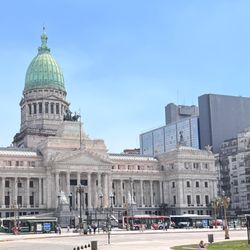
    Buenos Aires Bus - The Capitol building

    Buenos Aires Bus

    (21 reviews)

    San Nicolas

    Great way to see Buenos Aires, especially on a very warm summer day…read more Love using Hop On Hop Off Buses to get a feel for a large city. The Buenos Aires Tourist Bus was perfect to get a three-hour tour with so many iconic places to stop along the way. After visiting Recoleta Cemetery and the surrounding picturesque neighborhood, we paid $25 cash (you will get a better conversion rate) at the bus tour kiosk for a 24-hour pass. The pass is good for 24 hours from when you begin your tour. We chose a nice upstairs seat outside, then plugged in our yellow headphones and dialed into the English commentary. Loved the panoramic views overlooking historic landmarks, cultural spaces and unique neighborhoods full of Argentine culture. Nice to enjoy the leisurely pace as we rode past Plaza de Mayo, La Boca, Caminito, Puerto Madero, Teatro Colón, and Floralis Genérica. Loved visiting La Bombonera (the home of the famous Boca Juniors soccer club) without fighting the crowds. Nice to see the street art and colonial architecture in San Telmo from a vantage perspective. This was a great overview to orient us to neighborhoods and museums that we visited during our Buenos Aires vacation. Highlights included Plaza de Congreso, Puente de la Mujer (the Woman's Bridge), Teatro Colón, Floralis Genérica and the surrounding park, and the Museo Nacional de Bellas Artes. A great way to bookmark places to visit. Special thanks to Long Beach Yelp Elite Erica T. who scoped out the bus tour and gave us this great recommendation. Note: The buses run on an every 30-50 minue schedule and may make some longer stops, which is actually perfect for picking up a snack or taking a quick photo stop. Just ask when the next bus is coming. We did move into the airconditioned front of the bus near the end of the day when it was 43C/109F!!

    They sell way too many tickets for the buses and the audio is very generic. We got off the bus to…read morelook around and were told we could get back on the bus at anytime. When the bus came it was too full to let us on, and the next bus, and the next bus. We had to pay for a taxi to get back to our original destination after an hour of waiting in the sun. Don't waste your money on this business.

    Manzana de las luces - Primer Congreso

    Manzana de las luces

    (9 reviews)

    Monserrat

    This museum experience was amazing, thanks to our tour guide's knowledge of history, and energy…read more The buildings became alive with each explanation Giselle gave, and the facts provided. The tour is highly recommended and furthermore, it is free.

    Manzanas de las Luces The Society of Jesus arrived in the…read morenewly founded village of Buenos Ayres in 1608, establishing their first mission on a 2 hectare (5 acre) lot which had earlier been aside by Spanish conquistador Juan de Garay for the future town square. The Jesuits' 1661 sale of the property (which would ultimately become the Plaza de Mayo) and a gift of an adjacent lot by Isabel de Carvajal allowed the order to build a new, largely self-reliant mission. Work began in 1686 on the Saint Ignatius Church, a baroque structure completed in 1722, and the adjoining College of St. Ignatius was designed by local architect Juan Kraus and built between 1710 and 1729. Becoming the only academy in colonial Buenos Aires to provide a classical education, and the property possessed the city's finest laboratories, museum and library. The center housed the Office of the Advocate General of the Missions (which oversaw the order's numerous, lucrative Indian Reductions), as well as a pharmacy (the city's first) opened and operated by an English Jesuit, Father Thomas Falkner.[1] The 1767 suppression of the Society of Jesus led to the mission's closure, however, as well as an associated one housing a hospital, in the nearby San Telmo district. The academy was closed only temporarily, and was converted in 1772 into the Royal College of San Carlos. The temple was usurped and converted into a cathedral in 1775, though Father Falkner's pharmacy formed the basis for Viceroy Juan José de Vértiz's Medical Court of 1780 - the first school of medicine in what is today Argentina. Viceroy Vértiz also established the city's first printing press at the site, in 1780, as well as an orphanage funded by sales of the facility's printed material.[1] The center later had an anecdotal role in the Argentine War of Independence. The Regiment of Patricians was briefly headquartered in 1811 at the college, where the regiment staged a failed mutiny against their commander, General Manuel Belgrano. A network of five underground tunnels intersecting under the former mission (believed to have been built to guarantee the flow of supplies in the event of a siege, and to facilitate smuggling in peacetime) helped safeguard ammunitions during much of the war.The provisional government organized from the May Revolution of 1810, the First Assembly, opened a public library in 1812, and following the War of Independence, Governor Martín Rodríguez inaugurated the University of Buenos Aires and the General Archive, in 1821. A few days later, the city's leading newspaper, El Argos, described the area as the "Illuminated Block" in a September 1, 1821, editorial. Governor Rodríguez also established the Provincial Legislature and the Bank of the Province of Buenos Aires at the site, in 1822, as well as the city's first natural sciences museum (later housed in the nearby Santo Domingo convent). A secondary school established in 1817 in the Illuminated Block by Juan Martín de Pueyrredón eventually became the Buenos Aires National College, one of the nation's most prestigious university-preparatory schools, in 1863. The Provincial Legislature was used as the Argentine National Congress during the short-lived First Republic (1826-27), and was again used as such from 1862 to 1864, while newer facilities were built nearby. The Buenos Aires City Legislature also met at the site from 1894 to 1931, when its current building was completed. The old Provincial Legislature's final use was as the University of Buenos Aires School of Architecture (until 1972). The Illuminated Block was declared a National Historic Monument, in 1942, and was (with three of the catacombs) extensively restored, in 1983.

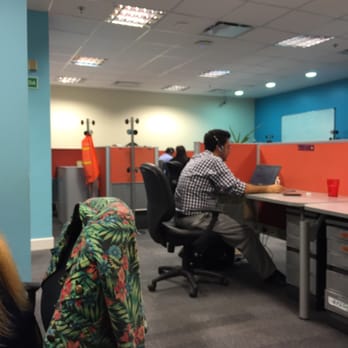
    Accenture - sharedofficespaces - Updated May 2026

    Loading...
    Loading...
    Loading...