Wallingford Historical Marker Photos


More like Wallingford Historical Marker
Recommended Reviews - Wallingford Historical Marker
Start your review...



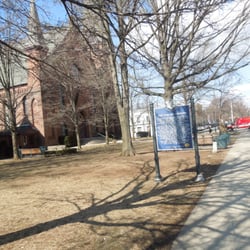
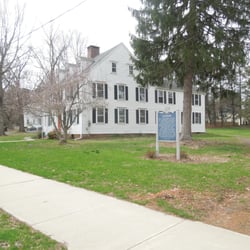
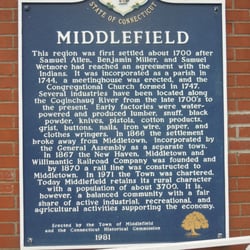
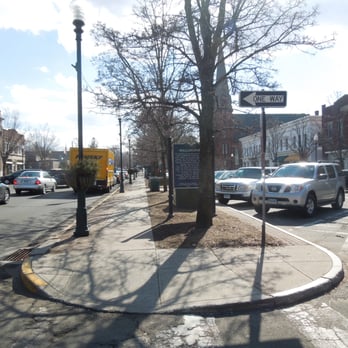
Some of the towns in Connecticut are ridiculously old. What is now Wallingford was added onto the New Haven Colony over 350 years ago. This is a two-sided marker from the CT Historical Commission in the familiar white lettering on a blue background. It has the same inscription on both sides, and is located on a strip of grass in Wallingford's downtown near the intersection of North Main Street and Center Street. It was dedicated in 1976 and the blue paint and white lettering are overall in pretty good shape, but there is small areas of peeling at the top left and a larger peeled section at the top right. The inscription is not one of the more scintillating ones I have read. Judge for yourself -- Wallingford This territory was purchased by the New Haven Colony in 1638 from Montowese, son of an Indian sachem. It was named after Wallingford, England, and was settled in 1670 by planters from New Haven and Stratford. Its boundaries originally encompassed present-day Cheshire, Meriden, and part of Prospect. From 1766 when the "True Sons of Liberty" order was formed in the town, the cause of liberty was of foremost importance. A native son, Dr. Lyman Hall, was a signer of the Declaration of Independence. Originally agricultural, the town has made a lasting name for itself through the development of the silverware industry. Erected by the Town of Wallingford the Wallingford Historical Society and the Connecticut Historical Commission 1976 read more