Cancel

    Open app

    Search

    Wabasso Bridge Photos

    Recommended Reviews - Wabasso Bridge

    Your trust is our priority, so businesses can't pay to alter or remove their reviews. Learn more about reviews.
    Yelp app icon
    Browse more easily on the app
    Review Feed Illustration
    Photo of Ariel W.
    4395
    5919
    103856

    8 months ago

    Helpful 23
    Thanks 6
    Love this 28
    Oh no 0

    10 years ago

    Helpful 16
    Thanks 0
    Love this 16
    Oh no 0

    Verify this business for free

    Get access to customer & competitor insights.

    Verify this business

    AB Michael Wabasso Bridge

    AB Michael Wabasso Bridge

    5.0(2 reviews)
    1.1 mi

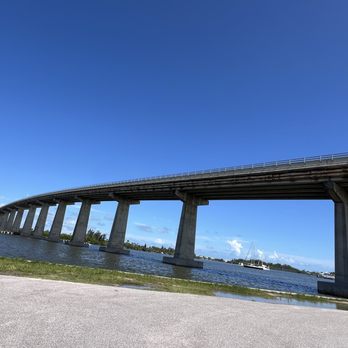
    A great bridge for getting to and fro…read more Imagine if it were not there, though? Swim, or boat or ferry ride Would be the way to cross the tide Though the water is fun to tread I'd rather go over dry instead So thanks to be this bridge I see And to traverse it safely, thankfully!
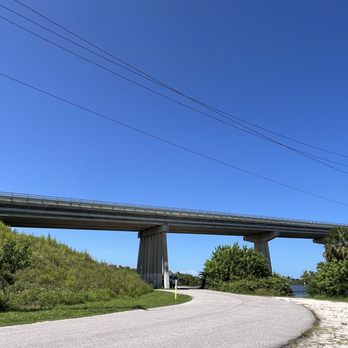
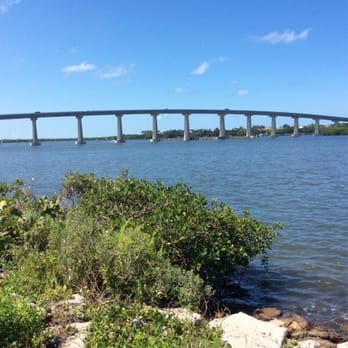
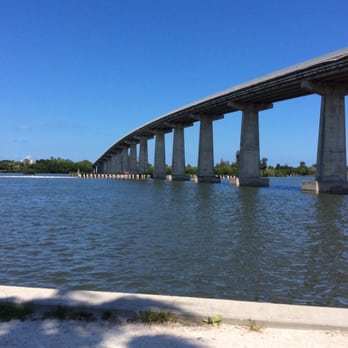
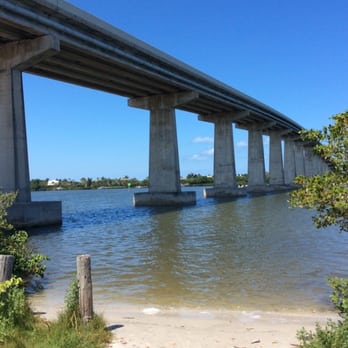
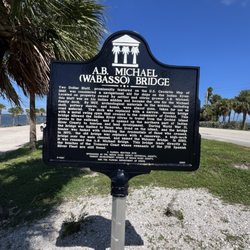
    Before you cross the Wabasso Causeway connecting the mainland to the barrier island there is a…read morehistorical marker in Wabasso Causeway Park. The marker is part of the Historical Marker Program, one of the Division of Historical Resources' most popular and valued public history programs. The markers raise awareness of Florida's cultural history while enhancing the enjoyment of historic sites for residents and tourists. The blue historic markers tell the stories of the people and places that were important to Florida's history and they can be found in front of schools, forts, roads, battlefields, cemeteries, churches, historic districts, archaeological sites, buildings, and bridges like this one. Historic marker F-1137 was installed in 2020 by The Indian River County Historical Society, Tourist Development County of Indian River, and the Florida Department of State. The marker provides information about the history of the Wabasso Bridge. The original bridge sat on what was known as Two Dollar Bluff, a navigational aid for ships on the Indian River since 1887. It was located on property of pioneer and citrus grower A.B. Michael who made Indian River citrus world famous. The bluff was an Ais Indian midden, a kind of ancient garbage dump for the original inhabitants of this area. In 1927 the midden yielded shells, pottery shards, and bones that were used for road material. At different times this area was part of Brevard, St. Lucie, and Indian River counties. The bluff became the Michael family dock. Eventually it was replaced in 1927 with a narrow, wooden bridge with a metal swing span that crossed to the community of Orchid. This bridge allowed travel between the Orchid Island groves and the railroad for transport of citrus. It also opened up the northern part of Indian River County to tourism and land development. During World War II you could only cross the bridge if you lived on the island. On October 5, 1964, a 400-foot section of the old wooden Wabasso Bridge burned. Before it was scrapped the bridge was purchased by Walt Disney World and refurbished for use in the Main Street Railroad. In 1970, the old bridge was replaced with a modern, high-arch bridge causeway over the main channel. For years it was the known as the A.B. Mitchell Wabasso Bridge. In 2020, it was renamed the A.B. Michael Bridge to correct an over fifty year old typo. Today the Wabasso Bridge takes travelers to the beaches of the Treasure Coasts which got its names from Spanish Treasure Fleet that sunk off the coast in a hurricane in 1715.

    Photos
    AB Michael Wabasso Bridge

    See all

    Bethel Creek House of Refuge

    Bethel Creek House of Refuge

    5.0(1 review)
    7.5 mi

    Five stars for the history! The Houses of Refuge were federally operated life saving stations that…read morewere built on the beach so that the keeper could rescue ship wreck victims during a time period when the main form of travel and hauling goods was by ship. The houses were spread approximately 20 miles apart along Florida's coast and were often very isolated. They were all built exactly alike with a main house, a cistern, and boat house. The house that was nearest to where I live, the Orange Grove House of Refuge was the last place barefoot mailman Ed Hamilton spent the night before he disappeared forever into the Hillsboro inlet. What exactly happened to him is a mystery that has never been solved. The houses of refuge are long gone except for the House of Refuge Museum at Gilbert's Bar in Stuart which you can still visit today. I have visited that house as well as discovered several of these historical house of refuge markers along the east coast of Florida as far south as Miami. In 1915 the Life Saving Service became the US Coast Guard. The Bethel Creek House of Refuge is also no longer here. It was the first house of refuge constructed on the east coast of Florida and was active from 1876-1936. It once stood in what is now the Jaycee Beach Park and there is a historical marker in the park dedicated to it erected in 2013 by Florida Society Colonial Dames XVII Century Ann Waggaman, President. Surrounding the marker are blocks from the foundation of the Bethel Creek House of Refuge. The first keeper of this house was John Houston. In 1917 the Bethel Creek House of Refuge was destroyed by a fire and replaced by a building that was removed in 1936. During WWII the station was reopened with a 40 foot watch tower to look for German U-Boats off the coast. In 1950 the Federal Government gave these 8 acres of land the the city of Vero beach who developed it in to the Jaycee Park in 1956.

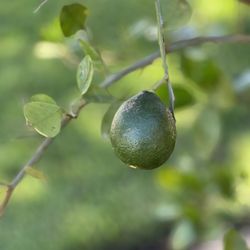
    Tangelo House - Tangelo tree on the property.

    Tangelo House

    5.0(2 reviews)
    8.3 mi

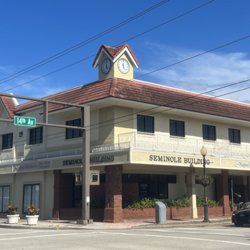
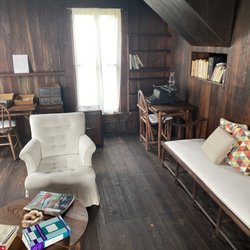
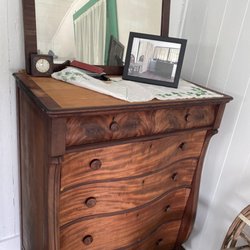
    The Tangelo House was formerly known as Ryburn's Apartment Building. It is located in the Royal…read morePark subdivision developed by Waldo Sexton and the Atlantic Construction Corporation. Arthur G. McKee was an early investor in the company and handled the lot sales. Mr. Ryburn purchased lot 8 on July 21,1926 for the construction of an right unit, two story apartment building. The building was designed in the Mission Revival style of architecture. One of the most notable early tenants was Bud Holman who was instrumental in bringing the Dodgers to Vero Beach. The Tangelo is the last remaining of four similarly built apartment from the 1920's along Royal Palm Blvd. The Waverly, The Penn, and the Flora are no longer standing. Mr. Ryburn sold the apartments to his son Alexander in 1931. In 1947 the carriage house in the back was remodeled into two apartments. In the 1950's the building became known as the Tangelo and there are three tangelo trees on the property. The Tangelo is the first apartment building to be placed on the National Register of Historic Places. Current apartment owners, Garrett and Stephanie Puzzo have restored the building back to its originally glory and today it was open for $6 tours in an event benefitting the Indian River Historical society. It was a lot of fun exploring the apartments. They are very small, but charming with arched doorways, built in shelves, and the original tubs. Most of the floors are original too as are the steel doorknobs and brass window cranks. In the center of the building is an eight foot by eight foot atrium letting in light and channeling rainwater from the roof. There was also art for sale in each room. When the building was constructed, apartments rented for $60 a month. Now most of the apartments have already been rented for between $1,400 and $1,800 a month. The upstairs apartment are larger with an additional corner room and balcony. The Tangelo Apartments in Vero Beach has been named the most haunted location on the Treasure Coast by the Florida Bureau of Paranormal Investigations. During investigations they have encountered a little girl. After the day time apartment tours finishes, Indian River Hauntings conducted a paranormal investigation open to the public for an $11 donation to the Indian River Historical Society.

    Beautifully restored building in a beautiful part of Vero Beach. Great job for the people that did…read morethe restoration!

    Photos
    Tangelo House
    Tangelo House
    Tangelo House

    See all

    The Fellsmere Railroad

    The Fellsmere Railroad

    5.0(1 review)
    11.4 mi

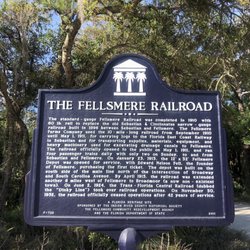
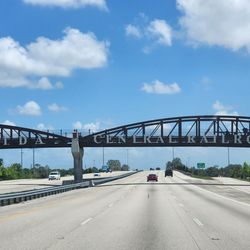
    The original rail line between Sebastian and Fellsmere was built in 1896. The 10 mile railway was…read morereplaced in 1910 and officially opened to the public on May 1, 1911. The line was originally used by the Fellsmere Farm Company to haul the heavy equipment that allowed them to excavate the drainage canals allowing them to build the town of Fellsmere. The Fellsmere Depot opened on January 23, 1913, and Edward Nelson Fell, the founder of Fellsmere, purchased the first ticket. The train was then used for passenger transportation. By April 1915, another 6 miles of track was added to extend to the next extinct town of Broadmoor. The Trans-Florida Central Railroad took over railroad operations on June 2, 1924. They operated the trains until November 30, 1952,when the railroad officially ceased operations after 42 years of service. The old railway corridor has now been transformed into the rails to trails project. The abandoned Trans-Florida Central Railway trails have been turned into hiking and mountain biking trails. The trail is a 2 mile hiking and biking pathway sitting in a former railroad corridor that once connected Sebastian and Fellsmere. The centerpiece of the trail is the iconic bridge over Interstate-95 where the name of the trail is displayed prominently in huge letters across the span of the bridge. It was designed to look like an old trail bridge. Though the railroad trail is about 15 miles long, only 2 miles of trail have been completed. You can enter the trail at the end of Fellsmere historic district where this marker is located. There is another entrance across from the Brookside Historical Cemetery.

    Photos
    The Fellsmere Railroad

    See all

    Wabasso Bridge - landmarks - Updated May 2026

    Loading...
    Loading...
    Loading...