US Coast Guard Station Hanger Photos


More like US Coast Guard Station Hanger
Recommended Reviews - US Coast Guard Station Hanger
Start your review...



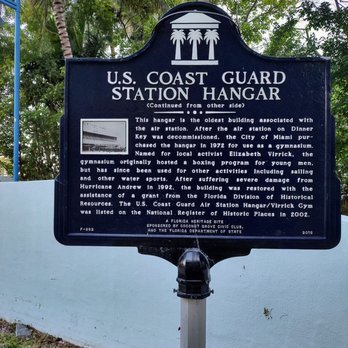
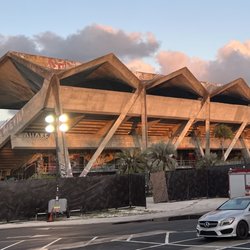
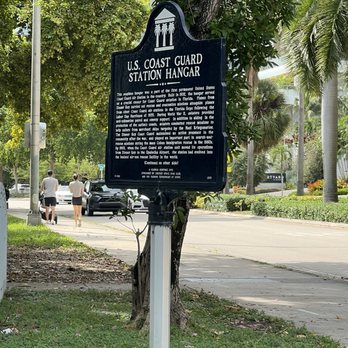
The Florida Historical Marker Program is one of the Division of Historical Resources' most popular and valued public history programs. It raises awareness of Florida's cultural history while enhancing the enjoyment of historic sites for residents and tourists. The blue historic markers tell the stories of the people and places that were important to Florida's history and they can be found in front of churches, schools, roads, archaeological sites, battlefields, and historically important buildings. The U.S. Coast Guard Hanger is one of eight historical markers installed by the City of Miami Public Works in 2015. Joyce E. Nelson, president of the Coconut Grove Civic Club was inspired to get the markers installed after seeing a similar program during a trip to Charleston. What is unique and really nice about the Coconut Grove markers is that they include historic photos. During World War I and II Coconut Grove was a US naval base. In 1932 this seaplane hangar became a part of the first permanent United States Coast Guard Air Station in the country. Planes from the Dinner Key Coast Guard rescued people from the Labor Day Hurricane of 1935. During World War II, planes flew missions to spot U Boats off the coast and rescued sailors on ships targeted by the Nazi Navy. In the 1960's, the Coast Guard rescued Cuban migrants during mass immigration. This US Coast Guard hangar site was the busiest Coast Guard station in the country until operations were moved to Opa-locka Airport in 1965. In 1972 the hangar was turned into a gymnasium used for boxing and sailing programs. It was named in honor of local activist Elizabeth Virrick. The historic Coast Guard hangar suffered extensive damage during Hurricane Andrew in 1992. It was restored with a grant from the Florida Division of Historical Resources and added to the National Register of Historic Places in 2002. Historic marker F-892 was added in 2015 by the Coconut Grove Civic Club and the Florida Department of State. read more


Another piece of Coconut Groves History can be found at the US Coast Guard Station Hanger. This seaplane hangar was a part of the first permanent United States Coast Guard Air Station in the country. Built in 1932, the hangar served as a crucial center for Coast Guard aviation in Florida. Planes from Dinner Key carried out rescue and evacuation missions alongside planes from other Coast Guard air stations in the Florida Keys following the Labor Day Hurricane of 1935. During World War II, aviators provided anti-submarine patrol and convoy support. In addition to aiding in the protection of the nation's coasts, aviators conducted rescue missions to help sailors from merchant ships targeted by the Nazi Kriegsmarine. The Dinner Key Coast Guard maintained an active presence in the community after the war and played an important part in search-and-rescue missions during the mass Cuban immigration rescue in the 1960s. By 1965, when the Coast Guard air station unit moved its operations from Dinner Key to the Opa-locka Airport, the station had evolved into the busiest air-sea rescue facility in the world. The U.S. Coast Guard Station Hanger is the oldest building associated with the air station. After the air station on Dinner Key was decommissioned, the City of Miami purchased the hangar in 1972 for use as a gymnasium. Named for local activist Elizabeth Virrick, the gymnasium originally hosted a boxing program for young men but has since been used for other activities including sailing and other water sports. After suffering severe damage from Hurricane Andrew in 1992, the building was restored with the assistance of a grant from the Florida Division of Historical Resources. The U.S. Coast Guard Air Station Hangar/Virrick Gym was listed on the National Register of Historic Places in 2002. read more