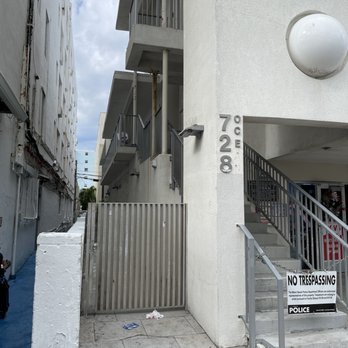
Scarface Historic Marker Photos


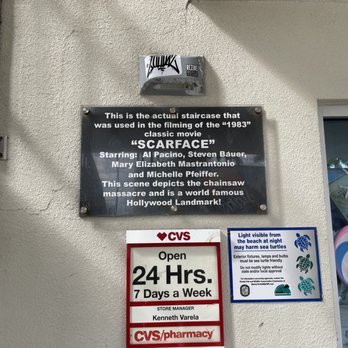
More like Scarface Historic Marker
Recommended Reviews - Scarface Historic Marker
Start your review...



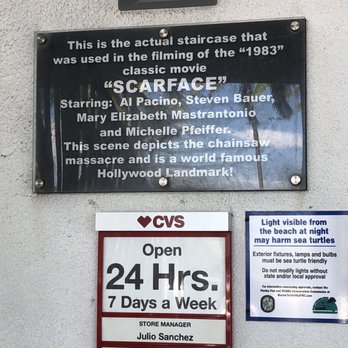
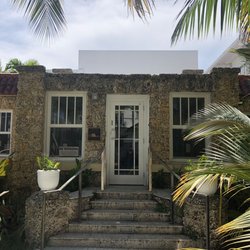
I always love discovering a bit of history and this marker is Hollywood magic right here in Miami. On Ocean Drive in South Beach is a plaque honoring that the building appeared in the movie Scarface. It used to be an apartment building but it is now a CVS that still has much of its original architecture. The rooms that were used for filming during the movie are now part of the pharmacy. Scarface is a 1983 film based on a 1929 novel and a 1932 movie. It tells the story of a mobster based on real life criminal Al Capone. In the movie Cuban refuge Tony Montana played by Al Pacino comes to Miami during the Marial boatlift in 1980 when Cuba released jail inmates and mental hospital patients who then fled the island for Florida. The film charts Tony Montana's humble arrival in Miami to his transformation as a wealthy murdering drug lord. Other people who appeared in the movie were Steven Bauer, Mary Elizabeth Mastrantonio and Michelle Pfeiffer in her first dramatic role. The movie marker is at the entrance of the staircase used during the filming of the chain saw scene. Look for it to the right of the stairs and to the left of the main entry to the building. You might think the city of Miami was pleased to be depicted in a Hollywood film but it was not. They were concerned about the movie's portrayal of Cuban Americans so civic leaders pushed to get filming moved out of Florida. Very little was actually filmed in South Beach and the filmmakers continued production in New York and California. If you are in the area its a great place to stop for a selfie. read more
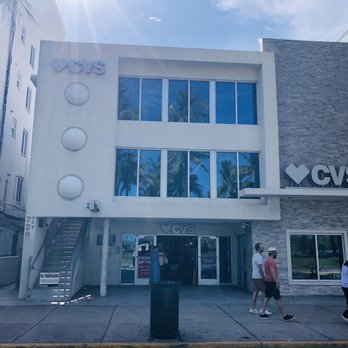
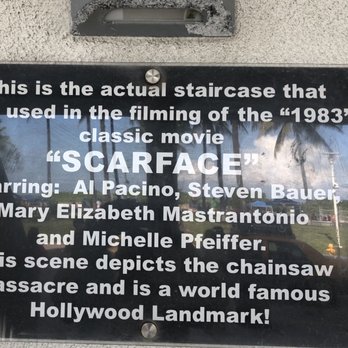
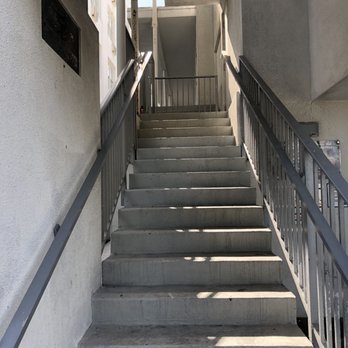

Okay, I know rating a plaque 5 stars is a little over the top BUT Scarface is one of my all time favorite movies and I HAD to check this place out. Oddly we were looking for a drug store, so it was a win/win when we found out the old Sun Ray Hotel, the Scarface scene of the coke deal with Colombians and chainsaw body mutilation were one and the same! Super cool to just envision the whole thing, then go in and get some water, snacks and toiletries at the CVS! read more

The movie "Scarface" came out in 1983. It starred Al Pacino as a guy who came from Cuba and became a big drug lord in Miami. Pacino was nominated for an Academy Award for best actor for his role. (He didn't win.) In the movie, he starts out working in "Little Havana". Due to political reasons most of the film was shot in Los Angeles. Later in the film, there's a grisly murder scene involving a chain saw. It's one of the few scenes actually filmed in Miami to capture Ocean Drive. The building where this scene was filmed is now renovated and is a CVS store. A portion of the facade of the building (the former Sun Ray apartments),however, was preserved. People were sitting on the (actual) staircase used in the film scene when I stopped by. I didn't take a photo of it, but attached you'll see the plaque on the wall of the now CVS commemorating this "historic" movie site. read more
More info about Scarface Historic Marker


















Why does Yelp recommend reviews?
1 review that is not currently recommended
The reviews below are not factored into the business's overall star rating.

6 months ago


