Cancel

Open app

Search

Tyntesfield

3.0 (3 reviews)
Closed • 11:00 am - 5:00 pm

Tyntesfield Photos

Recommended Reviews - Tyntesfield

Your trust is our priority, so businesses can't pay to alter or remove their reviews. Learn more about reviews.
Yelp app icon
Browse more easily on the app
Review Feed Illustration

7 years ago

Helpful 0
Thanks 0
Love this 0
Oh no 0
Photo of Rowena R.
8
640
624

16 years ago

Helpful 0
Thanks 0
Love this 0
Oh no 0
Photo of Melanie M.
2
332
328

17 years ago

Helpful 1
Thanks 0
Love this 0
Oh no 0

Verify this business for free

Get access to customer & competitor insights.

Verify this business

Stanton Drew Stone Circles

Stanton Drew Stone Circles

(2 reviews)

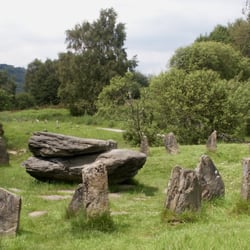
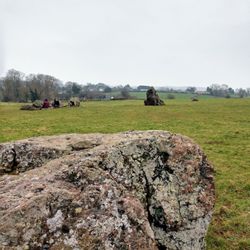
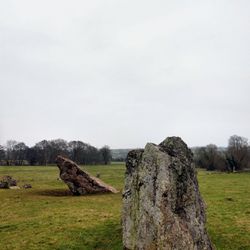
Everyone has heard of Stonehenge, right? but maybe not these stones. These are most definitely…read moreworthy of a visit. here is some information regarding them - The megalithic complex at Stanton Drew in Somerset consists of three stone circles and a three-stone group known as "The Cove," dating back as far as 2000-3000 BCE. Although this is the third largest complex of prehistoric standing stones in England, it is surprisingly little known. The village of Stanton Drew preserves the third largest complex of standing stones in England, built about 4,500 years ago. Perhaps because it lies off the beaten track, its remarkable prehistoric stone circles have not received the same level of interest and exploration as the more famous examples at Avebury and Stonehenge. Yet recent surveys have revealed that the circles and cove were part of a much more elaborate and important ritual site than had previously been imagined. There are three stone circles at Stanton Drew, one large and two small.  They have never been excavated, so it is difficult to say exactly how, why and when they were built. However, based on comparison with other stone circles and timber monuments, it is likely that they were constructed as ceremonial monuments around 2500 BC, during the late Neolithic period. The Great Circle, at 113 metres (370 feet) across, is one of the largest in the country. It has 26 surviving upright stones, although there may once have been many more. Geophysical surveys, which detect features under the ground, have revealed that the monument would have looked very different 4,500 years ago. Inside the circle were nine concentric rings of wooden posts, each standing several metres tall. Although similar timber circles are known elsewhere, such as Woodhenge, this is the largest and most complex timber monument known in the British Isles. Surrounding the stones would have been a large and deep circular ditch, 6-7 metres (20-23 feet) wide and about 135 metres (440 feet) in diameter, probably with one or two banks, making it a henge monument. A 50-metre (164-foot) gap on the north-east side formed a wide entrance. The other two circles, to the south-west and north-east, are smaller. The remains of the north-east circle, even though it is the smallest of the three, include some of the largest and heaviest blocks of stone, which would have required many people to move. Within this circle, geophysical surveys have shown that four enormous timber posts once stood in a square. This is a type of monument built across Britain and Ireland during the late Neolithic period, sometimes called 'square-in-circle' or 'four-poster' sites. It is not yet understood whether these were buildings, raised platforms or some other form of ceremonial structures. The three circles stand on the floodplain of the river Chew. Both the Great Circle and the north-east circle were approached by short 'avenues' (parallel lines) of standing stones leading down towards the river. Most of these have now fallen

It's likely that you'll have heard of Stonehenge and Avebury, but Stanton Drew Stone circle? Not…read morequite so famous. Which is a shame because it's just on our doorstep and very pretty indeed. We parked just behind the pub (The Druid's Arms - a pertinent name!) and rambled into the fields, passing the £1 honesty box and paying our toll. The stone circle is owned by English Heritage, but the car park and stones themselves do need a bit of upkeep I suppose. You can grab a leaflet about the history of the place on the way through the kissing gate (how very English). It's dodge-the-sheep-poo into the field, and when we were there were certainly more sheep than people (so leave your canine friends at home). The stones themselves, monolothic structures, shaped into a circle with one flat horizontal rock in the middle. Fancy a picnic? This is a great place to lay out the table cloth in the summer (again, dodge the droppings though!) All in all, it takes less than 20 mins to wander around the whole site and is actually a larger site than Stonehenge (although the stones themselves are smaller). However, the pub's a nice one and there's a pretty church nearby - so you could easily spend a Sunday afternoon out in the area.

Tyntesfield - landmarks - Updated May 2026

Loading...
Loading...
Loading...