Cancel

Open app

Search

Bishop's Palace Photos

Recommended Reviews - Bishop's Palace

Your trust is our priority, so businesses can't pay to alter or remove their reviews. Learn more about reviews.
Yelp app icon
Browse more easily on the app
Review Feed Illustration

11 months ago

Helpful 3
Thanks 1
Love this 1
Oh no 0

6 years ago

Helpful 1
Thanks 0
Love this 0
Oh no 0
Photo of Jenn C.
420
1863
1931

12 years ago

Helpful 1
Thanks 0
Love this 1
Oh no 0

13 years ago

Helpful 0
Thanks 0
Love this 0
Oh no 0
Photo of Helen M.
0
422
835

18 years ago

Helpful 0
Thanks 0
Love this 0
Oh no 0

It's a lovely, I wouldn't go unless it's sunny, you do have to make a effort to enjoy wells.

Helpful 0
Thanks 0
Love this 0
Oh no 0

18 years ago

Helpful 0
Thanks 0
Love this 0
Oh no 0

Verify this business for free

Get access to customer & competitor insights.

Verify this business

Glastonbury Tor - From the field

Glastonbury Tor

(8 reviews)

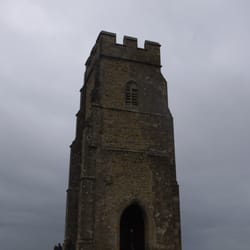
WOW! One of the best FREE things you can do on UK roadtrip...assuming you're in good health! There…read moreare two ways up, and easy way and hard way...we unfortunately took the hard way up, and the easy way down, but at least we can say we did both! It's a short hike either way but still wear good shoes, bring water, maybe food, sunglasses, and hat if its a sunny day. The wide panoramic views at the top are incredible on a clear sunny day. The tower is interesting though not completely amazing. It's more decorative than useful to be honest...I feel sorry the workers/slaves who had to haul up the stones so many centuries ago.

I've been a fan of Arthurian legends for as long as I can remember, and Glastonbury Tor standing…read moretall in my mind ever since playing "Conquests of Camelot" on my Tandy 386 back in the 80s. The solitary tower became, in my impressionable mind, not only a concrete symbol of the Arthurian mythos, but a tangible link to the stories that shaped my childhood, fostered my creativity, and sculpted my personality. I hoped to one day see it in person; to stand in its shadow, and absorb the impression of its history, and the aura of its legends. Glastonbury Tor is one of the proposed locations of the mythical Isle of Avalon, the "island in a sea of mist" upon which King Arthur was buried. There is some precedent for this belief, as the valley surrounding the hill is regularly filled with a thick white fog, as far as the eye can see. The hill of Glastonbury rises from this sea of roiling white like an island, with the lonely tower at its apex standing like a grave marker. And below, at the base of the Tor, within the ruins of Glastonbury Abbey, lie the graves of the man who inspired the legends of Arthur and Camelot. Truly, if there is an Avalon, this is it. As a child, I never thought I would actually see the day that I'd be standing atop that hill, 25 years later, my epic quest (journey? pilgrimage?) complete. Overwhelmed by this fabled obelisk, with its magnanimous legacy promising that the stories I had idolized contained at least a grain of truth, I wept tears of joy and contentment.

Church of St Mary Magdalene - St Andrew's Chapel

Church of St Mary Magdalene

(3 reviews)

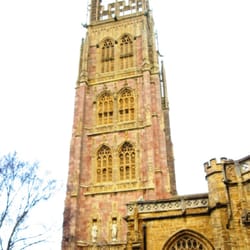
The ancient County Town of Somerset has a church worthy of its status and history, famous for its…read moresplendid tower, which is a landmark for miles around. The early history of the church is obscure: Taunton was the home of a great Augustinian Priory under the control of the Bishops of Winchester, who were also Lords of the Manor until the 19th century. The town that grew up alongside the castle and Priory looked to the Priory for many of its spiritual needs, but the townspeople probably had their own church on the present site from at least the 11th century onwards. However, the first recorded mention of the church is in the 13th century, and foundations of that age have been found during various archaeological excavations. In 1308 the church became independent of the Priory, and over the next two hundred years was rebuilt into the form we see to-day. From the outside and particularly from the perfect view between the Georgian houses of Hammet Street the dominant feature is its tower. Somerset is famed for its huge towers, built in the 15th and early 16th centuries on the wealth that came from the wool trade. They are divided into the Wells group, with vertical emphasis, and the Taunton group, with horizontal emphasis. Unsurprisingly, St Mary's belongs to the latter group, and is the grandest by far. At 163ft, (50m) it can be seen for miles. It is built in a striking red sandstone, with window openings and tracery in golden Ham stone. Constructed in 1514, the present tower is actually a copy (albeit an exact one using much of the original materials) completed in 1862, after the original became unsafe. The other external feature is the generous south porch, dating from 1508, and decorated with elaborate niches, although the statues are Victorian replacements for those destroyed in the Reformation. Indeed, much of the decoration in the church had to be replaced, following extensive damage during the Commonwealth period Taunton was a staunch Puritan town. The interior is splendid the plan is almost square, thanks to its generous double aisles, giving the impression of a forest of columns. The oldest elements are the arcade arches at the east end of the nave, which date from the late 13th century. Otherwise, most of the fabric dates from the 14th and 15th centuries. Of particular note is the 15th century carved wooden roof, with its gilded angels a Somerset tradition. There are more angels carved on the nave capitals and corbels. Although most of the furnishings are Victorian, there are some attractive memorials: on the north wall, an almost life-size statue of Robert Graye, (1570-1635), flanked by columns and topped with a arched pediment, recalls a famous son of Taunton and a generous benefactor, who built almshouses for the poor in East Street, which are still in use to-day. The windows in the north aisle contain fragments of brightly coloured mediaeval glass. Another benefactor was Richard Huish, (d. 1615), and his plainer but still attractive memorial is found on the South wall. At the west end of the inner aisle, is a stone memorial to Thomas More, (d. 1576), second owner of the Priory following the Dissolution. To-day it provides the backdrop to the small shop, selling cards and fairly traded items. Opposite, in the North Aisle, is a small but lively café, apparently catering to a regular group of pensioners. Finally, this church has a personal connection, which makes it especially interesting to me: my Great-Great-Great Grandfather and Grandmother were married here, in July 1828.

This is the largest church in Somerset, situated right in the centre of its county town, Taunton…read more I can thorougly recommend this as a place to get married! The church is really spacious and so you can have as many seated guests as you can wish. They will organise beautiful flowers for you and, of course, the photographs look great with such an amazing place in them. The vicar has changed since we got married and so I can't say what he is like but our day was really special.

Coity Castle - http://www.cadw.wales.gov.uk/default.asp?id=6&PlaceID=54

Coity Castle

(2 reviews)

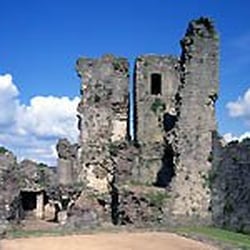
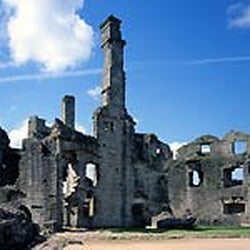
Coity Castle is a magical place full of distant battle cries and that incredible sense that…read moreimportant things have happened there. Built in 1100 and then rebuilt after a siege by Owain Glyndwr, this is a castle often overlooked by visitors to Wales, despite its extremely important part in Welsh history. Although other castles, such as Cardiff Castle, Caerphilly Castle and Castell Coch, are more visited, I would argue that it's the lesser known relics which are more interesting. This Medieval castle is built up on a hill, with clear evidence of moats, and looks almost like a half-rotten tooth sticking up into the sky. It has just as much grandeur and fairy-tale quality as a person could ask for in a castle. This historic site is well worth a visit; sunset will reward you will specular photographs and views.

This is another of South Wales's impressive Norman Castles, standing in ruins near the town of…read moreBridgend in South Wales, not far from Cardiff. It was built by Sir Payn "the Demon" de Turberville, one of the legendary Twelve Knights of Glamorgan who are supposed to have conquered the area under the leadership of Robert FitzHamon, Lord of Gloucester. Although it was originally built soon after 1100, a lot of the castle actually dates from the fourteenth century and later. Parts of it were rebuilt following the siege by Owain Glyn Dr in 1404-05. Despite being in ruins, there are still plenty of interesting features to see - including the remains of the central octagonal pillar for the vaults of the castle. If you have OS map 170 the reference is SS 923815. Nearby you can also visit Newcastle and Ogmore Castles in a day trip.

Bishop's Palace - landmarks - Updated May 2026

Loading...
Loading...
Loading...