Glastonbury Abbey Photos
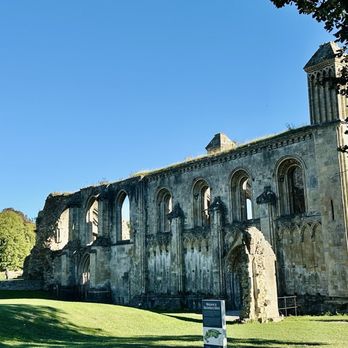


Recommended Reviews - Glastonbury Abbey
Start your review...


Reviews With Photos


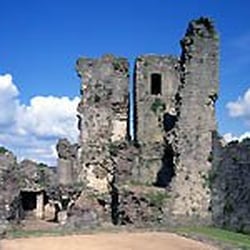
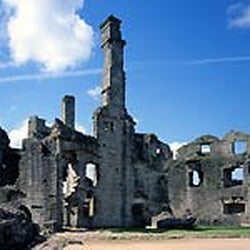
There is no doubt that the legends surrounding the mythical figure of King Arthur are romanticized and exaggerated. Even so, these tales have captivated and inspired millions of young "squires" to espouse the concepts of honor, duty and chivalry. I believe these tales have made us all better men and women. Whether or not the figure buried here is the man behind the legend (and many scholars believe it his *the* King Arthur, although his life bears little resemblance to the tales of Thomas Malory and T.S. Eliot), kneeling before the grave of such a literary and cultural titan is a humbling experience, and only deepened my desire to continue pursuing the truth of this inspiring figure. Was he nothing more than a British (Welsh?) warlord who fended off several invasions of Saxon hordes, or was he truly a devout Paladin of God, who launched several crusades to find the Holy Grail, was betrayed by his closest knight and beloved wife, and slain by his corrupted son? Does it matter? While the abbey's walls and foundations still stand (for the most part), and a few secrets still lurk within the rubble (such as a couple of floor tiles still bearing their original designs and paint), the Abbot's Kitchen and other satellite buildings have been preserved or renovated, and offer a better example of the architecture and daily life of the monks who once inhabited this history-laden holy site. Be sure to walk the entire grounds to take in the breadth and splendor of the efforts undertaken to preserve this amazing landmark. I departed the ruins of Glastonbury Abbey (left abandoned to stone salvagers in the 16th century, now only a shell of its former glory) awed, humbled and renewed in my love of all things Camelot, fictional or not.


Here is some information I found out about Glastonbury Abbey from the net - see below.. "Although today it stands in ruins, Glastonbury Abbey, in Somerset, England, is still a powerfully evocative place, shrouded in history, religion, and mythology. One story claims that Joseph of Arimathea, legendary keeper of the Holy Grail, founded the first Christian church in Britain at Glastonbury shortly after the death of Christ. Another holds that in 1191, monks from the abbey unearthed a hollowed-out log containing two bodies and an inscribed cross that read: "Here lies buried King Arthur and his wife Guinevere." The traditions and myths surrounding Glastonbury Abbey are perhaps key among the reasons it developed into one of the most important--and wealthiest--monasteries in Europe. But skeptics have long decried these stories as inventions by medieval monks to fill the abbey's coffers, especially after a massive fire destroyed the monastery in 1184. Archaeologist Roberta Gilchrist of the University of Reading has recently completed a multiyear project aimed at constructing a new history of Glastonbury Abbey, unencumbered by previous assumptions based solely on myth. "Glastonbury Abbey holds a unique place in the history of medieval monasticism and in the development of English cultural identity," says Gilchrist. "Yet despite its historical and cultural significance, relatively little was known about the abbey's archaeology." Most of the Glastonbury Abbey Project's efforts were focused on reevaluating data from previous excavations. From 1904 to 1979, at least 36 excavations were completed, but much of that material was lost or never published. It has also been frequently misinterpreted. Gilchrist and her team have spent several years combing through a century's worth of archives, as well as conducting new radiocarbon dating and chemical composition analysis on previously excavated artifacts. "Our goals were to assess the scholarly significance of the excavations and provide a new historical source of evidence for understanding the site," says Gilchrist. Researchers also reevaluated the purported site of King Arthur's grave. Both the skeletal remains and the inscribed cross disappeared after the dissolution of the abbey in 1539, but archaeologist Ralegh Radford claimed to have found the original burial site when he excavated at Glastonbury during the 1950s and 1960s. Unfortunately, there is little proof connecting that site with the famous king. "Radford may have exaggerated his evidence," says Gilchrist. "Reassessment of his excavation records shows that this was merely a pit in a cemetery, dating to sometime between the eleventh and fifteenth centuries." Analysis of the twelfth-century abbey church indicates that the monks themselves purposefully promoted the site's historic reputation. As they rebuilt the church after the great fire in 1184, instead of using contemporary architectural styles, they inserted antiquated and retrospective elements, apparently to deliberately feign antiquity. There is no doubt that many of the myths surrounding Glastonbury Abbey were at least partially created or propagated in both medieval and modern times. However, according to Gilchrist, too much media attention has focused on the new evidence that seems to refute Glastonbury's mythical traditions. For her, there is room for both archaeology and legend to coexist. "At Glastonbury, people respond on a personal level to the place and its historical, legendary, and spiritual resonances. We didn't claim to disprove the legendary associations, nor would we wish to," she says. "Archaeology can help us to understand how legends evolve and what people in the past believed." In fact, she notes, the project has actually uncovered the first definitive proof of occupation at the Glastonbury Abbey site during the fifth century--when Arthur allegedly lived. -------------------------------------------------------- So I came here with my husband on a lovely sunny December morning for a walk around. The indoor area shows relics and explanations of everything regarding this abbey and its history. Definitely worthy of a few hours. The grounds are beautiful and very nicely manicured.Also Glastonbury town centre makes for a very interesting place if you are into History - as there are more things to see in the area.


My mom and I had much fun traipsing around Glastonbury the town and the abbey on our August 2013 vacation. The abbey is behind great walls -- like an enormous enclosed park -- inside a darling little hippie-ish town that is full of vegetarian/veggie friendly restaurants, shops full of Tibetan jewelry, loads of crystals, new age books, primitive drapey clothing from India and other Eastern locales plus a darned good farmer's market. Once you find your way to the Abbey grounds, it open up to a vast area with the ruins and lush green turf. It's huge - they have concerts there. The museum at the entrance is very well done and the costumed docents were very friendly and informative. My big thrill, honestly, was getting to interact with the independent raptor rescue group - Sharandys Birds of Prey. Some other folks idea of fun was rolling sideways down the slight grassy slope (ok, those people were like 2 and 3 years old). Bring a book, a blanket, and a picnic - if it's a sunny day, you won't regret it.


1 year ago

Loved it. If you're reading this and considering going I'm going to take a guess that the history and mythology surrounding the location means something. That being said........are you telling me I can stand in on the ground that held King Arthur's tomb and expect me not to go!?!?!?? Beautiful grounds. Read up on the history of the grounds and take a walk around recreating it in your head. Take some great pics and enjoy a few hours in the town streets and shops. read more
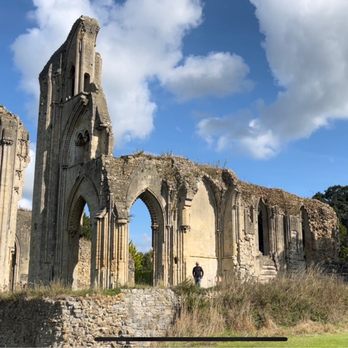
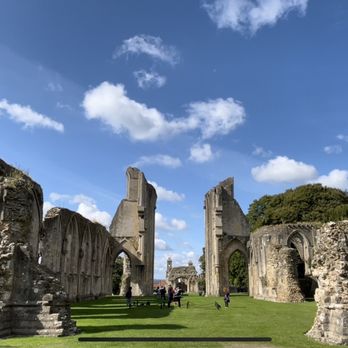

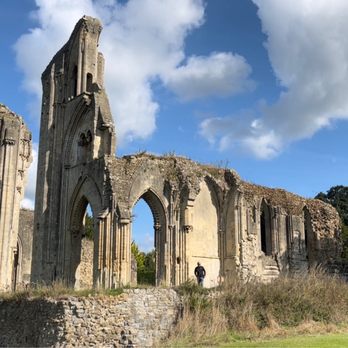


There is no doubt that the legends surrounding the mythical figure of King Arthur are romanticized and exaggerated. Even so, these tales have captivated and inspired millions of young "squires" to espouse the concepts of honor, duty and chivalry. I believe these tales have made us all better men and women. Whether or not the figure buried here is the man behind the legend (and many scholars believe it his *the* King Arthur, although his life bears little resemblance to the tales of Thomas Malory and T.S. Eliot), kneeling before the grave of such a literary and cultural titan is a humbling experience, and only deepened my desire to continue pursuing the truth of this inspiring figure. Was he nothing more than a British (Welsh?) warlord who fended off several invasions of Saxon hordes, or was he truly a devout Paladin of God, who launched several crusades to find the Holy Grail, was betrayed by his closest knight and beloved wife, and slain by his corrupted son? Does it matter? While the abbey's walls and foundations still stand (for the most part), and a few secrets still lurk within the rubble (such as a couple of floor tiles still bearing their original designs and paint), the Abbot's Kitchen and other satellite buildings have been preserved or renovated, and offer a better example of the architecture and daily life of the monks who once inhabited this history-laden holy site. Be sure to walk the entire grounds to take in the breadth and splendor of the efforts undertaken to preserve this amazing landmark. I departed the ruins of Glastonbury Abbey (left abandoned to stone salvagers in the 16th century, now only a shell of its former glory) awed, humbled and renewed in my love of all things Camelot, fictional or not. read more


Here is some information I found out about Glastonbury Abbey from the net - see below.. "Although today it stands in ruins, Glastonbury Abbey, in Somerset, England, is still a powerfully evocative place, shrouded in history, religion, and mythology. One story claims that Joseph of Arimathea, legendary keeper of the Holy Grail, founded the first Christian church in Britain at Glastonbury shortly after the death of Christ. Another holds that in 1191, monks from the abbey unearthed a hollowed-out log containing two bodies and an inscribed cross that read: "Here lies buried King Arthur and his wife Guinevere." The traditions and myths surrounding Glastonbury Abbey are perhaps key among the reasons it developed into one of the most important--and wealthiest--monasteries in Europe. But skeptics have long decried these stories as inventions by medieval monks to fill the abbey's coffers, especially after a massive fire destroyed the monastery in 1184. Archaeologist Roberta Gilchrist of the University of Reading has recently completed a multiyear project aimed at constructing a new history of Glastonbury Abbey, unencumbered by previous assumptions based solely on myth. "Glastonbury Abbey holds a unique place in the history of medieval monasticism and in the development of English cultural identity," says Gilchrist. "Yet despite its historical and cultural significance, relatively little was known about the abbey's archaeology." Most of the Glastonbury Abbey Project's efforts were focused on reevaluating data from previous excavations. From 1904 to 1979, at least 36 excavations were completed, but much of that material was lost or never published. It has also been frequently misinterpreted. Gilchrist and her team have spent several years combing through a century's worth of archives, as well as conducting new radiocarbon dating and chemical composition analysis on previously excavated artifacts. "Our goals were to assess the scholarly significance of the excavations and provide a new historical source of evidence for understanding the site," says Gilchrist. Researchers also reevaluated the purported site of King Arthur's grave. Both the skeletal remains and the inscribed cross disappeared after the dissolution of the abbey in 1539, but archaeologist Ralegh Radford claimed to have found the original burial site when he excavated at Glastonbury during the 1950s and 1960s. Unfortunately, there is little proof connecting that site with the famous king. "Radford may have exaggerated his evidence," says Gilchrist. "Reassessment of his excavation records shows that this was merely a pit in a cemetery, dating to sometime between the eleventh and fifteenth centuries." Analysis of the twelfth-century abbey church indicates that the monks themselves purposefully promoted the site's historic reputation. As they rebuilt the church after the great fire in 1184, instead of using contemporary architectural styles, they inserted antiquated and retrospective elements, apparently to deliberately feign antiquity. There is no doubt that many of the myths surrounding Glastonbury Abbey were at least partially created or propagated in both medieval and modern times. However, according to Gilchrist, too much media attention has focused on the new evidence that seems to refute Glastonbury's mythical traditions. For her, there is room for both archaeology and legend to coexist. "At Glastonbury, people respond on a personal level to the place and its historical, legendary, and spiritual resonances. We didn't claim to disprove the legendary associations, nor would we wish to," she says. "Archaeology can help us to understand how legends evolve and what people in the past believed." In fact, she notes, the project has actually uncovered the first definitive proof of occupation at the Glastonbury Abbey site during the fifth century--when Arthur allegedly lived. -------------------------------------------------------- So I came here with my husband on a lovely sunny December morning for a walk around. The indoor area shows relics and explanations of everything regarding this abbey and its history. Definitely worthy of a few hours. The grounds are beautiful and very nicely manicured.Also Glastonbury town centre makes for a very interesting place if you are into History - as there are more things to see in the area. read more


My mom and I had much fun traipsing around Glastonbury the town and the abbey on our August 2013 vacation. The abbey is behind great walls -- like an enormous enclosed park -- inside a darling little hippie-ish town that is full of vegetarian/veggie friendly restaurants, shops full of Tibetan jewelry, loads of crystals, new age books, primitive drapey clothing from India and other Eastern locales plus a darned good farmer's market. Once you find your way to the Abbey grounds, it open up to a vast area with the ruins and lush green turf. It's huge - they have concerts there. The museum at the entrance is very well done and the costumed docents were very friendly and informative. My big thrill, honestly, was getting to interact with the independent raptor rescue group - Sharandys Birds of Prey. Some other folks idea of fun was rolling sideways down the slight grassy slope (ok, those people were like 2 and 3 years old). Bring a book, a blanket, and a picnic - if it's a sunny day, you won't regret it. read more


10 years ago
Our first stop of our day was Glastonbury Abbey, the ruins of a monastery originally founded in the 7th century. The Glastonbury area is associated with the legend of King Arthur, and it is rumored that King Arthur was originally buried there. read more


13 years ago

8 years ago

9 years ago