Cancel

    Open app

    Search

    The Manor House Photos

    Recommended Reviews - The Manor House

    Your trust is our priority, so businesses can't pay to alter or remove their reviews. Learn more about reviews.
    Yelp app icon
    Browse more easily on the app
    Review Feed Illustration
    Photo of Kathryn C.
    32
    320
    141

    16 years ago

    Helpful 0
    Thanks 0
    Love this 0
    Oh no 0

    Verify this business for free

    Get access to customer & competitor insights.

    Verify this business

    Stanton Drew Stone Circles

    Stanton Drew Stone Circles

    4.5(2 reviews)
    6.0 km

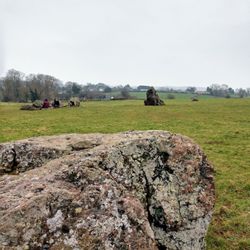
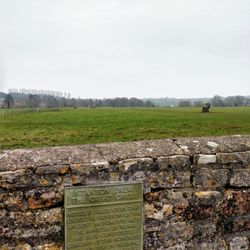
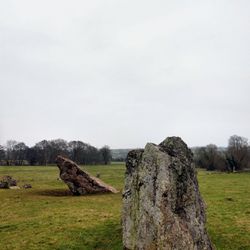
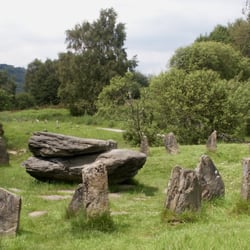
    Everyone has heard of Stonehenge, right? but maybe not these stones. These are most definitely…read moreworthy of a visit. here is some information regarding them - The megalithic complex at Stanton Drew in Somerset consists of three stone circles and a three-stone group known as "The Cove," dating back as far as 2000-3000 BCE. Although this is the third largest complex of prehistoric standing stones in England, it is surprisingly little known. The village of Stanton Drew preserves the third largest complex of standing stones in England, built about 4,500 years ago. Perhaps because it lies off the beaten track, its remarkable prehistoric stone circles have not received the same level of interest and exploration as the more famous examples at Avebury and Stonehenge. Yet recent surveys have revealed that the circles and cove were part of a much more elaborate and important ritual site than had previously been imagined. There are three stone circles at Stanton Drew, one large and two small.  They have never been excavated, so it is difficult to say exactly how, why and when they were built. However, based on comparison with other stone circles and timber monuments, it is likely that they were constructed as ceremonial monuments around 2500 BC, during the late Neolithic period. The Great Circle, at 113 metres (370 feet) across, is one of the largest in the country. It has 26 surviving upright stones, although there may once have been many more. Geophysical surveys, which detect features under the ground, have revealed that the monument would have looked very different 4,500 years ago. Inside the circle were nine concentric rings of wooden posts, each standing several metres tall. Although similar timber circles are known elsewhere, such as Woodhenge, this is the largest and most complex timber monument known in the British Isles. Surrounding the stones would have been a large and deep circular ditch, 6-7 metres (20-23 feet) wide and about 135 metres (440 feet) in diameter, probably with one or two banks, making it a henge monument. A 50-metre (164-foot) gap on the north-east side formed a wide entrance. The other two circles, to the south-west and north-east, are smaller. The remains of the north-east circle, even though it is the smallest of the three, include some of the largest and heaviest blocks of stone, which would have required many people to move. Within this circle, geophysical surveys have shown that four enormous timber posts once stood in a square. This is a type of monument built across Britain and Ireland during the late Neolithic period, sometimes called 'square-in-circle' or 'four-poster' sites. It is not yet understood whether these were buildings, raised platforms or some other form of ceremonial structures. The three circles stand on the floodplain of the river Chew. Both the Great Circle and the north-east circle were approached by short 'avenues' (parallel lines) of standing stones leading down towards the river. Most of these have now fallen

    It's likely that you'll have heard of Stonehenge and Avebury, but Stanton Drew Stone circle? Not…read morequite so famous. Which is a shame because it's just on our doorstep and very pretty indeed. We parked just behind the pub (The Druid's Arms - a pertinent name!) and rambled into the fields, passing the £1 honesty box and paying our toll. The stone circle is owned by English Heritage, but the car park and stones themselves do need a bit of upkeep I suppose. You can grab a leaflet about the history of the place on the way through the kissing gate (how very English). It's dodge-the-sheep-poo into the field, and when we were there were certainly more sheep than people (so leave your canine friends at home). The stones themselves, monolothic structures, shaped into a circle with one flat horizontal rock in the middle. Fancy a picnic? This is a great place to lay out the table cloth in the summer (again, dodge the droppings though!) All in all, it takes less than 20 mins to wander around the whole site and is actually a larger site than Stonehenge (although the stones themselves are smaller). However, the pub's a nice one and there's a pretty church nearby - so you could easily spend a Sunday afternoon out in the area.

    Photos
    Stanton Drew Stone Circles
    Stanton Drew Stone Circles
    Stanton Drew Stone Circles

    See all

    Church of St Mary Magdalene - St Andrew's Chapel

    Church of St Mary Magdalene

    5.0(3 reviews)
    55.7 km

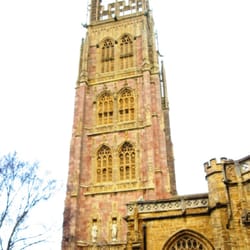
    The ancient County Town of Somerset has a church worthy of its status and history, famous for its…read moresplendid tower, which is a landmark for miles around. The early history of the church is obscure: Taunton was the home of a great Augustinian Priory under the control of the Bishops of Winchester, who were also Lords of the Manor until the 19th century. The town that grew up alongside the castle and Priory looked to the Priory for many of its spiritual needs, but the townspeople probably had their own church on the present site from at least the 11th century onwards. However, the first recorded mention of the church is in the 13th century, and foundations of that age have been found during various archaeological excavations. In 1308 the church became independent of the Priory, and over the next two hundred years was rebuilt into the form we see to-day. From the outside and particularly from the perfect view between the Georgian houses of Hammet Street the dominant feature is its tower. Somerset is famed for its huge towers, built in the 15th and early 16th centuries on the wealth that came from the wool trade. They are divided into the Wells group, with vertical emphasis, and the Taunton group, with horizontal emphasis. Unsurprisingly, St Mary's belongs to the latter group, and is the grandest by far. At 163ft, (50m) it can be seen for miles. It is built in a striking red sandstone, with window openings and tracery in golden Ham stone. Constructed in 1514, the present tower is actually a copy (albeit an exact one using much of the original materials) completed in 1862, after the original became unsafe. The other external feature is the generous south porch, dating from 1508, and decorated with elaborate niches, although the statues are Victorian replacements for those destroyed in the Reformation. Indeed, much of the decoration in the church had to be replaced, following extensive damage during the Commonwealth period Taunton was a staunch Puritan town. The interior is splendid the plan is almost square, thanks to its generous double aisles, giving the impression of a forest of columns. The oldest elements are the arcade arches at the east end of the nave, which date from the late 13th century. Otherwise, most of the fabric dates from the 14th and 15th centuries. Of particular note is the 15th century carved wooden roof, with its gilded angels a Somerset tradition. There are more angels carved on the nave capitals and corbels. Although most of the furnishings are Victorian, there are some attractive memorials: on the north wall, an almost life-size statue of Robert Graye, (1570-1635), flanked by columns and topped with a arched pediment, recalls a famous son of Taunton and a generous benefactor, who built almshouses for the poor in East Street, which are still in use to-day. The windows in the north aisle contain fragments of brightly coloured mediaeval glass. Another benefactor was Richard Huish, (d. 1615), and his plainer but still attractive memorial is found on the South wall. At the west end of the inner aisle, is a stone memorial to Thomas More, (d. 1576), second owner of the Priory following the Dissolution. To-day it provides the backdrop to the small shop, selling cards and fairly traded items. Opposite, in the North Aisle, is a small but lively café, apparently catering to a regular group of pensioners. Finally, this church has a personal connection, which makes it especially interesting to me: my Great-Great-Great Grandfather and Grandmother were married here, in July 1828.


    This is the largest church in Somerset, situated right in the centre of its county town, Taunton…read more I can thorougly recommend this as a place to get married! The church is really spacious and so you can have as many seated guests as you can wish. They will organise beautiful flowers for you and, of course, the photographs look great with such an amazing place in them. The vicar has changed since we got married and so I can't say what he is like but our day was really special.

    Photos
    Church of St Mary Magdalene - Tower of St Mary Magdalene. Red sandstone with Ham stone facings.

    Tower of St Mary Magdalene. Red sandstone with Ham stone facings.

    Church of St Mary Magdalene - Fragments of mediaeval stained glass in north aisle.

    Fragments of mediaeval stained glass in north aisle.

    Church of St Mary Magdalene - Chancel and High Altar

    See all

    Chancel and High Altar

    Coity Castle - http://www.cadw.wales.gov.uk/default.asp?id=6&PlaceID=54

    Coity Castle

    5.0(2 reviews)
    66.3 km

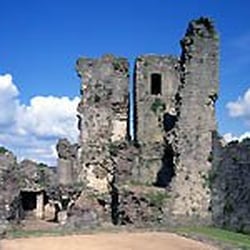
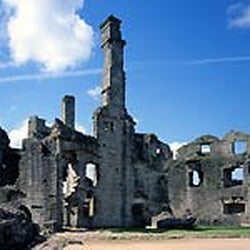
    Coity Castle is a magical place full of distant battle cries and that incredible sense that…read moreimportant things have happened there. Built in 1100 and then rebuilt after a siege by Owain Glyndwr, this is a castle often overlooked by visitors to Wales, despite its extremely important part in Welsh history. Although other castles, such as Cardiff Castle, Caerphilly Castle and Castell Coch, are more visited, I would argue that it's the lesser known relics which are more interesting. This Medieval castle is built up on a hill, with clear evidence of moats, and looks almost like a half-rotten tooth sticking up into the sky. It has just as much grandeur and fairy-tale quality as a person could ask for in a castle. This historic site is well worth a visit; sunset will reward you will specular photographs and views.

    This is another of South Wales's impressive Norman Castles, standing in ruins near the town of…read moreBridgend in South Wales, not far from Cardiff. It was built by Sir Payn "the Demon" de Turberville, one of the legendary Twelve Knights of Glamorgan who are supposed to have conquered the area under the leadership of Robert FitzHamon, Lord of Gloucester. Although it was originally built soon after 1100, a lot of the castle actually dates from the fourteenth century and later. Parts of it were rebuilt following the siege by Owain Glyn Dr in 1404-05. Despite being in ruins, there are still plenty of interesting features to see - including the remains of the central octagonal pillar for the vaults of the castle. If you have OS map 170 the reference is SS 923815. Nearby you can also visit Newcastle and Ogmore Castles in a day trip.

    Photos
    Coity Castle - Http://www.cadw.wales.gov.uk/default.asp?id=6&PlaceID=54

    Http://www.cadw.wales.gov.uk/default.asp?id=6&PlaceID=54

    Coity Castle - Http://www.cadw.wales.gov.uk/default.asp?id=6&PlaceID=54

    Http://www.cadw.wales.gov.uk/default.asp?id=6&PlaceID=54

    Coity Castle - Http://www.cadw.wales.gov.uk/default.asp?id=6&PlaceID=54

    See all

    Http://www.cadw.wales.gov.uk/default.asp?id=6&PlaceID=54

    Pulteney Bridge - Pulteney Bridge, Bath_Yelp_Sanju-2

    Pulteney Bridge

    4.4(40 reviews)
    18.5 km

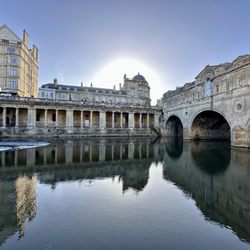
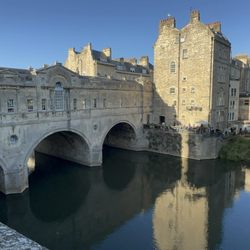
    The Pulteney Bridge in Bath is one of only four bridges in the world to have retail shops spanning…read moreboth sides of the bridge. Construction of the stone arch bridge was completed over the River Avon in 1774. Crossing the bridge (I was on a bus) has a very Old World feel. I was excited by the history and seeing the little shops on the bridge. The shops were packed with tourists.

    Bath's iconic architecture is one of the many reasons why the city is a designated UNESCO World…read moreHeritage site, from its Roman origins to the fashionable eighteenth-century designs that form many of the city's most recognizable buildings. The guide informed us that the historic bridge is one of only four bridges in the world to have shops across its full span on both sides. (he meant Inhabited Bridges where shops/houses are built on the bridge) 1. Ponte Vecchio, Florence 2. Krämerbrücke, Germany 3. Pulteney Bridge, UK 4. Ponte di Rialto (Venice) I had been to #1,3,4 now. Pulteney Bridge is an impressive structure, its three arches sitting astride the River Avon, a splendid backdrop to the crescent-shaped river weir. The bridge in Bath is one of the most photographed examples of Georgian architecture in the city. it was designed in 1769 by Robert Adam and named after Frances Pulteney, wife of William Johnstone Pulteney. He had grand plans to create a 'new town' to rival that of John Wood's on the west side of the city. His grand scheme needed a new bridge, and he didn't want just any old bridge; he wanted a spectacular bridge, one which everyone would talk about, and that's how this came into existence.

    Photos
    Pulteney Bridge - Pulteney Bridge, Bath_Yelp_Sanju-5

    Pulteney Bridge, Bath_Yelp_Sanju-5

    Pulteney Bridge
    Pulteney Bridge

    See all

    The Manor House - landmarks - Updated May 2026

    Loading...
    Loading...
    Loading...