Cancel

    Open app

    Search

    The Bowes Museum

    3.5 (8 reviews)

    The Bowes Museum Photos

    Recommended Reviews - The Bowes Museum
    Your trust is our priority, so businesses can't pay to alter or remove their reviews. Learn more about reviews.
    Yelp app icon
    Browse more easily on the app
    Review Feed Illustration

    11 years ago

    Helpful 1
    Thanks 0
    Love this 0
    Oh no 0
    Photo of Ali H.
    0
    523
    661

    7 years ago

    Helpful 0
    Thanks 0
    Love this 1
    Oh no 0

    16 years ago

    Helpful 0
    Thanks 0
    Love this 0
    Oh no 0
    Photo of Kim H.
    0
    718
    747

    13 years ago

    Helpful 0
    Thanks 0
    Love this 0
    Oh no 0

    18 years ago

    Helpful 0
    Thanks 0
    Love this 0
    Oh no 0

    17 years ago

    Helpful 0
    Thanks 0
    Love this 0
    Oh no 0

    14 years ago

    Helpful 0
    Thanks 0
    Love this 0
    Oh no 0

    10 years ago

    Helpful 0
    Thanks 0
    Love this 0
    Oh no 0

    Verify this business for free

    Get access to customer & competitor insights.

    Verify this business

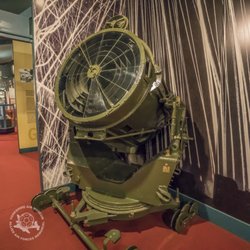
    Yorkshire Air Museum - The Museum is home to Victor XL231, a Cold War jet kept in live running condition

    Yorkshire Air Museum

    4.4(7 reviews)
    93.8 km

    This is a great day out regardless of age be you 5 or 105 there should be something to interest…read moreyou. Located on a former wartime Air-base this museum is run by many volunteers, including an ex-rear Gunner and wireless operator who was shot up during a raid over Germany. George Martin can be found in the Air Gunners Exhibition and I can assure you a more interesting bloke with his experiences and memories of this period I have yet to meet. The Museum is spread within several restored wartime sheds which house the various themes on display, along with many restored aircraft outside and in hangers. It also still has the air traffic control tower which displays how things would have been. One of the hangers displays other restored Aircraft including, the Halifax bomber of which nearly 80 were lost during raids over Germany from this base alone. Other more modern planes are also on display including the Buccaneer, Vulcan Bomber, and Harrier to name a few. The museum continues to restore aircraft and long may it continue we had an excellent day out and at an entrance cost of only £5.00 per adult including parking it wasn't going to break the bank.

    We went on a slightly miserable but warm morning. When we arrived we were very impressed with the…read moresetup of the museum. It is very well kept with lots if different executions and lots of planes to see. I was particularly impressed with the Halifax bomber! You could also try out a couple of actual cockpits and they had 2 simulators, one to practice landings and the other as a rear gunner! The sun came out and it was a glorious day, we sat outside the NAAFI with a drink and a cake from the canteen. We would highly recommend you take a trip out, the kids would love it at well!!!

    Photos
    Yorkshire Air Museum - Spitfire

    Spitfire

    Yorkshire Air Museum - Tornado jet in the sunshine at the Yorkshire Air Museum

    Tornado jet in the sunshine at the Yorkshire Air Museum

    Yorkshire Air Museum - Our Bomber Command exhibition explores the history of WW2

    See all

    Our Bomber Command exhibition explores the history of WW2

    Beamish Museum - resident of the 1900's

    Beamish Museum

    4.7(14 reviews)
    41.2 km

    We visited the Beamish Museum 7 years ago and came back for the second time. It is a great living…read morehistory museum. We visited this time specifically the 1900's and 1950's villages. Most houses and shops are accessible with people in period outfits providing explanations. Of course, we also bought stuff in the vintage shops. Getting around happened on the great vintage bus and tram service. Altogether, a great day out. Note: tickets are not cheap, but valid for a year. Do book online to avoid the queue.

    Wow! I visited from Edinburgh and had the best time! Beamish museum is such a magical place, like…read morebeing on a movie set with people all in traditional clothing walking around, working in the 1900's chemist where you can buy soaps, lip salve, and other things, the confectionery shop and bakery for pies and cakes and sweets, sit in the sun inn pub for a pint, ride on the many trams for free as the conductor yells 'hold tight' as you travel very slowly around the town, jumping on and off at various tram stops eg: 1900's town, Rowley station, 1900's pitt village, 1940's farm, 1950's town and farm where you can go into an air raid shelter and visit the homes and some of the residents. There is also the 1820's colliery, Pockerley waggonway, old hall and the transport depot all to explore. It is such an experience and I found myself grinning from ear to ear the full 6 hours I was there. Everyone keeps in character that at one point when i was visiting the community hall the lady was sweeping the floors talking about cleaning up after entertaining children and I couldn't tell if she was playing a character or if it was real as there were schools of children visiting that day but thats how it is, its a full immersive experience and I honestly loved it!

    Photos
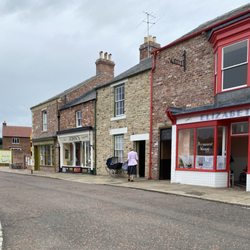
    Beamish Museum - 1950's town

    1950's town

    Beamish Museum - 1950's town

    1950's town

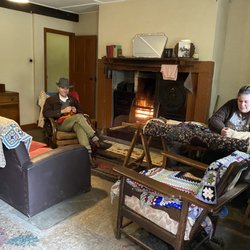
    Beamish Museum - Residents of the 1940's home

    See all

    Residents of the 1940's home

    The Pencil Museum - Learning about pencils at the factory of my favourite colour pencils!

    The Pencil Museum

    3.0(5 reviews)
    79.2 km

    On a typically stormy night in Cumberland, more than 400 years ago, an oak tree crashed to ground…read morein Keswick. The split earth gave up a wealth of black lead, known locally as wad and soon to be renamed graphite. It was the purest graphite in the world and gave rise to riches, skulduggery and the world's first pencil industry. This tale is told by Professor Henry Petroski in The Pencil: A History of Design and Circumstance (1990) and laid out in admirably simple style in this quirky museum, off a side road in the town. Everything you ever wanted to know about pencil manufacture (but were afraid to ask) is answered here, from how early artist's pencils were made to why the Napoleonic Wars broke the Cumberland monopoly on pencil production. Budding and successful artists can hone their skills in a small workshop at the back of the museum.

    You know when something is so naff, that it comes full-circle and actually becomes quite cool? Yes?…read moreWell, that's the pencil museum. It's a museum. And it's full of pencils. We went along because it was raining, and we needed something to keep us out of the pub for an hour. On entering and paying your £3, you receive a free pencil. Now, how many museums give out demos of their exhibits like that, eh? The last time you walked into the Natural History Museum, did they hand you the thigh bone from a woolly mammoth to take home and decorate your mantel with? I'll bet not. Point 1 to the Pencil Museum. Clutching your cedar-smelling new pencil, you walk through a kind of papier mache tunnel (graphite mine) into the museum: a small set of rooms with case after case of pencils. From the humble origins (writing with dirty lumps of graphite), through the evolution of the wooden holder, and on to the colourful array of pencils we all take for granted today. I know. Case upon case of pencils - I can see you stifling a yawn - but, remember, it's got to be truly rubbish to be able to swing round full circle. Highlights: clever secret war pencils with maps and compasses inside, and a big photo-opportunity pencil to stand next to with a sign saying 'This is me a the Cumberland Pencil Museum'. Brilliant.

    Photos
    The Pencil Museum

    See all

    Carlisle Castle

    Carlisle Castle

    4.7(7 reviews)
    76.8 km

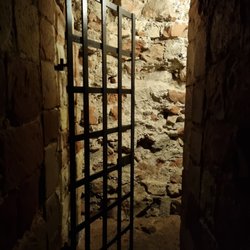
    Came here on the way down south. Only had limited time, but this castle was on our route. Has an…read moreinteresting part in history and was free for us EH members. For 500 years, until the English and Scottish crowns were united in 1603, Carlisle Castle was the principal fortress of England's north-western border with Scotland. Unlike most medieval castles, it has been continuously occupied since its foundation by William II in 1092. When Mary, Queen of Scots fled from her rebellious subjects to England in May 1567, she was housed for some weeks here. This was the last time the castle was used as a royal residence. These are just some of the countless interesting facts. There's a lot more to see, learn and read. Funnily enough just the day before we've visited Linlinthgow Palace, the birthplace of Mary. You can visit lots of rooms, can walk on the walls. You can see the prison cells and much more. Its' a highly interesting castle. There is also Cumbria's Museum of Military Life on site, if you got some time on your hands. A museum shop, toilets and a café/restaurant. Picnic tables outside as well. All in all a very interesting visit. We only had 2-3 hours time, but you could easily spend a day here.

    From the outside a very nice building with a piece of well-kept lawn. For our group, however, the…read moreadmission fee was a touch expensive, so we left the charms of the interior to wealthier people. Zvenku velmi pěkná stavba s opečovávaným trávníkem. Pro naši skupinku ovšem poněkud dražší vstupné, takže kouzla interiéru jsme nechali movitějším :)

    Photos
    Carlisle Castle
    Carlisle Castle
    Carlisle Castle

    See all

    The Bowes Museum - museums - Updated May 2026

    Loading...
    Loading...
    Loading...