Stephens County Historical Courthouse Photos


More like Stephens County Historical Courthouse
Recommended Reviews - Stephens County Historical Courthouse
Start your review...



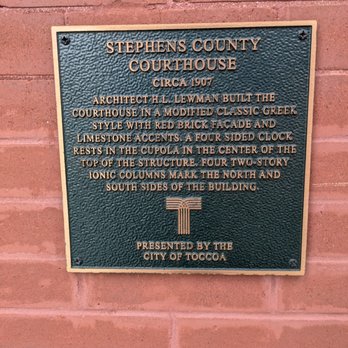
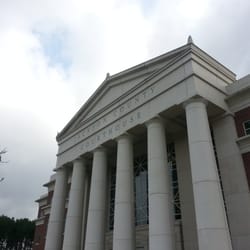
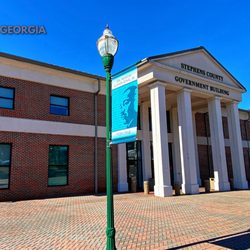
Stephens County took shape on August 18, 1905, when the legislature carved it from Franklin and Habersham counties and named it for Alexander Hamilton Stephens, the Georgia statesman who later served as vice president of the Confederacy and governor. Long before the county existed, the land held a deep Indigenous history reaching back to around 500 AD, with communities tied to the South Appalachian Mississippian culture whose descendants are linked to the proto‑Creek people. Their most visible legacy is the large mound at ancient Tugaloo, once a major village and ceremonial center at the meeting of Toccoa Creek and the Tugaloo River, a place that anchored regional life for centuries. By the fifteenth century, Cherokee groups had moved into the region and eventually became dominant, establishing towns such as Estahoe and Tugaloo, the latter a settlement of more than 600 people with a council house and roughly 200 lodges. Tugaloo Town was destroyed during the Revolutionary War after the Cherokees allied with the British, leaving only the mound, now partly surrounded by Lake Hartwell, as a reminder of its scale and significance. That layered history sits beneath the county that would emerge two centuries later, shaped by both Indigenous presence and the waves of settlers who arrived after the Revolution. When the new county organized itself in the early twentieth century, it expressed its civic ambitions through the construction of the Stephens County Historical Courthouse in Toccoa. Ground was broken in April 1907, and by 1908 the building was complete, giving the young county a seat of government that looked permanent, orderly, and rooted in classical ideals. For a county newly placed on the map, the courthouse served as a declaration of stability and identity, anchoring the civic center that would define Toccoa for generations. The courthouse itself is a textbook example of the Neoclassical Revival style that dominated Georgia's public architecture at the time. Its red brick facade is crisply trimmed with limestone, and the north and south entrances are framed by two story Ionic columns that lift the porticos into something almost temple like. The east and west elevations echo that rhythm with two story pilasters, and the reinforced corners give the building a balanced, symmetrical presence. A low pitched hipped roof supports the central clock tower, capped by a cupola whose four faces look out over Toccoa in every direction, a quiet but confident symbol of the county's early aspirations. [Review 252 of 2026 - 949 in Georgia - 25441 overall] read more