Cancel

    Open app

    Search

    St Donats Castle Photos

    Recommended Reviews - St Donats Castle

    Your trust is our priority, so businesses can't pay to alter or remove their reviews. Learn more about reviews.
    Yelp app icon
    Browse more easily on the app
    Review Feed Illustration
    Photo of Tanya P.
    27
    699
    691

    16 years ago

    Helpful 0
    Thanks 0
    Love this 0
    Oh no 0
    Photo of M L.
    0
    234
    875

    17 years ago

    Helpful 0
    Thanks 0
    Love this 0
    Oh no 0

    Verify this business for free

    Get access to customer & competitor insights.

    Verify this business

    Coity Castle - http://www.cadw.wales.gov.uk/default.asp?id=6&PlaceID=54

    Coity Castle

    5.0(2 reviews)
    8.4 mi

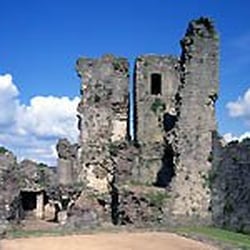
    Coity Castle is a magical place full of distant battle cries and that incredible sense that…read moreimportant things have happened there. Built in 1100 and then rebuilt after a siege by Owain Glyndwr, this is a castle often overlooked by visitors to Wales, despite its extremely important part in Welsh history. Although other castles, such as Cardiff Castle, Caerphilly Castle and Castell Coch, are more visited, I would argue that it's the lesser known relics which are more interesting. This Medieval castle is built up on a hill, with clear evidence of moats, and looks almost like a half-rotten tooth sticking up into the sky. It has just as much grandeur and fairy-tale quality as a person could ask for in a castle. This historic site is well worth a visit; sunset will reward you will specular photographs and views.

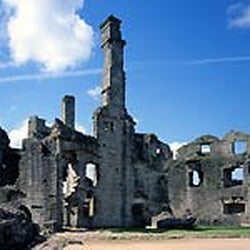
    This is another of South Wales's impressive Norman Castles, standing in ruins near the town of…read moreBridgend in South Wales, not far from Cardiff. It was built by Sir Payn "the Demon" de Turberville, one of the legendary Twelve Knights of Glamorgan who are supposed to have conquered the area under the leadership of Robert FitzHamon, Lord of Gloucester. Although it was originally built soon after 1100, a lot of the castle actually dates from the fourteenth century and later. Parts of it were rebuilt following the siege by Owain Glyn Dr in 1404-05. Despite being in ruins, there are still plenty of interesting features to see - including the remains of the central octagonal pillar for the vaults of the castle. If you have OS map 170 the reference is SS 923815. Nearby you can also visit Newcastle and Ogmore Castles in a day trip.

    Photos
    Coity Castle - Http://www.cadw.wales.gov.uk/default.asp?id=6&PlaceID=54

    Http://www.cadw.wales.gov.uk/default.asp?id=6&PlaceID=54

    Coity Castle - Http://www.cadw.wales.gov.uk/default.asp?id=6&PlaceID=54

    Http://www.cadw.wales.gov.uk/default.asp?id=6&PlaceID=54

    Coity Castle - Http://www.cadw.wales.gov.uk/default.asp?id=6&PlaceID=54

    See all

    Http://www.cadw.wales.gov.uk/default.asp?id=6&PlaceID=54

    Church of Saint Cadog - 14th Century chapel with mediaeval screen

    Church of Saint Cadog

    5.0(1 review)
    7.3 mi

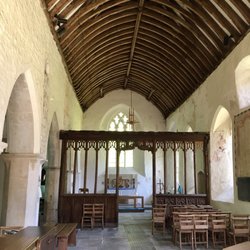
    Llancarfan is a delightful village in the Vale of Glamorgan, tucked away up a narrow valley (and…read moreaccessed - be warned - via some very narrow lanes). Best known for its pub, the Fox and Hounds, it is also home to one of Wales's oldest Christian sites. Here, St Cadoc founded a small monastery around 515AD. Viking raids and economic decline meant that, by the Norman conquest, the original foundation was probably a shadow of its former self, but evidence points to small Norman church having been founded on the site, rebuilt between the 12th and 15th centuries into the impressive church we see today. As well as the robust Gothic architecture, the church retains a fine mediaeval screen and Retford. But Pride of place is reserved for the substantial remains of mediaeval wall paintings, which rank among the best in Britain. For here are a superb rendition of St George and the dragon, being watched by a fine red-bearded king, his queen and the daughter (who St George is saving), with her sacrificial lamb, all watched over by the Virgin Mary. Then there is s complete rendition of the Seven Deadly Sins and a less complete depiction of the Seven Corporal Acts of Mercy. Finally there is a wonderful death and gallant, where a rotting corpse (complete with toad and worms) leads a young 15th Century dandy out of the church and into the graveyard. This is the only surviving depiction of this motif in a British church. The tower has a small Romanesque window set high up, possibly re-used from the earlier Norman church. The church still has regular services and is well worth a visit.

    Photos
    Church of Saint Cadog
    Church of Saint Cadog - 12th Century nave

    12th Century nave

    Church of Saint Cadog

    See all

    Ewenny Priory - http://www.cadw.wales.gov.uk/default.asp?id=6&PlaceID=73#

    Ewenny Priory

    4.0(2 reviews)
    6.2 mi

    If you're into your monastic history, then this is the place to come! This is an impressive Norman…read morepriory founded by Benedictine monks in the 12th century. The priory itself is now a private house and is set within a fortified perimeter wall, which is huge and looming, and quite a feat of architecture in itself. But the church is still used today and open to the public most of the year. But the reason you come here, I would say, is the same reason one might visit a cathedral: there is a certain air of calm and tranquillity wrapped up in tradition and wonderful architecture. When light streams into the church, it can be breathtakingly beautiful in that quiet kind of way. This is quite a quiet spot where parking is easy and picnicking even more so. A good place to bring studious children, grandparents or people with a keen interest in the historical or religious.

    If you're taking a trip out of Cardiff to explore the surrounding towns, villages and countryside…read moreacross the Vale of Glamorgan, it's well worth visiting this impressive Norman monastic church on your travels. Founded for Benedictine monks of Gloucester Abbey by the Norman lord of Glamorgan in the 12th century, today the site is looked after by Cadw, the Welsh Assembly's historic environment service ('Cadw' means 'to keep' in Welsh). It is unusual because it sits within a fortified perimeter wall, much of which is still standing, and it is regarded as the most complete Norman Church in South Wales. The priory was later converted into a private house, but the nave is still in use as a Parish church, and restoration work has been carried out by Cadw there fairly recently. At the eastern end of the church you can see tombs containing the de Londres family (the family of the Norman lord who founded the place). It can be found just off the road leading from Bridgend to Llantwit Major. When you enter the churchyard, look out for the magnificent big Yew tree standing outside - some experts say this type of tree was planted in graveyards to represent immortality and resurrection.

    Photos
    Ewenny Priory - Http://www.cadw.wales.gov.uk/default.asp?id=6&PlaceID=73#

    Http://www.cadw.wales.gov.uk/default.asp?id=6&PlaceID=73#

    Ewenny Priory - Http://www.cadw.wales.gov.uk/default.asp?id=6&PlaceID=73#

    Http://www.cadw.wales.gov.uk/default.asp?id=6&PlaceID=73#

    Ewenny Priory - Http://www.cadw.wales.gov.uk/default.asp?id=6&PlaceID=73#

    See all

    Http://www.cadw.wales.gov.uk/default.asp?id=6&PlaceID=73#

    St Donats Castle - landmarks - Updated May 2026

    Loading...
    Loading...
    Loading...