St Augustine Municipal Marina Photos


More like St Augustine Municipal Marina
Recommended Reviews - St Augustine Municipal Marina
Start your review...
Reviews With Photos


Stopped to fuel up and check out the sites in St Augustine. The folks are super friendly and helpful here. They helped pulled us into the dock and quickly fueled us up. The gentleman in the office provided a great suggestion for a nice fish dinner. It's a safe place to park your boat at a reasonable hourly rate. The fuel costs were reasonable as well. The docks, park, and restroom are kept clean.


Today we toured the replica Spanish galleon, El Galeon, and the replica explorer ship, Nao Victoria. El Galeon is open daily, 9a-6p. Tickets are $15 for adults, $8 for children ages 6 to 12; children under 5 free. For $10, adults.can also tour the Nao Victoria. (Tour both ships for $20.) Tickets are available at all Ripley's Red Train ticket locations. Www.staugustine-450.com Facebook.com/450 twitter.com/StAugustine450


I visit this Marina every time I'm in town just to see what is docking there there's always some great Mega Yachts to look at or some Homeland Security go fast boats to check out it always seems to be in top shape and everyone at the marina is always very friendly


3 months ago
2 years ago
Dates: July 12 - 13, 2024 LOA: 48' Beam: 15' Draft: 3'4" There is a strong current here at the bridge. We arrived at a busy time and had to hang out in the channel while the dock hands coordinated the traffic of parking transients and tourist boats. The gentleman on the radio gave very clear instructions on how to approach and where to go. We were placed in a slip facing the bridge and the orientation of the docks gave us some reprieve from the current, but slack tide may help those that don't have twin screws or bow thrusters. Use the dock hands. They know what they're doing and the long fingers in the slips allow you to get a line in their hands early to help guide you in against the current. The docks were floating and in great condition. Plenty of depth at the fuel dock and in the slips. They are setup to do pump outs at your slip so you don't have to relocate to do so, which is nice. Laundry and shower facilities were clean. We only stayed one night and didn't venture out, but we would return here. read more

8 years ago
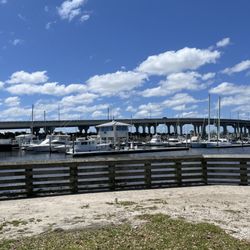
From a visitor perspective, this marina is gorgeous. There is a nice brick building with information, restrooms and facilities for the boat keepers. The marina is picturesque in bordering the historic district of St Augustine, the Bridge of Lions and the harbor. In the water you can get a glimpse of yachts, sailboats, fishing vessels and even a pirate ship Argh!!!! The staff is friendly and helpful at the center. You can purchase tickets for a harbor cruise here. The grounds are immaculate with some bench seating. The area is dog friendly. They have posted lots of safety information about hurricanes and storm readiness. There are some safety fences and rails in place but you still need to watch children carefully. If you get there early and are lucky you can snag metered parking across the street. There is no dedicated parking. read more


Stopped to fuel up and check out the sites in St Augustine. The folks are super friendly and helpful here. They helped pulled us into the dock and quickly fueled us up. The gentleman in the office provided a great suggestion for a nice fish dinner. It's a safe place to park your boat at a reasonable hourly rate. The fuel costs were reasonable as well. The docks, park, and restroom are kept clean. read more


4 years ago
Very professional, clean facilities and excellent floating docks. south dock does have 3 tourist boats so a bit crowded but overall excellent experience. 24/7 security and very helpful dock hands. Fuel is easy to get and they come to you for free pump outs. Also have docking for hourly visitors. read more


5 years ago

Today we toured the replica Spanish galleon, El Galeon, and the replica explorer ship, Nao Victoria. El Galeon is open daily, 9a-6p. Tickets are $15 for adults, $8 for children ages 6 to 12; children under 5 free. For $10, adults.can also tour the Nao Victoria. (Tour both ships for $20.) Tickets are available at all Ripley's Red Train ticket locations. Www.staugustine-450.com Facebook.com/450 twitter.com/StAugustine450 read more


3 years ago

I visit this Marina every time I'm in town just to see what is docking there there's always some great Mega Yachts to look at or some Homeland Security go fast boats to check out it always seems to be in top shape and everyone at the marina is always very friendly read more

5 years ago

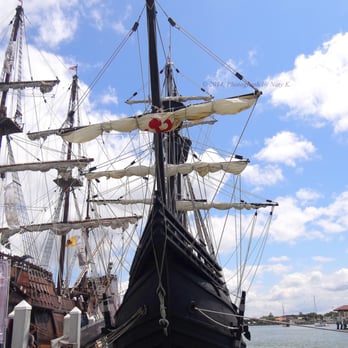
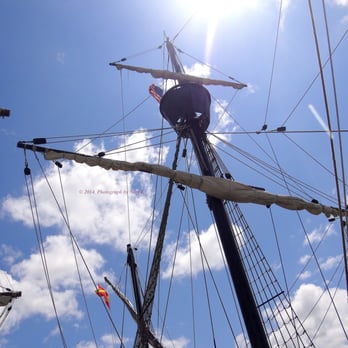
As you're traveling on the Bridge of Lions, the bridge connecting St. Augustine to Anastasia Island across the Matanzas Bay, you may notice something that looks somewhat out of place among the other modern yachts and boats. Something as if brought over from a movie set: two historic ships, side by side, rising above the St. Augustine skyline. You may even do a double-take, as I did, before becoming excited and intrigued as to such a sight. Suddenly, nothing else mattered. Flagler College, Villa Zorayda...everything was now put in the back of my mind. I wanted to time travel 500 years back and step onboard those two ships and would not happily leave St. Augustine until doing so. Like a child obsessed with getting his hands on a toy, I could not get the thought out of my mind. My friend was also somewhat interested, though his degree of interest did not even come close to measuring up to my own. I was grateful that the weather was cooperative, as I was looking forward to photographing these beautiful vessels against a blue sky. The ships looked so majestic in the water. Like a giddy child, I powerwalked down the marina boat slips until arriving to the walkway that led to the first ship, the Nao Victoria. Suddenly, my dream of living onboard a boat was reawakened. Although my friend worried about the rocking and could never envision himself living onboard, I could definitely see myself joining the crew. The crew were all young Spaniards, very friendly and knowledgeable about the history and any questions about the craft, though if you don't speak Spanish, it might be a challenge. The original Nao Victoria, one of four ships given to Magellan by King Charles I of Spain, was the first ship to successfully circumnavigate the world (the other three ships, also Nao class vessels were the San Antonio, Concepcion and Santiago). This ship was part of a 1519 expedition commanded by Ferdinand Magillan. After his demise, Juan Sebastián Elcano took over command of the voyage. The expedition began with five ships but the Victoria was the only ship to complete the voyage, in a total of 3 years. Now, thanks to La Fundación Nao Victoria, you can climb onboard an exact replica of the same ship! The ship was built by hand, in order to replicate the labor that went into building the original 16th century vessel. Then, it was put to use to replicate the original voyage. It has visited 52 countries and sailed out of Spain and around the world from 2004 to 2006. The captain of this ship is actually a female (and you thought women could not do such things!) and the crew is comprised of a handful of men and a couple of women. They sleep on board the ship (I was able to see their accommodations and kitchen after befriending one of the female crewmembers). Because there was no such thing as a steering wheel in the 16th century, the ship is steered by a beam, which broke when they were traveling from Key West. The Coast Guard had to escort the vessel while the crew manually tried their best to steer with the broken beam, becoming injured in their fight against the 10+ foot waves. Speaking about the crew: they are actually completing internships in several areas, such as hospitality, maritime biology, and journalism. They survive based on donations, and the ticket purchases. The other ship is the Galeón Andalucia, a replica of a merchant vessel. El Galeón is a replica of the vessels that traveled the coasts of Florida between the 16th and 18th centuries, transporting men, goods, culture and ideas, creating ties between America and Europe. Galeons were constructed from oak, pine and various hardwoods for hull and decking. Because this was a merchant vessel, cannons are on board, to protect the merchandise and crew from pirates and any other attacks. This vessel is significantly larger, and more modern, as it has a steering wheel. Though neither of the ships had their sails up, you can imagine how beautiful they must look, especially when sailing against the sunset. There are actual videos that show both ships as they're being built and traveling on the water. These are available on their website, as well as when you tour the ships. It's not often that you see such beautiful historic ships, especially for climbing onboard to experience the magic for yourself. The ships are in several different ports for short amounts of time, usually leaving around summertime in order to avoid tropical storms and hurricanes. I really enjoyed this educational experience and was in awe of their beauty. In the meantime, I am left wanting...wishing I could experience a voyage onboard! read more




6 years ago
5 years ago
12 years ago

11 years ago