Cancel

    Open app

    Search

    South Miami

    4.0 (1 review)

    South Miami Photos

    Recommended Reviews - South Miami

    Your trust is our priority, so businesses can't pay to alter or remove their reviews. Learn more about reviews.
    Yelp app icon
    Browse more easily on the app
    Review Feed Illustration
    Photo of Fox E.
    4535
    16891
    49976

    7 years ago

    Helpful 14
    Thanks 0
    Love this 17
    Oh no 0

    Verify this business for free

    People searched for Local Flavor 208 times last month within 5 miles of this business.

    Verify this business

    French Country Village

    French Country Village

    4.5(2 reviews)
    3.3 km

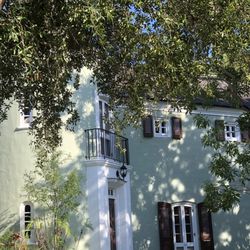
    George Merrick is the founder of the City of Coral Gables. His family came to Miami from PA two…read moreyears after Henry Flagler brought the railroad to Florida. It was the dawn of the development of Florida. George Merrick attended Rollins College in Winter Park and in 1922 he meticulously planned Coral Gables. The houses were so well made that they survived hurricanes before there were building codes and his architecture was so charming that Coral gables is called the city beautiful. He also created the University of Miami. At first he wanted his buildings to be strictly Spanish and later Mediterranean style. Eventually he expanded his vision to include seven unique villages inspired by different international influences. The villages were built during the land boom years in the 1920's. It was a joint venture between Merrick, The American Building Company and former Ohio Governor Myers Cooper. The original plan was for more 1,000 residences in a series of villages based on architecture from around the world. The plan was never fully realized when the housing boom crashed from two hurricanes followed by the Great Depression. In the end only seven villages were built including this Italian Village. By 1928 George Merrick was forced out of the city he founded and ended up in the Keys. He returned to the city two years before he died to serve as postmaster. You can learn more about George Merrick by taking a tour of his family home in Coral Gables. Built between 1925 and 1926, the French Country Village was inspired by 18th-century rural French provincial farmhouse estates and chateauxs. There are two different style of architecture. Architect Frank Forster designed country homes and farm buildings and architects Edgar Albright and Philip L. Goodwin designed a rustic chateaux style of home. They were all built in the country style and they have have spacious yards and gardens. Design elements include steeply-pitched roofs, turrets, carved wood and wrought-iron balconies, red brick, and tall ceilings. You can find them on the 500 block of Hardee Road. When you see this neighborhood you feel like you stepped into Disney's Beauty and the Beast. Belle sings there must be more than this provincial life but I would be quite happy here. Since there are only 12 homes the demand for them is extremely high. When they do hit the market the price is over 2 million if you could even be lucky enough to get one.
    See my other reviews there are a few "villages" in Coral Gables to depict different styles from…read morearound the world, this area is French country. See below for some information. French Country Village On the 500 block of Hardee Road are homes inspired by 18th century rural French architecture. This thematic district has two evident styles. Architect Frank Forster designed the farm styled homes, while architects Edgar Albright, and Phillip L. Goodwin designed the homes that are more rustic in style. I came for a drive around during covid - and definitely saw "French architectural styles" from the car, check out my pictures and you decide!

    Photos
    French Country Village
    French Country Village
    French Country Village - So gorgeous

    See all

    So gorgeous

    French Normandy Village

    French Normandy Village

    4.7(3 reviews)
    5.3 km

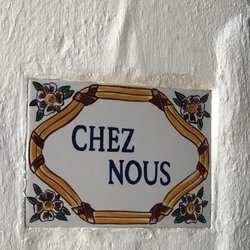
    George Merrick is the founder of the City of Coral Gables. His family came to Miami from PA two…read moreyears after Henry Flagler brought the railroad to Florida. It was the dawn of the development of Florida. George Merrick attended Rollins College in Winter Park and in 1922 he meticulously planned Coral Gables. The houses were so well made that they survived hurricanes before there were building codes and his architecture was so charming that Coral gables is called the city beautiful. He also created the University of Miami. At first he wanted his buildings to be strictly Spanish and later Mediterranean style. Eventually he expanded his vision to include seven unique villages inspired by different international influences. The villages were built during the land boom years in the 1920's. It was a joint venture between Merrick, The American Building Company and former Ohio Governor Myers Cooper. The original plan was for more 1,000 residences in a series of villages based on architecture from around the world. The plan was never fully realized when the housing boom crashed from two hurricanes followed by the Great Depression. In the end only seven villages were built including this French Normandy Village. By 1928 George Merrick was forced out of the city he founded and ended up in the Keys. He returned to the city two years before he died to serve as postmaster. You can learn more about George Merrick by taking a tour of his family home in Coral Gables. The French Normandy village is based on a 15th century French Village. It is one of three of Merrick's villages that showcases different periods of French architecture. Architects John and Coulton Skinner built the eleven townhouses that make up this village between 1926 and 1927. The townhouses are characterized by hollow tile, poured concrete, and white stucco are crisscrossed with half timbering and topped by flat, shingled, gabled roofs. The grounds have traditional kitchen gardens, enclosed courtyards, and open-air porches. The village is bounded by LeJeune Road, Viscaya Court, Viscaya Avenue, and Alesio Avenue. In 1935 all of the French Normandy townhouses were purchased by the University of Miami to use as men's dormitories. During World War II, they were used as barracks for soldiers. Today they are all privately owned. The homes in the villages are some of the most sought after residences in the Gables. They rarely go up for sale and are always in high demand. Today there are 80 homes left. Expect to pay close to a million for a French Normandy residence. Once you see these beautiful homes you can easily understand why they are so coveted.

    Another great excursion during your staycation or if you're visiting something other than the…read morebeach! This "village" was built in 1926-1927, and was designed by architects John and Coulton Skinner. They are supposed to resemble a 15th century French village. It's difficult to see much beyond the white stuccoed walls as you walk around the block. However, the profusion of flowers is amazing with wisteria and bougainvillea. The connected houses were not always privately owned. In 1935, the Village was sold to nearby University of Miami and served as homes to five fraternities. Next, during World War II like most of the iconic Art Deco hotels in South Beach, they were used to house soldiers here for training.

    Photos
    French Normandy Village - Is this French enough for you? do you like my car?

    Is this French enough for you? do you like my car?

    French Normandy Village
    French Normandy Village

    See all

    Segovia Traffic Circles Sculptures - Located on the roundabouts near the golf course and also the original old walls

    Segovia Traffic Circles Sculptures

    4.5(4 reviews)
    6.1 km

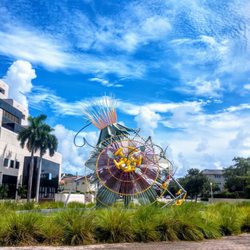
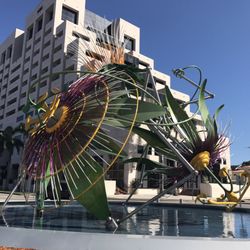
    Coral Gables is known for it's numerous plazas, entrances, and fountains from 1920's. That's why I…read morefind it so interesting to see what current works of art are being added. Anything new needs to harmonize with the beautiful features that George Merrick added in when he created the city. In 2014 the city approved two sculptures to be installed at the traffic circles along Segovia Street. They were designed by New York-based artist and sculptor Alice Aycock. The two installations are the first public art pieces to be added since George Merrick was alive. The sculptures are inspired by the passion flower and are constructed of more than 4,000 pieces of metal. The two sculptures are different. The sculpture on Biltmore is larger and has two flower designs. The Coral Way sculpture is designed to mimic a flower flowing in the breeze. More than 180 submissions were judged before a panel selected Aycock's design. The flowers have received mixed reviews from the community. Many feel that the modern art is not in keeping with the look of the city. A group of residents tried to have the sculptured removed but did not muster enough signatures for the ballot. Some of the complaints are that the sculptures are not Mediterranean and that accidents have increased at the traffic circles since the sculptures were installed. Others complain bitterly that they are not even able to choose a paint color for their house yet the city has moved away from the Mediterranean look of the city without consulting them. The city has decided to keep the sculptures despite the protest of some people who do not care for the look of modern art in their 1920's Mediterranean Revival city.

    Interesting new metal art located near the golf course and situated on two roundabouts. There are…read moretwo pieces one on each roundabout - They are passions flowers. Other people here have told the history about them so I will leave it at that. However what I did read about on the net and thought was amusing - was some local residents were not very happy with them, thinking they did not represent Coral Gables mediterranean image, so they started a petition to get them remove. They did get over a thousand signatures but no where near enough to make an impact and get them removed. Looks like they are here to stay. I was not too keen when I first saw them and had a little chuckle to myself as the largest one is situated in front of a plastic surgery office (HE HE)...(apt? - you decide). However after walking around and actually really looking at them, the location, the area, they started to grow on me!...Let me know what you think - when you go for a look!

    Photos
    Segovia Traffic Circles Sculptures - Located on the roundabouts near the golf course and also the original old walls

    Located on the roundabouts near the golf course and also the original old walls

    Segovia Traffic Circles Sculptures - Located on the roundabouts near the golf course and also the original old walls

    Located on the roundabouts near the golf course and also the original old walls

    Segovia Traffic Circles Sculptures - First one! Passion fruits (these are the vine's flowers) seem to be the rage here in Miami! :)

    See all

    First one! Passion fruits (these are the vine's flowers) seem to be the rage here in Miami! :)

    Miami Culinary Tours - cigar shop

    Miami Culinary Tours

    4.9(466 reviews)
    17.6 km

    I cannot recommend this tour enough! We had Toni as our guide for the Little Havana Food Tour. She…read morewas so energetic and knowledgeable, and so prepared! She brought ponchos so we could continue on as it rained. It was beautiful to learn about and see this neighborhood through the eyes of someone who grew up here. Toni knows so much history and seemed to know so many of the people, too! The tour has so much food - I was honestly more than full at the end and I didn't even finish all of my portions. I think it was a really good range of drinks, desserts, and food. Even though that coffee cup looks small, that's a full serving size and it was strong! I really really appreciate that this tour not only accommodated for vegetarians but also chose options for me that were realllllly good. Instead of the cubano, I had these fried plantain cups stuffed with veggies. They were SO good and seasoned well! And the spinach and cheese empanada was also amazing. My friend who got the meat options also loved her food. This tour is the perfect way to learn more about Cuban history, the history of the neighborhood, see all the street art, watch a game at domino park, and experience some of the best food in Miami. I cannot recommend this enough!!!

    My mother and I had such a wonderful time in Miami Little Havana food and culture tour! We tasted…read moreempanadas, Cuban coffee, Cuban sandwiches, Cuba mojitos, sugarcane juice, guava pastries, and churros. We even stopped by a cigar store and learned all about cigar making while watching a woman roll cigars. We stopped and learned about Cuba, antiques cars, the various murals, famous Cubans in history and so much more. It was an informative tour in such a fun way! The time went by so quickly and it wouldn't have been the same experience without Mariela as our guide. She is so passionate and knowledgeable. Her energy was so upbeat. I think this a great tour for visitors who want to learn about a culture that shapes Miami as well as locals who want to learn about a neighborhood they may not know the ins and outs of. Mariels brought Cuba to us and we can't thank her enough! We highly recommend this tour!

    Photos
    Miami Culinary Tours - Murals

    Murals

    Miami Culinary Tours
    Miami Culinary Tours - Mojitos

    See all

    Mojitos

    South Miami - localflavor - Updated May 2026

    Loading...
    Loading...
    Loading...