Seven Dials Photos


Recommended Reviews - Seven Dials
Start your review...



18 years ago
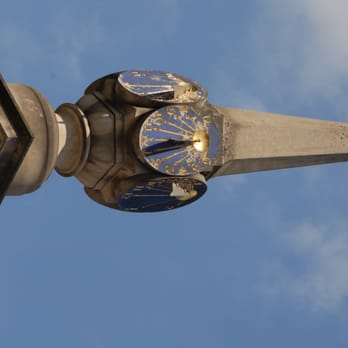
I have always been interested in the Victorian Underworld. Seven Dials has a reputation for having been one of the seediest and unsafe places to go in the past.a slum, renowned for its gin shops. At one point each of the seven apexes facing the Monument housed a pub, their cellars and vaults connected in the basement providing handy escape routes should the need arise. Dickens wrote of it. The 19th century saw an influx of Irish workers into the area, attracted by cheap, although overcrowded lodgings. Henry Mayhew observed in London Labour & The London Poor, 1861: In many houses in Monmouth Street there is a system of sub-letting among journeymen. In one room lodged a man and his wife, (a laundress), 4 children and 2 single young men. The woman was actually delivered (of a baby) in this room while the men kept at their work they never lost an hours work! The names of the seven streets were chosen with the intention of attracting well to do residents, however some of the names have subsequently been simplified or changed because of duplication with other streets in London. They were originally: Little and Great Earl Street (now Earlham Street), Little and Great White Lyon Street (now Mercer Street), Queen Street (now Shorts Gardens) and Little & Great St. Andrew's Street (now Monmouth Street). Some of the original street signs can still be seen attached to buildings in the area. Dickens wrote of it. The face of Seven Dials has changed dramatically over the centuries, but it retains its unique character, a good example of Covent Garden's ability to renew itself against a backdrop of heritage architecture. This is one of the most vibrant and eclectic neighbourhoods in and around Covent Garden. Seven Dials is a remnant of London's historic estates which were often totally self contained plots. These individual vicinities now set London apart from the grandiose town-planning projects apparent in so many other cities. The case of Seven Dials is typical of the original estate development, where the lines and perimeters of the streets fall into the shape of the pre-existing rural landscape. An ancient field known as Marshland Close occupied the Shaftesbury Avenue, Shelton Street, Neal Street and West Street area, whilst Shelton Street to Long Acre reside on the historic Elm Field. In the Middle Ages the land belonged to the leper Hospital of St Giles, which became the property of the crown under Henry VIII. The area was laid out by Thomas Neale in the early 1690s, and completed in 1714. His radical concept was for a radial seven-street layout around a central polygonal space, which has remained virtually intact for over 300 years. Whilst most estate developers of the 17th century were modelling their plans on the Italianate concept of a central square, Neale drew his inspiration from a different source - perhaps the grand examples in Paris of radiating streets around a circus. In Wren's Baroque rebuilding of the city following the Great Fire you can see similar features on a larger scale. It was conceived as a respectable residential suburb for lawyers, gentlemen and prosperous tradesmen. However as fashion moved westwards, the area began to seem cramped, and became increasingly commercialised. Houses were converted into shops, lodgings and factories. Here you could find woodcarvers, straw-hat manufacturers, pork butchers, watch repairers, booksellers, pubs and breweries. At times the area threatened to descend into the undesirable depravity of the St Giles Rookery to the north, but it was predominantly a working neighbourhood, especially as immigrant Irish and Jews arrived in the 19th century, bringing trade.It was still poor in the 20th centurey when Agatha Christie set a book there. Many of the present shops, bars and restaurants occupy the original 1690s buildings, retaining many historic features, despite later re-facing and repairs. Floral Street is worth going down. It's sweet, has lots of little courts and good shops. The replacement of the central column monument in 1989 with a replica of the original feature - long dismantled - became a symbol of the Seven Dials renaissancePopular tradition as to why the pillar has only six dials is that the seventh sundial is formed by the pillar itself casting its shadow on the ground. one-off buildings in a perfectly preserved historic setting, come to Seven Dials! Advertised now as Seven Dials, Covent Garden London's most fashionable shopping area! How times change. read more

16 years ago
More info about Seven Dials
Seven Dials Reviews in Other Languages









Why does Yelp recommend reviews?
1 review that is not currently recommended
The reviews below are not factored into the business's overall star rating.

16 years ago