Cancel

Open app

Search

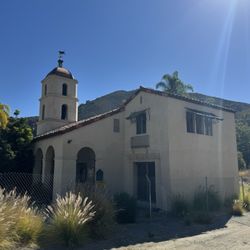
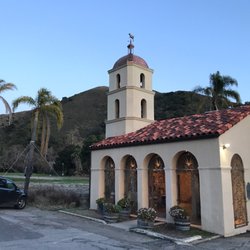
Serra Chapel Photos

Recommended Reviews - Serra Chapel

Your trust is our priority, so businesses can't pay to alter or remove their reviews. Learn more about reviews.
Yelp app icon
Browse more easily on the app
Review Feed Illustration

3 years ago

Helpful 26
Thanks 4
Love this 34
Oh no 0
Photo of Satya D.
117
26
19

3 years ago
Helpful 2
Thanks 0
Love this 7
Oh no 0

7 years ago

Helpful 10
Thanks 0
Love this 12
Oh no 1
Photo of T. M.
0
131
0

2 years ago
Helpful 0
Thanks 0
Love this 0
Oh no 0

5 years ago

Helpful 0
Thanks 0
Love this 0
Oh no 0

7 years ago
Helpful 1
Thanks 0
Love this 1
Oh no 0

7 years ago

Helpful 1
Thanks 0
Love this 1
Oh no 0

Ask the Community - Serra Chapel

Verify this business for free

Get access to customer & competitor insights.

Verify this business

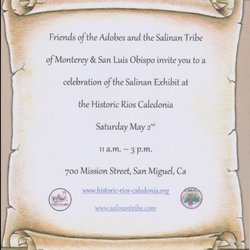
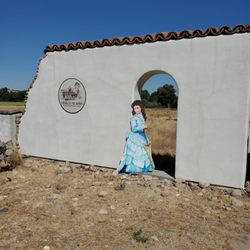
The Historic Rios-Caledonia Adobe - Rio-Caledonia Adobe Entrance -- Friends of the Adobes

The Historic Rios-Caledonia Adobe

(4 reviews)

The Ríos-Caledonia Adobe is a historic adobe house built in 1835 in San Miguel, California. The…read moreRíos-Caledonia Adobe is open to the public as a house museum and library. The original building was made of adobe, had a roof of hand-made tiles, and used strips of rawhide to tie the pine rafters in place. It is located directly across the street from Mission San Miguel Arcángel. It has had many different owners, and the property has been a a stagecoach stop with a hotel and tavern, as well as an elementary school and many other businesses. In 1923, the property was purchased as a tourist attraction, and the new owner added the gift shop. The County of San Luis Obispo purchased it in 1964 as the adobe had fallen into disrepair. In 1968, the Friends of the Adobes formed to preserve and restore the adobe. The site now operates as a county park with a history research library, museum, and gift shop. There are plenty of trees to enjoy a picnic or an outing. The Ríos-Caledonia Adobe is right off the freeway, and admission is free.

This is a nice little stop off of the freeway. Its literally across the street from Mission San…read moreMiguel Arcangel, and actually has a lot of history to it. The Rios-Caledonia Adobe is located on an old stage road, and served as a sort of halfway point between San Francisco and Los Angeles. Back in the 19th Century it was a functioning hotel and saloon. When the stagecoach days ended, and the days of the automobile began, the new owners installed a "visible" gas pump, and it served as an important rest stop on U.S. 101. In fact, the driveway you go down is actually a SEGMENT of the ORIGINAL U.S. 101 roadway ITSELF! Not to be missed if you are in the area! Go to see the history of travel before freeways.

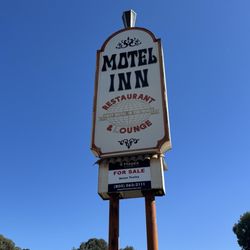
First Motel

First Motel

(1 review)

Local Eval: Little did I know, that as a kid staying with my mom in a rustic dive motel in…read morePennsylvania, that 3,000 miles away, in the little town of SLO, was it's first ancestor....and that 1/2 century later, I would call the SLO/Pismo area home. The "Milestone Mo-Tel Inn" was built in 1925 [closed in 1991] & the main building is a historic landmark, which is possibly owned by next doors "Apple Inn". While there were plans to rehab this area, is still not redeveloped yet & is not open to the public. But one can still stop, just before the N101 ramp, & marvel at these testaments to early visionaries of what we have long taken for granted, for almost a century. While there are numerous local and national accounts, I do favor the one done by Smithsonian Magazine in DECEMBER 12, 2016, as follows: "The World's First Motel Was a Luxury Establishment, Not a Dive The first motel was supposed to turn into a chain, but it was quickly overtaken by cheaper competitors. By Kat Eschner SMITHSONIANMAG.COM The year was 1925. Across the country, thousands were touring in their cars. Auto travel was becoming normal. But on this day in San Luis Obispo, a town roughly between Los Angeles and San Francisco in California, something totally new was happening. An architect and developer named Arthur Heineman had spotted a niche in the market. His response: the Milestone Mo-Tel Inn. Heineman created a hotel designed specifically for drivers, writes Eric Zorn for the Chicago Tribune. It had small garages next to several dozen bungalows. Use of one cost a motorist $1.25 per night, about $17.00 in today's money. Heineman shortened "motor hotel" down to "Mo-Tel," and a term was born. It was luxurious for the 1920s, wrote Kristin Jackson for the The Seattle Times two years after the motel closed in 1991. "It cost $80,000 to build in its ornate Spanish-mission style, with a three-tiered bell tower, white pillars, and a tree-fringed courtyard," she wrote. "In those days most American car travelers still were staying in campgrounds or tiny wood cabins (some about the size and style of chicken coops) that were clustered by a gas station or general store." Up to 160 people could stay at the motel. According to David Middlecamp of the Tribune, units had modern conveniences like showers, central heating and carpet, he writes, and there were even rooms for chauffeurs. Jackson spoke to Marcella Faust, who as a young woman was one of the establishment's first waitresses. Faust described how the waitresses were dressed--"Spanish-style," including a vest and a "big hat with roses on it"--and their varied tasks, which included handing out brochures at the roadside. "We'd stand out there on the road in our big hats," she said. "My girlfriend would work the cars going north, I'd work the ones going south. They were Model A's and Model T's back then, so they'd have to go pretty slow up the steep hill there. We'd just stand there and wave and hand them the booklets as they went past." It wasn't long before the Milestone had competition from other motels. Heineman had originally planned to open a chain with 18 California locations, Jackson wrote, but he wasn't successful. The Great Depression meant that motel chains opted for less luxe styling, Zorn writes. The Milestone, eventually renamed the Motel Inn, closed in 1991 and then the site fell into disrepair. Even the word "motel" has been slipping out of favor, he writes. But across the country, motels remain part of American road culture. "Motels opened up the American road to those who were neither rugged enough for car camping nor wealthy enough to stay in 'real' hotels," Zorn writes. "In a way that's largely unsung, they aided our transformation to a mobile culture." Hopefully, one day, this wonderful landmark will be rehabbed into a fascinating & historic place to stay, minus Model T cars and chauffeurs!

Serra Chapel - landmarks - Updated May 2026

Loading...
Loading...
Loading...