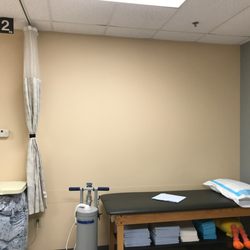
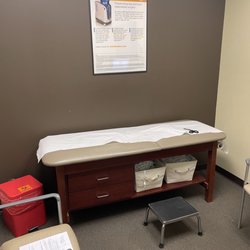
I love my new knees! And I apologize for the long review…read more..
My journey into knee replacement started over 30 years ago while in the Marines and started losing cartilage from running. 10 years later, I was having unbearable pain from walking and doing mundane tasks, and went to an orthopedist where I was living in Texas, and was told they needed replacement but I was too young (at the time, the hardware was only good for 7 years).
Fast forward to last September, I received several recommendations for Shelbourne Knee Center from my wife's co-workers (my wife is military). Doing some research, Shelbourne is one of the top places the country for this type of thing, and our insurance covered it. I live an hour away from the hospital, so I didn't take this adventure lightly. I was very apprehensive about doing this since I was already in pain and worried that the recovery would be worse. I really had nothing to worry about.
Dr. Benner saw me at my appointment, took x-rays and did a physical exam of my knees. They looked pretty bad, bones resting on bones where the cartridge would have been, etc. We made an appointment to replace them in the spring and then COVID hit, cancelling all elective surgeries. So I rescheduled for late May. Yes, both knees at once.
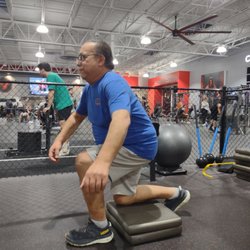
In the meantime, I worked with Sarah, the physical therapist, once a month to increase the range of motion in the soft tissue. Yes, physical therapy can be a joy but it is necessary. And Sarah is great, and very knowledgeable. Sarah also gave me exercises to do at home daily.
On the day of surgery, I arrived at the hospital at 6 am and checked into the surgery center. They brought me to a pre-op room to get me ready, and then placed me on a gurney and wheeled me to the operating room where I was introduced to the staff that would work on me. Dr. Benner and his PA arrived and discussed what would happen, and then the anesthesiologist had me breath into a mask...
The next thing I know, I wake up back in pre-op 3 hours later and was told everything went fine. My lower legs were in a contraption called a Continuous Passive Motion machine (CPM) which slowly moved my legs to keep the knees moving. I would be in this thing for a week. My knees were also encased in a cyrocuff, filled with ice water to reduce the swelling. My wife came in, and I was taken to my room on the 3rd floor.
Their philosophy is to rest first after surgery to reduce the swelling. The first 24 hours was on complete bed rest (I had a Foley catheter inserted so I could freely urinate without getting out of bed). The next day, the catheter was removed and I did my first physical therapy session with a hospital physical therapist. The first thing she did was show me how to get out of bed and use a walker. Other than going to the bathroom and doing physical therapy, I was to stay in bed with the CPM and cyrocuff for a week.
Dr. Benner came by that afternoon and discussed what they did. Normally a bilateral knee replacement should take 4 hours, but they were able to complete it in 3. My legs were becoming bowlegged due to the joint settling, and they straightened them. They also resurfaced my kneecap. I was also given a nerve block to reduce any pain.
Normally, you are discharged the next afternoon after surgery. But after attempting to climb up and down a set of practice stairs (I have steps going into my house), we determined that I should stay another night to gain more strength. And the insurance approved it.
I awoke the next day with a little discomfort but surprisingly no pain (the pain meds probably had something to do with that). More physical therapy, where I successfully maneuvered the stairs. Dr. Benner came by again to check up on me, and then we were on the way home.
A week later, we were back at Shelbourne where Sarah had me do more physical therapy and gave me more exercises to do at home. More x-rays and another check-up with Dr. Benner, and another appointment for the following week, where Sarah removed the waterproof bandages. They use what is called a Zipline to close the incision, and those were removed 2 weeks later.
I was able to stop using the walker after 2 weeks, and now at 5 weeks post surgery, I stopped using a cane.
Surprisingly, there has been no pain. I stopped using the prescription pain meds after 10 days. Prior to surgery, I was taking Celebrex (an anti inflammatory) twice a day. Now, I'm taking it once a day along with Tylenol.
I highly recommended anyone exploring knee replacement to check out Shelbourne Knee Center. I was dreading it, but the experience so far has been nothing but fantastic.