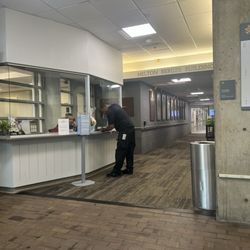
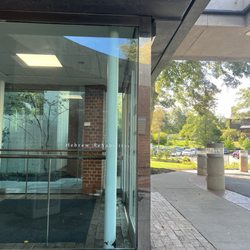
Getting to know the staff and the patients at the Rogerson House has been a life-changing experience. My neighbor Bill was placed in the Rogerson four years ago. As his health was deteriorating, his memory getting increasingly worse, I had plenty of opportunity to observe the staff's extraordinarily way of helping him adapt to his new and painful situation. Their care and love for him was genuine. Many cried at the Memorial Service arranged for him. I would visit Bill without ever giving advance notice: every single time, Bill would be engaged in one of the many activities provided--music, French lessons, bingo, poetry reading, gardening. While the patients had seemed a blur when I first arrived, the staff made sure to introduce us and to ease the relationship between patients, families, and visitors. I feel extremely fortunate to have gotten to know some remarkable people--Gertrude, a historian who wrote many books, Joan the minister's widow who loved dogs and many others. The selflessness of the helpers and administrators is beyond anything I could have imagined. Bill was made to feel very special at the Rogerson. Granted, he was one of the most charming people on earth (I am biased), but he was treated according to his great gifts, his wit, and sense of style. The staff would always make a great fuss over his outfits, they would make sure his television was tuned to the Animal Channel, and they treated him with great respect. But even if Bill hadn't had his charming ways, he would have been cared for with the same devotion. Toward the end of his life, when he became incontinent, they did their best to help him without embarrassing him. I was disconsolate when Bill was asked to move to the second floor (for advanced Alzheimer patients). I protested at first, finding it dehumanizing to uproot him from his friends and helpers. But the reasons they gave me were compelling: what they said was that when a patient stops making sense, becomes fully incontinent, the other patients begin ostracizing him or her. They explained that Bill should remain the star. The moment he would start noticing that he was being shunned, he would begin avoiding his fellow residents. This is actually what happened. Before he moved upstairs, he started eating alone, becoming less and less talkative. They were right. Rather than losing his status, he had preferred to isolate himself. At first, it was quite a shock for me to see him upstairs, with patients who seemed significantly more advanced in their disease. But it really was better for him. He didn't seem as ashamed or confused. One of the most wonderful aspects of this move upstairs is that the staff reconstituted his room with absolute precision. Same pictures on the wall, same everything. This helped Bill make the transition without feeling displaced in the least. I would give 5 stars to the Rogerson for their great humanity, their resources, the tremendous personal attention they pay to each resident. I think the food could be improved. Perhaps some good quality pot pourri could be added to dispel some of the residual smells. It was also not utterly clear to me how a family was supposed to deal with the patient once the condition really deteriorated. We got additional help to make sure Bill was dressed/undressed and shaved and cleaned. However, it wasn't completely clear to me whether this service could have been gotten with his insurance. Had we not been able to afford the added help, would he have had to leave for a nursing home? Those questions are worth asking. At any event, Bill stayed to the very end. He was comforted by remarkable people from Hospice and must have felt, despite the tragic situation he found himself in, that he had gained a second home. I will always be grateful to the remarkable people at the Rogerson. They taught me how to look beyond a condition that often makes us forget its victims deep intelligence and sensibility. Now that Bill is no more, I miss his friends and those who cared for him so beautifully throughout his illness. The genius behind the Rogerson House is the philosophy that nobody should be allowed to feel disoriented or displaced. Everything is designed to rekindle a sense of safety. Even if the residents' short-term memory has eroded, the Rogerson House is there to rekindle long-term experiences and joys. Their garden is truly idyllic. Looking at two women walking arm in arm, I realized that Alzheimer's or not, the Rogerson stresses above all else that we are all part of one humanity. I thank them for all they did for Bill and his friends. read more