Raleigh Water Tower Photos


More like Raleigh Water Tower
Recommended Reviews - Raleigh Water Tower
Start your review...



19 days ago
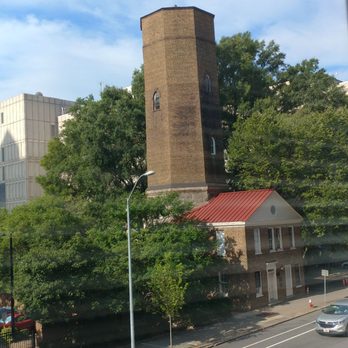
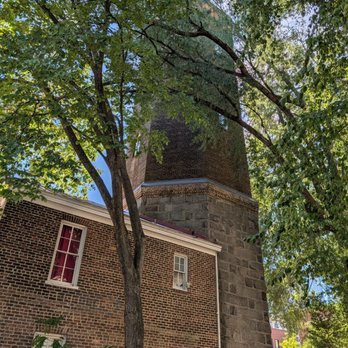
The historic Raleigh Water Tower is located in Downtown Raleigh on West Morgan Street. Built in 1887, it stands 85 feet tall. It held 100,000 gallons of water. At the time, it was Raleigh's tallest building. The water tower marked the beginning of water quality concerns and the move away from private wells and cisterns. Fires were another big concern. Walnut Creek water was the water source, and the tower used steam pumps and sand filters. The vertical design ensured adequate water pressure for everyone in Raleigh. Structurally, the iron water tank sat atop a massive octagonal red brick tower supported by a five-foot-thick, locally quarried granite base that transitioned seamlessly to a matching two-story office building. The city took over the infrastructure in 1913, but by 1924 it could no longer meet the area's needs because of population growth. They dismantled the tank, and the building sat neglected for 15 years. It was set to be demolished until Raleigh architect William Henley Deitrick bought the property and made it his office. He preserved a rare example of Romanesque Revival industrial architecture in downtown Raleigh. It was the first time a historic property got an adaptive reuse. He built four floors inside the tower's cavity, with a spiral staircase winding along the brick walls. He preserved the pine framing beams visible at the roof's apex. He worked on the blueprints for mid-century modern structures like the E.B. Bain Water Treatment Plant, Dorton Arena, Halifax Court, Chavis Heights, and a modernization of the News & Observer Building. In 1963, Deitrick deeded the historic building and its covenants to the North Carolina Chapter of the American Institute of Architects, which used the building for almost 50 years before outgrowing it in 2010. In 1971, it was listed on the National Register of Historic Places and is a preserved piece of Raleigh's history. It is currently home to Tower Escapes, a premier multi-level Raleigh escape room that lets visitors climb through Deitrick's historic spiral layout to solve immersive puzzles. It is a must-stop for history buffs and architecture enthusiasts alike! read more

I wasn't sure what this odd tower was all about and after some poking around, now I know. And now you know, too. Constructed in 1887, this was the main water tower for the city of Raleigh for 37 years. Before the tower was here, most of the water in the city came from private wells and such. But in the 1880's, a municipal system was built that drew water from nearby Walnut Creek and was carried to a nearby pumping station. The water was forced through sand filters and then into the 100,000 gallon water tank sat on top of the tower. But this point, this was the supply for the enter city and it wasn't keeping up. So in 1913, the city built a larger facility and built a larger dam upstream and this facility was decommissioned in 1924 and the steel tank was removed. Since then, the facility was converted into offices for an architectural firm and on to become a headquarters for a fast food company and lately, it's just a Historic Landmark for the city with an Tower Escapes company having two escape rooms inside. [Review 11585 overall, 1365 of 2019.] read more