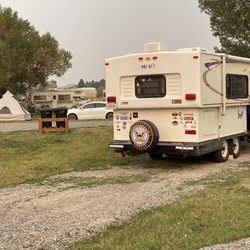
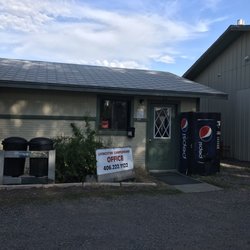
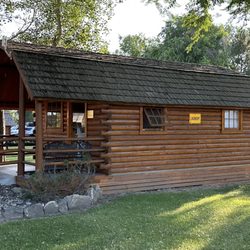
Old West Rv Park Photos

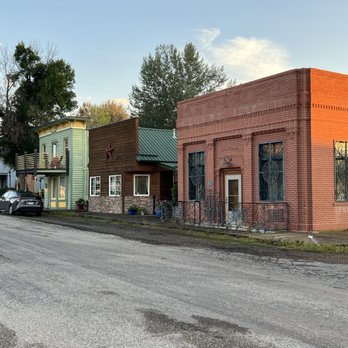

More like Old West Rv Park
Recommended Reviews - Old West Rv Park
Start your review...


Reviews With Photos


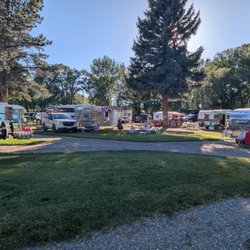
We had a wonderful overnight stay at Old West RV Park. Easy access to, in and out of the park, level, and clean and the owners, Jeremy and Ivy are lovely, and dog friendly people which we and our Corgi really appreciate. The grass at the camp sites are well maintained, making it an even better experience all around for ours and his enjoyment. Will definitely stay here again when traveling I-90. Thanks for the great dinner recommendation, too!

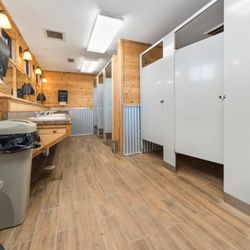
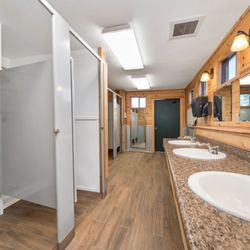
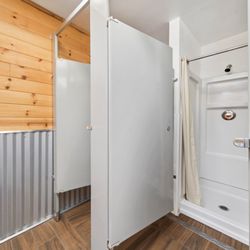
Chirps Across the Continental Divide: A Love Letter to Reed Point's Little Sentinels by Antonio J. Hopson I can't explain my love for prairie dogs, but I'll try--because obsession needs witnesses. They're cute, sure, but that's just the welcome mat. What hooks me is that each one is a character: expressive, social, democratic even. In their sprawling underground neighborhoods--called towns--they share the burden of survival like a chorus line of lookouts. One squeaks a warning for a hawk; another chirps a different tune for a coyote. There's even evidence they can recognize the same human wearing different colored shirts. In the grand theater of the animal kingdom, prairie dogs don't just bark--they speak. And of all the wild creatures we've studied, only humans have a more nuanced language. For now. That's what draws me--not just their behavior, but their performance of it. So we packed a cooler, my old notebook signed by Jane Goodall (humble brag), and my partner Jenny, and drove 760 miles to Reed Point, Montana. Destination: Greycliff Prairie Dog Town State Park, a sun-drenched patch of holy ground for lovers of language, wildlife, and miracles that live in the dirt. We parked with lawn chairs and beers--the kind of setup meant more for communion than conquest. If you're lucky enough to date someone who finds rodents romantic, skip the tourist traps. Go see the real show: prairie dogs at dusk. But first: Reed Point. The town feels like time paused for a smoke and never came back. We stayed at the Old West RV Park, run by Jeremy and Ivy--two of the kindest, no-nonsense folks you'll ever meet. The place is spotless. The restrooms gleam. The grass is manicured like a country club for travelers. There's even a rusted safe, a stagecoach wheel, and a tractor that--to this city slicker--looked like a fossil from another dimension. Now, let's talk about the "Redneck" thing. I'm a Black man. Jenny's white. And yes, I know what you might be thinking: Montana? Isn't that the kind of place where people don't "see" you until they do? But not once did we feel unwelcome. Not from Jeremy. Not from Ivy. Not even from the guy with the Jeep whose license plate simply read "REDNECK." We laughed--not at it, but with it. In Reed Point, "redneck" wasn't code for hate; it was shorthand for hard work--for boots worn down by fences, and fences built up by hands. Jeremy, curious and open, asked why we drove halfway across the West to watch what many call pests. I explained--romantically, yes, but also scientifically. Prairie dogs are keystone species. Their burrows aerate soil, feed ecosystems, create homes for owls, ferrets, foxes. Sure, they're a headache for ranchers--but they're a heartbeat for the plains. Jeremy nodded, asked sharp questions. That's the thing about Montanans: they'll move toward you or away--but always honestly. He even helped us search beyond the park, pointing out access roads and public lands. We took a wrong turn--of course--and ended up right back at Greycliff. Perfect. Prairie dogs, like us, are diurnal. They nap during the day's peak heat and come alive in the golden hour--just like we did. Most folks blast past the I-90 sign, never knowing they're missing the closest thing America has to a rodent opera. Jenny and I weren't tourists. We were observers. Scientists. Lovers. We set up shop, field notebook in hand, and began cataloging: behavior, vocalizations, social dynamics. Around the park's loop, we noted distinct neighborhoods--each with its own tone and tempo. We named them: Tacoma, Medina, Bellevue, and Rainier Beach. Some had kids. Some had retirees. One was ruled by a prairie dog we dubbed "Karen"--who would not shut up about our presence. I swear she was filing a report. Jenny had seen them once as a kid, from a car window. That glimpse had imprinted on her. For me, it was more than awe. It was homecoming. Instead of teaching science, I was doing science. The behavior was textbook and thrilling. Sentry postures. Splooting. Foraging. Alarm jumps that looked like panic--or joy. The line blurs in prairie dog. Jenny cooed at every move. I tried to play the scientist. Tried. But I smiled more than I wrote. And truth be told, while these creatures are wild, they're acclimated to humans standing around watching. We stay in our lane, they stay in theirs. But you can't help but feel like you're the one in the zoo--not them. Back at the RV park, it was a fifteen-minute drive to The Water Hole Saloon


What a charming, friendly, and clean RV Park. We had a great nights stay and would definitely come back. Highly recommended.

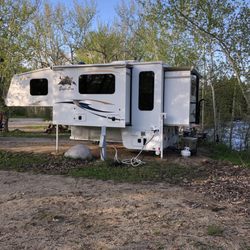
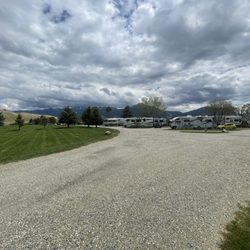
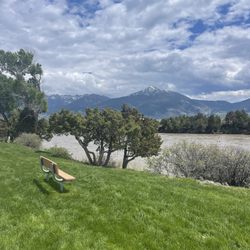
This park is small, close to the "main road" in downtown Reed Point, MT. The accommodations are top notch. The gravel site was enhanced by having nice grass and plants/trees next to it. The Waterhole is a saloon/restaurant/"casino" a few blocks away, which was really quaint and fun! There's a service/gas station across the street, which was convenient. Loved our one night stay!
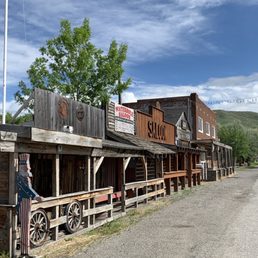

Good enough for what we were looking for & the staff were very friendly. Because of COVID19, the laundry & bathrooms were closed. The saloon down the street was closed, too, which is a bummer because I wanted to try it! This place is next to the highway, so you can hear the swish of the cars going by, but it's not too bad in my opinion. We stayed at site 9, which is the farthest into this small rv park. There is a post office across the street.


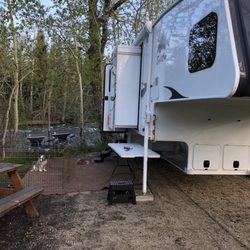
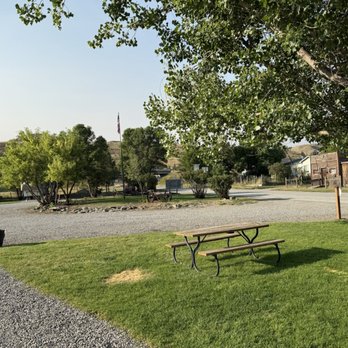
This is a VERY small park with 19 spots right off I-90. Our pull-through site was great with free cable TV and wifi. It had a small lawn with a large picnic table. The owner told us of the Watering Hole Tavern a couple of blocks from the park that had pretty reasonably priced food. (We took her advice and had a pizza.) RV park had a problem with water drainage a few days prior to us arriving and the owner/manager kept us informed about the condition of the grounds to be sure we would be comfortable staying there. It was a great spot to stop for the night before we started the big climb up the Rockies.


2 days ago
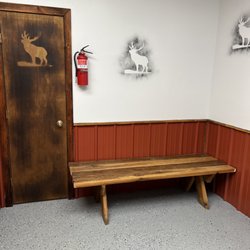
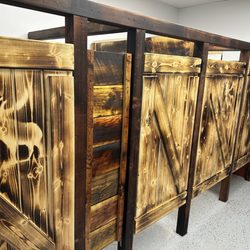
We loved this stop! The nicest couple that were so helpful. The campground is super tidy and the best bathrooms we've had on our trip with large showers, hot water, great water pressure and impeccably clean! Would definitely recommend stopping here. read more



4 months ago
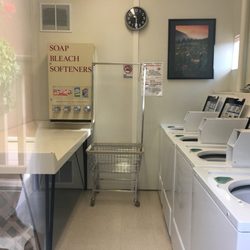
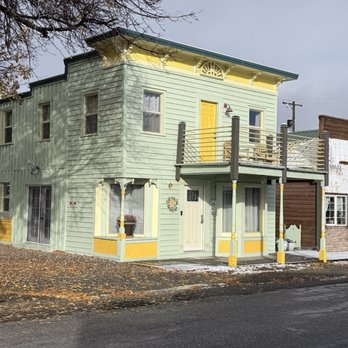
They don't get any nicer than Ivy and Jeremy! You'll feel like you've know them for years. Camp ground is super clean, charming, great laundry and bathrooms! Sites are nice with everything you need to enjoy this quaint little town that has an interesting history. Ivy and Jeremy can share all about it! I love hearing the train in the distance. Close to i90 so easy to find! Highly recommend!! read more


2 months ago

1 month ago
1 month ago

3 months ago

1 year ago
We had a wonderful overnight stay at Old West RV Park. Easy access to, in and out of the park, level, and clean and the owners, Jeremy and Ivy are lovely, and dog friendly people which we and our Corgi really appreciate. The grass at the camp sites are well maintained, making it an even better experience all around for ours and his enjoyment. Will definitely stay here again when traveling I-90. Thanks for the great dinner recommendation, too! read more


1 year ago
Chirps Across the Continental Divide: A Love Letter to Reed Point's Little Sentinels by Antonio J. Hopson I can't explain my love for prairie dogs, but I'll try--because obsession needs witnesses. They're cute, sure, but that's just the welcome mat. What hooks me is that each one is a character: expressive, social, democratic even. In their sprawling underground neighborhoods--called towns--they share the burden of survival like a chorus line of lookouts. One squeaks a warning for a hawk; another chirps a different tune for a coyote. There's even evidence they can recognize the same human wearing different colored shirts. In the grand theater of the animal kingdom, prairie dogs don't just bark--they speak. And of all the wild creatures we've studied, only humans have a more nuanced language. For now. That's what draws me--not just their behavior, but their performance of it. So we packed a cooler, my old notebook signed by Jane Goodall (humble brag), and my partner Jenny, and drove 760 miles to Reed Point, Montana. Destination: Greycliff Prairie Dog Town State Park, a sun-drenched patch of holy ground for lovers of language, wildlife, and miracles that live in the dirt. We parked with lawn chairs and beers--the kind of setup meant more for communion than conquest. If you're lucky enough to date someone who finds rodents romantic, skip the tourist traps. Go see the real show: prairie dogs at dusk. But first: Reed Point. The town feels like time paused for a smoke and never came back. We stayed at the Old West RV Park, run by Jeremy and Ivy--two of the kindest, no-nonsense folks you'll ever meet. The place is spotless. The restrooms gleam. The grass is manicured like a country club for travelers. There's even a rusted safe, a stagecoach wheel, and a tractor that--to this city slicker--looked like a fossil from another dimension. Now, let's talk about the "Redneck" thing. I'm a Black man. Jenny's white. And yes, I know what you might be thinking: Montana? Isn't that the kind of place where people don't "see" you until they do? But not once did we feel unwelcome. Not from Jeremy. Not from Ivy. Not even from the guy with the Jeep whose license plate simply read "REDNECK." We laughed--not at it, but with it. In Reed Point, "redneck" wasn't code for hate; it was shorthand for hard work--for boots worn down by fences, and fences built up by hands. Jeremy, curious and open, asked why we drove halfway across the West to watch what many call pests. I explained--romantically, yes, but also scientifically. Prairie dogs are keystone species. Their burrows aerate soil, feed ecosystems, create homes for owls, ferrets, foxes. Sure, they're a headache for ranchers--but they're a heartbeat for the plains. Jeremy nodded, asked sharp questions. That's the thing about Montanans: they'll move toward you or away--but always honestly. He even helped us search beyond the park, pointing out access roads and public lands. We took a wrong turn--of course--and ended up right back at Greycliff. Perfect. Prairie dogs, like us, are diurnal. They nap during the day's peak heat and come alive in the golden hour--just like we did. Most folks blast past the I-90 sign, never knowing they're missing the closest thing America has to a rodent opera. Jenny and I weren't tourists. We were observers. Scientists. Lovers. We set up shop, field notebook in hand, and began cataloging: behavior, vocalizations, social dynamics. Around the park's loop, we noted distinct neighborhoods--each with its own tone and tempo. We named them: Tacoma, Medina, Bellevue, and Rainier Beach. Some had kids. Some had retirees. One was ruled by a prairie dog we dubbed "Karen"--who would not shut up about our presence. I swear she was filing a report. Jenny had seen them once as a kid, from a car window. That glimpse had imprinted on her. For me, it was more than awe. It was homecoming. Instead of teaching science, I was doing science. The behavior was textbook and thrilling. Sentry postures. Splooting. Foraging. Alarm jumps that looked like panic--or joy. The line blurs in prairie dog. Jenny cooed at every move. I tried to play the scientist. Tried. But I smiled more than I wrote. And truth be told, while these creatures are wild, they're acclimated to humans standing around watching. We stay in our lane, they stay in theirs. But you can't help but feel like you're the one in the zoo--not them. Back at the RV park, it was a fifteen-minute drive to The Water Hole Saloon read more


1 year ago
1 year ago

3 years ago
What a charming, friendly, and clean RV Park. We had a great nights stay and would definitely come back. Highly recommended. read more


2 years ago
This park is small, close to the "main road" in downtown Reed Point, MT. The accommodations are top notch. The gravel site was enhanced by having nice grass and plants/trees next to it. The Waterhole is a saloon/restaurant/"casino" a few blocks away, which was really quaint and fun! There's a service/gas station across the street, which was convenient. Loved our one night stay! read more


2 years ago
2 years ago

6 years ago
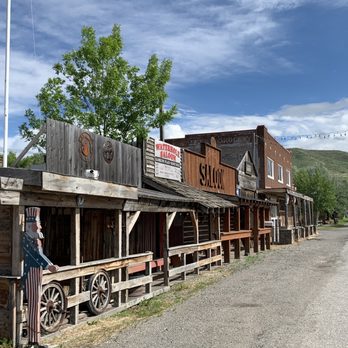
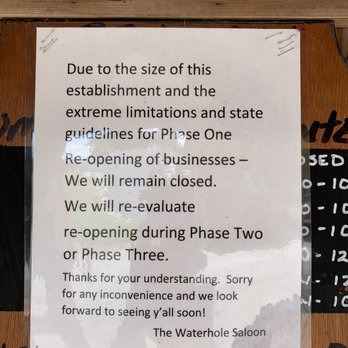
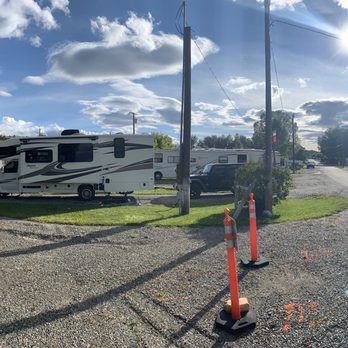
Good enough for what we were looking for & the staff were very friendly. Because of COVID19, the laundry & bathrooms were closed. The saloon down the street was closed, too, which is a bummer because I wanted to try it! This place is next to the highway, so you can hear the swish of the cars going by, but it's not too bad in my opinion. We stayed at site 9, which is the farthest into this small rv park. There is a post office across the street. read more


5 years ago

7 years ago

7 years ago

13 years ago

8 years ago
This is a VERY small park with 19 spots right off I-90. Our pull-through site was great with free cable TV and wifi. It had a small lawn with a large picnic table. The owner told us of the Watering Hole Tavern a couple of blocks from the park that had pretty reasonably priced food. (We took her advice and had a pizza.) RV park had a problem with water drainage a few days prior to us arriving and the owner/manager kept us informed about the condition of the grounds to be sure we would be comfortable staying there. It was a great spot to stop for the night before we started the big climb up the Rockies. read more


8 years ago
Cute small Park with gravel level sites and shade trees with grass. Easy access to I90. Yes I can hear traffic on I90 but one fan for white noise cures that. Attentive, helpful owners. $31 with Good Sam discount for water, sewer, electric, wifi and tv. Wow. read more


9 years ago
7 years ago
7 years ago
More info about Old West Rv Park
5 South Division St
Reed Point, MT 59069
Directions
(406) 326-2394
Call Now
Hours
Other Amenities