Old School Square Historic District Photos

More like Old School Square Historic District
Recommended Reviews - Old School Square Historic District
Start your review...



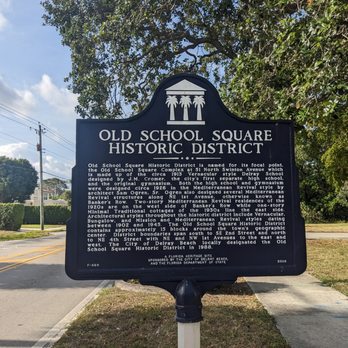
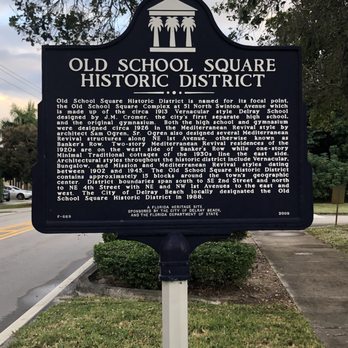
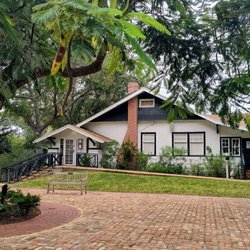
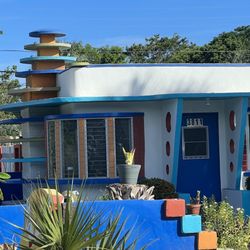
I love this little marker buried in a residential neighborhood and standing in front of a classic old church. It points out the local history of the immediate vicinity. There was a time I lived in Delray Beach and never knew all of this, so it's nice to see all of this added. The marker has the same text on both sides, reading "Old School Square Historic District is named for its focal point, the Old School Square Complex at 51 North Swinton Avenue which is made up of the circa 1913 Vernacular style Delray School designed by J.M. Cromer, the city's first separate high school, and the original gymnasium. Both the high school and gymnasium were designed circa 1926 in the Mediterranean Revival style by architect Sam Ogren, Sr. Ogren also designed several Mediterranean Revival structures along NE 1st Avenue, otherwise known as Banker's Row. Two-story Mediterranean Revival residences of the 1920s are on the west side of Banker's Row while one-story Minimal Traditional cottages of the 1930s line the east side. Architectural styles throughout the historic district include Vernacular, Bungalow, and Mission and Mediterranean Revival styles dating between 1902 and 1945. The Old School Square Historic District contains approximately 15 blocks around the town's geographic center. District boundaries span south to SE 2nd Street and north to NE 4th Street with NE and NW 1st Avenues to the east and west. The City of Delray Beach locally designated the Old School Square Historic District in 1988." This is marker F-669 and it was erected in 2009 by The City of Delray Beach and the Florida Department of State. You can park in the church parking lot to read the marker. [Review 987 of 2024 - 1863 in Florida - 22015 overall] read more

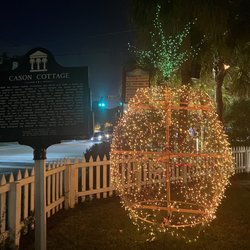
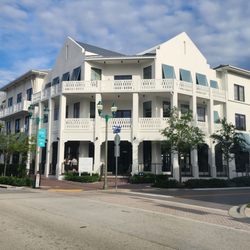
I love how the city of Delray beach embraces its history. They have several historic districts with markers through the city so you can learn more about how the city was created out of pineapple plantations and has now transformed into a premier vacation destination. Delray Beach's largest historic district is the Old School Square Historic District. It was created from the Delray Elementary built in 1913 on the corner of Swinton and Atlantic Avenues for grades one through twelve and the 1925 Delray High School which was built just north of the elementary building. The last graduation in the high school building was held in 1949 and by the mid 1980's, the Palm Beach School District had abandoned both buildings. The Delray Beach Historical Society gathered together concerned citizens and spearheaded an effort to restore the buildings in order to help a struggling downtown. Old School Square was locally designated in 1988 by the City of Delray Beach. In 1990 the elementary school opened as the Cornell Museum of Art and the Crest Theater opened in the former high school in 1993. Other historic buildings in this district include the 1902 turn of the century frame architecture Sundy House that was home to Delray Beach's first mayor, John S. Sundy, who served for seven terms. The building is now a bed and breakfast and restaurant/event space. Two of the cities oldest churches also reside in this district, the 1904 St. Paul's Episcopal Church and the 1903 Methodist Church. The restoration of the buildings did revitalize Atlantic Avenue as was envisioned. On the street there are many restaurants, shops, and galleries. Just off Atlantic is the Pineapple Arts District and a brand new food hall. On any given weekend you can see the street full with locals and tourists dining on the street at outdoor cafes. Still some signs of struggle remain. Doc's All American, a historic hamburger and hot dog stand remains closed while the city figures out a way to bring it back or develop something new. If you visit right now there is a giant Christmas tree that you can walk through set up in Old School Square while the during the weekend, Old School Square is the site of an excellent weekly farmer's market in the winter. I love the architecture and history of this section of Delray Beach. There is always something going on. It is one of my favorite places in south Florida to visit. read more
More info about Old School Square Historic District










Old School Square Historic District - landmarks - Updated September 2026
Best of Delray Beach
People found Old School Square Historic District by searching for…
Abandoned Buildings in Delray Beach, FL
Free Museum in Delray Beach, FL
Hidden Gems in Delray Beach, FL
Free Things to Do in Delray Beach, FL
Party Venues in Delray Beach, FL
Photo Spots in Delray Beach, FL
State Park in Delray Beach, FL
Historic Restaurants in Delray Beach, FL
Public Services & Government in Delray Beach, FL
Places to Take Pictures in Delray Beach, FL
Religious Organizations in Delray Beach, FL
Night View in Delray Beach, FL
Urban Exploration in Delray Beach, FL
Outdoor Market in Delray Beach, FL
Historical Sites in Delray Beach, FL
Public Parking in Delray Beach, FL
Places to Walk Around in Delray Beach, FL
National Parks in Delray Beach, FL
Trending Searches in Delray Beach, FL
Apple Orchards near Old School Square Historic District
Apple Picking near Old School Square Historic District
Archery near Old School Square Historic District
Barbershop near Old School Square Historic District
Beautiful Views near Old School Square Historic District
Blow Dry Bar near Old School Square Historic District
Castles near Old School Square Historic District
Consignment Shops near Old School Square Historic District
Corn Maze near Old School Square Historic District
Eyelash Extensions near Old School Square Historic District
Hidden Gems near Old School Square Historic District
Hiking near Old School Square Historic District
Kids Birthday Party near Old School Square Historic District
Landmarks & Historical Buildings near Old School Square Historic District
Lighthouses near Old School Square Historic District
Lookout Points near Old School Square Historic District
Makeup Artists near Old School Square Historic District
Photo Spots near Old School Square Historic District
Places To Take Pictures near Old School Square Historic District
Places To Walk near Old School Square Historic District
Private Schools near Old School Square Historic District
Public Art near Old School Square Historic District
Pumpkin Patches near Old School Square Historic District
Scenic Night View near Old School Square Historic District
Scenic Overlook near Old School Square Historic District
Small Venues & Event Spaces near Old School Square Historic District
Things To Do This Weekend near Old School Square Historic District
Browse Articles
Browse Nearby
BEST of Delray Beach, Florida Restaurants near Old School Square Historic District
BEST of Delray Beach, Florida Coffee near Old School Square Historic District
BEST of Delray Beach, Florida Things to Do near Old School Square Historic District
BEST of Delray Beach, Florida Photo Spots near Old School Square Historic District
BEST of Delray Beach, Florida Breakfast near Old School Square Historic District
BEST of Delray Beach, Florida Scenic View near Old School Square Historic District
BEST of Delray Beach, Florida Hotels near Old School Square Historic District
BEST of Delray Beach, Florida Sightseeing near Old School Square Historic District
BEST of Delray Beach, Florida Star Gazing near Old School Square Historic District
Browse Brands
Related Searches in Delray Beach, FL
Best Lookout Points to Visit in Delray Beach, Florida
Best Nature Trails for Hiking in Delray Beach, Florida
Book Engaging Historical Tours in Delray Beach, Florida
Discover Charming Historic Homes in Delray Beach, Florida
Discover Famous Monuments in Delray Beach, Florida
Discover Historic Sites and Places in Delray Beach, Florida
Discover Popular Landmarks in Delray Beach, Florida
Discover Popular Photo Spots in Delray Beach, Florida
Discover Top Nature Parks to Visit in Delray Beach, Florida
Discover Top Points of Interest in Delray Beach, Florida
Discover Top Scenic Spots to Visit in Delray Beach, Florida
Discover the Best Military Museum in Delray Beach, Florida
Enjoy the Best Walking Trails in Delray Beach, Florida
Experience Stunning Sunset Views in Delray Beach, Florida
Explore Beautiful Botanical Gardens in Delray Beach, Florida
Explore Beautiful Castles and Landmarks in Delray Beach, Florida
Explore Beautiful Parks and Green Spaces in Delray Beach, Florida
Explore Children's Museums Near Delray Beach, Florida
Explore Free Things to Do Around Delray Beach, Florida
Explore Picnic Parks Near Delray Beach, Florida
Explore Popular Scenic Overlook Points in Delray Beach, Florida
Explore Popular Scenic Views Near Delray Beach, Florida
Explore Secret Spots Worth Visiting in Delray Beach, Florida
Explore Venues & Event Spaces in Delray Beach, Florida
Explore the Top Car Museum in Delray Beach, Florida
Find Beautiful Views in Delray Beach, Florida
Find Parks and Recreation Activities in Delray Beach, Florida
Find Top Art Museums in Delray Beach, Florida
Find the Best Bridge Spots in Delray Beach, Florida
Find the Best Parks for Picnics in Delray Beach, Florida
Find the Best Playgrounds to Visit in Delray Beach, Florida
Great Things to See and Do in Delray Beach, Florida
Must-See Tourist Attractions Around Delray Beach, Florida
Plan a Scenic Drive Route Near Delray Beach, Florida
Popular Picnic Spots to Visit in Delray Beach, Florida
Popular Places to Go in Delray Beach, Florida
Popular Places to Take Pictures in Delray Beach, Florida
Popular Places to Walk Around in Delray Beach, Florida
Popular Things to Do in Delray Beach, Florida
Popular Things to See in Delray Beach, Florida
Top Hiking Trails to Explore in Delray Beach, Florida
Top Museums for Kids to Visit in Delray Beach, Florida
Top Places to Visit in Delray Beach, Florida for Sightseeing
Tour Famous Lighthouses Located in Delray Beach, Florida
Tour Popular Historical Sites in Delray Beach, Florida
Visit Beautiful Gardens in Delray Beach, Florida
Visit Popular Museums in Delray Beach, Florida Now


