Cancel

    Open app

    Search

    Old Bridge Park Photos

    Recommended Reviews - Old Bridge Park

    Your trust is our priority, so businesses can't pay to alter or remove their reviews. Learn more about reviews.
    Yelp app icon
    Browse more easily on the app
    Review Feed Illustration
    Photo of Ariel W.
    4395
    5919
    104020

    8 years ago

    Helpful 8
    Thanks 0
    Love this 6
    Oh no 0

    Verify this business for free

    People searched for Landmarks & Historical Buildings 105 times last month within 5 miles of this business.

    Verify this business

    Lake Worth Cultural Plaza - William Jenkins Worth for whom a number of towns take their name including Lake Worth.

    Lake Worth Cultural Plaza

    5.0(1 review)
    0.7 mi

    I have been staring at the back of this colorful building during the last couple of street painting…read morefestivals. The outside has a stage and a wide lawn for hosting events. It was time to find out what was inside. The building sits on the site of Lake Worth's first school built in 1912. It was torn down in 1916 and replaced with the concrete building that served as a school and city hall that stands here today. The building had to be rebuilt after the hurricane of 1928. In 1989 the building was placed on the National Register of Historic Places. The building contained city hall until 1973 when it was moved to 7 N. Dixie Hwy. It now houses the city hall annex on the first floor and the Lake Worth Museum on the second floor. The main purpose of my visit was to see the museum. As you go up the stairs you have to pass Miss Helen's desk. She was the best part of my visit. She is a Lake Worth treasure and pioneer by marriage as her husband likes to remind her. She gave me a brief tour and made herself available to answer any questions. The rooms are set up by themes such as World War 2 and Finland, Poland, and Lithuania in tribute to the heritage of the pioneers of Lake Worth. They had a nice display of dresses and I found the photographs of the devastation wrought by the Hurricane of 1928 fascinating. Miss Helen showed me the first census taken in the city in 1912 that listed 876 chickens in the city. Then someone got hungry and there were 875, just kidding. There were only 7 automobiles in the entire city in 1912. Although small I loved my visit to the museum and especially meeting Miss Helen. As I was leaving a firefighter was meeting with her to find historical records and pictures for the firehouse. If you live in the area and have a history question she is the person to see. Admission to the museum is free so make time for a visit the next time you are in the area.

    Photos
    Lake Worth Cultural Plaza
    Lake Worth Cultural Plaza
    Lake Worth Cultural Plaza - Photos showing the devastation of the Hurricane of 1928.

    See all

    Photos showing the devastation of the Hurricane of 1928.

    Little Red Schoolhouse

    Little Red Schoolhouse

    4.3(3 reviews)
    1.7 mi

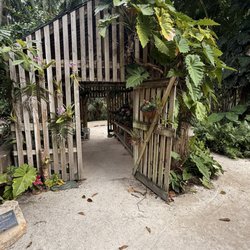
    What an interesting find, located right near the park parking lot and fenced city machinery yard…read more It's the first schoolhouse built in Palm Beach County. You can't walk in, but you can walk around it, admiring the garden and redwood structure.

    I happened on this by building chance and when I saw the sign on the side of the road and I stopped…read moreto take a look. The schoolhouse was founded in 1886 as the first school house in southeast Florida. The first students were taught by the reverends 16 year old daughter Hattie Gale. It was originally located one mile north of Royal Poinciana Bridge and it served the children of Lake Worth. During the height of it's enrollment in the 1890's 35 students attended at one time. It ceased to operate as a school house in 1901 and was used instead as a tool shed where it fell into disrepair. The Gardener's Society of Palm Beach rehabbed it in 1960 and moved it to where it resides today in Phipps Ocean Park. Today the school house is used as part of a living history program which was started in 1990's. Fourth grade classes in the surrounding counties can come to visit for a free field trip to see what a school day was like at the turn of the century. On the day I came by the schoolhouse was closed and I believe it is only open to school children which I think is a shame because as a teacher I would really like to visit. I wish they would consider opening it to the general public on a weekend once in awhile. There is a screen over the windows making it difficult to see inside but from what I could make out there were desks and displays on the walls. I love history so I enjoyed seeing this building even if i couldn't look inside. I think it is wonderful that this piece of history was preserved for the school kids of today.

    Photos
    Little Red Schoolhouse - In class.....

    In class.....

    Little Red Schoolhouse
    Little Red Schoolhouse

    See all

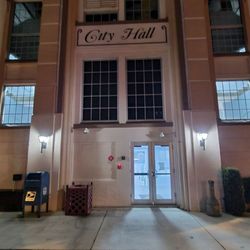
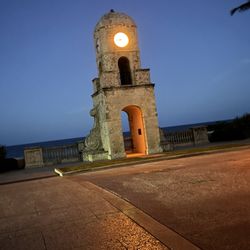
    City of Lake Worth Beach - D' City Hall Lake Worth at night  near 31st Annual Street Painting Festival Saturday Feb 22, 2025

    City of Lake Worth Beach

    4.0(1 review)
    1.0 mi

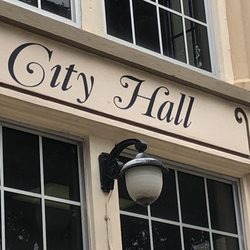
    This review is for the building only and the historical site, not the services offered inside. I…read morelove historical buildings and will take the time to read a historical sign whenever I find one. Today while visiting downtown Lake Worth I spotted one I had never seen in front of the town hall. The sign commemorates that the Lake Worth City Hall sits on the site of the first town hall that was built in 1915. The first town hall was school that was converted into a town hall in 1928. It was damaged in the Okeechobee hurricane of 1928 which caused the levee around lake Okeechobee to break. 2,500 people lost their lives and the area was plunged into a severe economic decline during the Great Depression. At first city hall operations were moved to the Lauriston Building at the intersection of Lake Avenue and Dixie Hwy. A new building was designed in a Spanish revival design by architect Floyd Kind at the end of 1928 and the building was completed in 1929. That building was used a city hall until 1973 when operations were transferred to the current city hall between Lake Avenue and Lucerne Ave. It is now used as the Lake worth historical museum. The current town hall once held an auditorium that held 350 people on the third floor. That is why the front of the building still bears the words municipal auditorium. The building is characterized by it's Moorish towers. It was designed by G.Sherman Childs who came to the area in 1913 to work for Addison Mizner until he opened his own firm. It was built to be hurricane resistant to provide shelter since the Great Hurricane of 1928 was still fresh in everyone's memory. The building ran out of money while it was being built due to the economic hardship of the Great Depression. Local businesses pitched in and the building was dedicated on November 28, 1935. The basement and first floor rooms were used for gatherings. During WWII the basement was used to host the Lake Worth USO. In 1953 the Lake Worth Playhouse began performances in the building. It closed in the 1970's. Today the building is still in use and holds all of the city service departments. I love the architectural design of the building. It represents the history of Lake Worth while it steers it's future.

    Photos
    City of Lake Worth Beach - Halloween fun on Lake Ave.

    Halloween fun on Lake Ave.

    City of Lake Worth Beach - Halloween fun on Lake Ave.

    Halloween fun on Lake Ave.

    City of Lake Worth Beach - Front facing Dixie hwy

    See all

    Front facing Dixie hwy

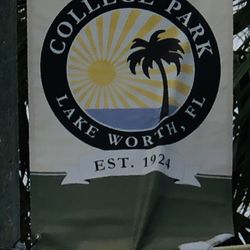
    College Park Historic District

    College Park Historic District

    5.0(1 review)
    2.1 mi

    I love a historical architectural tour and there is a great neighborhood on the northeast edge of…read moreLake Worth called The College Park Historic District, also known as College Park Residential Neighborhood. It was one of the first established neighborhoods in Lake Worth. Edgewood Realty Co. of West Palm Beach created the neighborhood in 1924 during Florida's land boom years in the 1920's. This subdivision was created by plats filed between December of 1924 and May of 1925. Within 3 hours 90 percent of the plats were sold. The developer wanted the neighborhood to be upscale so a minimum lot width of 50 feet was required and all new dwellings had to cost at least $5,000. The neighborhood is called College Park because the streets are named after a prominent colleges or universities like Harvard, Duke, and Princeton. Typical architectural styles are Mediterranean Revival and Mission style. The land boom ended in 1928 due to hurricanes and the Great Depression. The neighborhood saw another increase in construction after WWII when vets returned home and sought the warmer climate of Florida. Houses built during this time were single story, slab on grade masonry houses in Masonry Vernacular, International and Ranch architectural styles. John Price who served as county commissioner in Lake Worth was a resident of College Park. He was able to get the state and developers to donate more than 1,000 acres of land in the 1930's and 1940's which became John Prince Park, Palm Beach State College's Lake Worth campus, and the Lantana Airport. College Park was designated a U.S. historic district on February 9, 2001. Ninety historic homes and building reside in the boundaries of Maryland Drive, North Federal Highway, 19th Avenue North, and North Dixie Highway. Spillway Park located on the C-51 Canal is also located in this historic neighborhood.

    Photos
    College Park Historic District
    College Park Historic District
    College Park Historic District

    See all

    Harris Bridge - Lake Worth Avenue Bridge, aka Harris bridge, Lake Worth

    Harris Bridge

    5.0(2 reviews)
    0.1 mi

    It is the Lake Worth Avenue Bascule Bridge and can sometimes be referred to as the Palm Beach…read moreBascule Bridge. Officially, it is the Robert A. Harris Memorial Bridge named named for a retired Air Force officer who was director of the Lake Worth Chamber of Commerce from 1961 until his death in 1969. The bridge joins Lake Worth to Lake Worth Beach. This bridge (technically, two bridges) carries Lake Avenue (State Road 802) over the Intracoastal Waterway. it has a 35 foot vertical clearance over the water and the channel is 90 feet wide at the center. Two lanes of traffic in each direction with a raised pedestrian walkway on the outside. Three bridges have stood in this spot - the first was a wooden bridge built in 1918 that replaced a rowboat ferry. That was the longest toll-free bridge on the East Coast at the time. In 1937, a concrete bridge was built to replace the original one that was damaged in a storm. The 1937 bridge remained until 2011 when it was dismantled and pieces of it were sunk to create an artificial reef nearby. The current four-lane bridge opened on July 10, 1973. There is no toll to cross. The bridge is close to the Mar-A-Lago home of President Trump. Parts of A1A / South Ocean Boulevard nearby are closed by the Secret Service when he is here. Expect traffic and such, but thankfully there are road signs around the neighborhood indicating that the road is closed. [Review 173 of 2025 - 1958 in Florida - 23738 overall]

    The first bridge to built here was a wooden one built in 1918 so that people didn't have to take a…read morerowboat to get across the Intracoastal. It was dedicated on July 4, 1919 and the time it was the longest toll free bridge on the east coast. The old wooden bridge was replaced by a concrete bridge 1937. Which was damaged by a storm. When it was time to replace the bridge in the 70's, the old pieces of the 1937 bridge were left on the side of the new bridge until 2011 when they were sunk to create a reef for the Snook Islands Natural Area. The bridge that sits here now is the third bridge and it is officially called the Robert A. Harris Memorial Bridge. The bridge was named for Robert A. Harris, a retired Air Force Officer who served as the director of the Lake Worth Chamber of Commerce from 1961 until his death in 1969. The four lane concrete bridge was dedicated on July 10, 1973. It connects downtown Lake Worth to the Barrier Islands and Lake Worth Beach. The view is stunning of the Lake Worth Lagoon as you drive over the bridge. The city of Lake Worth also utilized the land under the bridges to make parks and they put in fishing piers. Old Bridge Park, Bryant Park, and Snook Islands Natural Area all lie at different points at the base of the bridge. The city took the bridge and then maximized what would have been unused to land to make places for people to relax and play and for nature to thrive. This bridge and it's surrounding parks is just one of the reasons I love Lake Worth so much.

    Photos
    Harris Bridge - Lake Worth Avenue Bridge, aka Harris bridge, Lake Worth

    Lake Worth Avenue Bridge, aka Harris bridge, Lake Worth

    Harris Bridge - Lake Worth Avenue Bridge, aka Harris bridge, Lake Worth

    Lake Worth Avenue Bridge, aka Harris bridge, Lake Worth

    Harris Bridge - Lake Worth Avenue Bridge, aka Harris bridge, Lake Worth

    See all

    Lake Worth Avenue Bridge, aka Harris bridge, Lake Worth

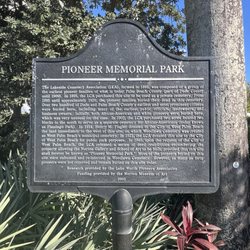
    Pioneer Memorial Park

    Pioneer Memorial Park

    5.0(2 reviews)
    5.9 mi

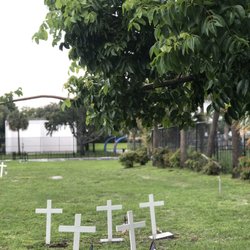
    Pioneer Memorial Park is also known as Lakeside Cemetery. It is the final resting place of the…read morepioneer families of West Palm Beach. The cemetery was maintained by the Lakeside Cemetery Association until it became too small to meet the needs of the community. Woodlawn Cemetery opened across the street on land deeded by railroad tycoon Henry Flagler, and the Lakeside Cemetery Association deeded the land to the city in 1921. The Association had three requirements for the land, it be kept as a park, a plaque naming the pioneers buried there be maintained, and that the Lake Worth Pioneers Association be allowed to hold their meetings there. When Ralph and Elizabeth Norton wanted the land to build an art museum the association dropped the requirement of keeping it as a park. If families could be contacted for permission than the graves were moved across the street to Woodlawn. Norton Museum was built on top of the remaining graves. The 1902 grave of Richard Hone who was murdered and his two infant sons lie in the northwest corner of the gallery in a crawl space under the auditorium. A plaque was placed on the Norton Gallery by the Palm Beach Arts League who built the museum. It is dedicated "in memory of those whose names appear below." It is unclear which of the names on the plaque of the 40 people still remain beneath the museum. If you visit the cemetery all you will see are the signs. There is a historical sign posted outside with the cemetery information. Many people pass it everyday without bothering to read it. Although it is not a secret that bodies lie under the museum not many people know about it. This is not an uncommon phenomenon in South Florida. The African-American section of Lakeside Cemetery now lies under the Flamingo Park neighborhood. So next time you are at the museum pause for a moment of respect for the Palm Beach. Pioneers who lay beneath your feet.

    Discovered this old cemetery and this is where many of the pioneers were buried. Many have been…read moremoved but forty remain.The list of pioneers from 1873 to1886 are. H Hammon W Moorse H Dye C Moorse H Pierce M Dimick F Dimick J McFarland E Bradley V Spencer A Wilder J Brelsford W Lainhart F Lennon E Dimick I Hendry A Geer C Lane D Brown G Potter M Spencer R Moore B Lainhart C Haight U Hendrickson C Cragin E Brelsford G Gale G Charters J Porter J Hoagland O Porter E Heyser J White W Lainhart R Potter J Davidson J McKenna E Gale A Garnett R McCormick G Rowley

    Photos
    Pioneer Memorial Park
    Pioneer Memorial Park
    Pioneer Memorial Park

    See all

    Old Bridge Park - landmarks - Updated May 2026

    Loading...
    Loading...
    Loading...