Lurie Garden Photos


You might also consider


More like Lurie Garden
Recommended Reviews - Lurie Garden
Start your review...


Reviews With Photos


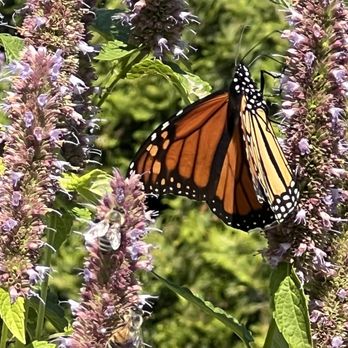
Of all the surprises in Chicago, the Lurie Garden is up there near the top. I lived in Chicago for years--10? 11?--before I ever visited the Lurie Garden. I knew it existed, but it is so well hidden in Millennium Park that you could easily miss it or not know it's there. The garden is a 2+ acre native plant garden in the southeast corner of Millennium Park. It has an endowment to maintain its upkeep, and that benefactor is Ann Lurie. In fact, Lurie Garden is part of the largest green roof in the world, as it is over the parking structures below ground. In addition to the beautiful grasses, plants, and flowers, you'll find some wildlife here in the park as well. Butterflies and bees abound, and you'll also see a lot of birds. I saw two different birds just today when I walked over to the park on my lunch hour. I did not see the aggressive redwing blackbirds, thank goodness, as they have been dive-bombing people all along the lakefront. Either I didn't look sufficiently threatening or I stayed far enough away! If you visit the Pritzker Pavilion, the Art Institute, or Millennium Park in general, I think a stop here is a must. Taking the skybridge from Maggie Daley park, you simply need to take a left after stepping of the bridge and you'll be heading into the garden. There's lots of seating here and so much to see.


Had the chance to explore Lurie Garden on a Thursday afternoon. It was awesome to get lost in the flora of the park. Great monuments to see and the stark comparison from the business buildings to the season flowers there. It started to drizzle and get windy, so do wear layers to avoid getting a head cold. Beautiful place to unplug from your electronics.


Another good thing in Grant Park is this cool garden. It also seems to be a maze. Lurie Garden is pretty fun to walk around in even if you don't like flowers and that kind of stuff. Easy to get lost. This is located near lots of other attractions so it's a fun way to get between these. It seems there's a lot of gardens around here. People thinking that would be correct about it. That's because there's a whole lot especially in Grant Park. Here is just one of the gardens. It's immediately close to the Grant Park Rose Garden and these kind of blend together. A difference between these is that this one has more than roses. There's so much color and then there's a maze too. Benches are throughout the garden in case you get tired trying to get out. The garden also has pretty good smells. Best time is in summer when the flowers have bloomed. It has quite a bit of flowers. This is a nice place for hanging out and wandering.


Visited this past August on a beautiful Chicago afternoon. I love urban gardens, and Lurie Garden was popping! Just outside downtown, the garden was an oasis in an incredibly busy part of town. Located steps away from Millennium Park and Cloud Gate, it was relatively empty when we visited. Millennium Park was packed on one side, and there were thousands of people at lollapalooza on the other side. We didn't get a chance to visit on our trip last week, but I'm sure as the weather gets colder, this part of town slows down a bit. As far as urban gardens go, this is one of the best I've had the pleasure of visiting.
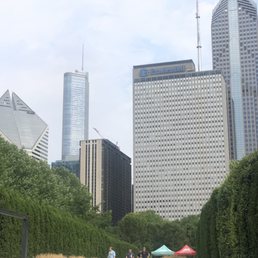

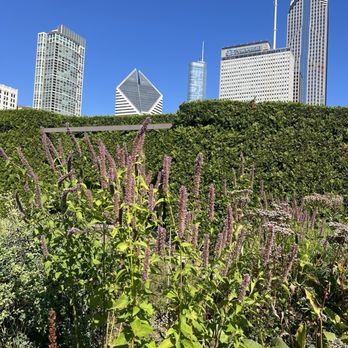
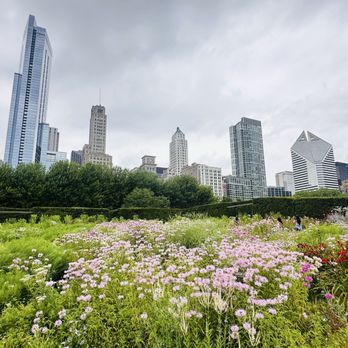
I found a secret garden in Chicago. Well maybe not so secret but it felt that way. The motto for the city of Chicago is Urbs in Horto, Latin for City in a Garden. You will actually find many gardens of various sizes throughout the city of Chicago. The Lurie Garden is a three acre garden located on the roof deck of the Millennium Park parking garage across the street from the Chicago Art Institute. It is one of the world's largest green roofs. Lightweight geofoam lies underneath the soil. The garage itself was built on top of a former railroad yard and parking lot. The garden is part of Millennium Park and is named after Ann H. Lurie who along with her husband Robert made a $10 million endowment gift from their foundation in order to maintain the garden. Opened on July 16, 2004, it was designed by GGN (Gustafson Guthrie Nichol), a Seattle based architecture firm and Robert Israel, a noted lighting and set designer who set the placement of the paths and designed the shape of the flower beds. The garden was built at a cost of 13.2 million dollars to celebrate the second millennium. Lurie Garden has won the Award of Excellence from the American Society of Landscape Architects. The garden is composed of perennials, bulbs, grasses, shrubs and trees. There are four main components to the garden, the shoulder hedge, the dark plate, the light plate, and the seam boardwalk. The garden is made of two plates separated by two hedges. The dark plate inspired by marsh ecologies and is made of shade loving plants represents Chicago's history. Look for ferns, shrubs, trees including black locusts, redbuds, and cherries. The light plate made of sun dependent perennials arranged in planting blocks. It represents Chicago's future and is reminiscent of the sunny open plains of the Midwest. Poet Carl Sandburg called Chicago "City of Big Shoulders" and the shoulders he referred to are represented by a 15 foot hedge that protects the garden on two sides setting apart the garden from the rest of Millennium Park. The diagonal seam boardwalk running through the garden represents the Lake Michigan seawall that divides Grant Park. Dutch gardener Piet Oudolf designed the flower beds in the garden using 26,000 perennial plants in 250 varieties native to the prairie. The garden has attracted several animal species, 27 species of birds, and butterflies and bees. The garden also has ornamental and prairie grasses. The garden does not use pesticides or fertilizers. For the most color, plan to visit June through fall. It is a four season garden that changes throughout the year so you can experience something different each season. Admission to the garden is free and it often hosts guided walks, lectures, demonstrations, and festivals. I love how this oasis of nature is framed by the skyscrapers of Chicago. It is definitely worth a visit if you are in the city.
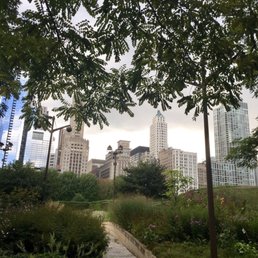

Great little getaway from the hustle and bustle. Bring a book, find a little nook, and relax in this luscious city hideaway. I wouldn't say this is a "must see" Chicago spot, but it's attached to Millennium Park (where the bean is) so why not take a stroll through if you have a minute. It's very wide spread and has a nice variety of flowers, trees, bushes, etc. If you're into horticulture I'm sure you'll appreciate the seasonal plants and info graphics. Lurie Garden is free to roam and has security guards around the area to maintain safety and comfort. They do host events here every so often, though, so maybe check that schedule before making a long trek out to ensure it's open to the public on that day. I'd advise Ubering or walking rather than driving just due to heavy traffic in the area and lack of parking, though they do have paid garages and street options nearby. Ideal morning: Stroll down to Fairgrounds coffee and grab an oat milk latte. Take a walk through Millennium Park, meander through the gardens, get cozy on a bench and read a book!


Always a nice diversion after the Art Institute or walking back from the Barbour. Take a moment to treat your senses to the wonderful garden.


Wow its amazing that there is a nice garden in the middle of Downtown. Yes it is located inside the massive Millennium Park. A few steps to the Cloud Gate. Its not like a big garden that takes a long time to get through. It is small but it has some fabulous greens/plants to check out. Depending on the season, there are different flowers to enjoy. Great for pictures. Such beautiful scenery. Chicago people are so lucky.


Hands down, this garden was my favorite-EST part of my visit to MiLLennium Park. If you were to ask me personaLLy- there is no other pLace that is more beautifuL, reLaxing, simpLy fuLL of coLor & Life!! I couLd easiLy get Lost in the Lurie Garden for hours just taking photos and gawking over the beautifuL Chicago skyscrapers|skyLine. This is the perfect spot for anyone who needs a break from aLL the hustLe and bustLe. Grab some Lunch, escape in a reaLLy good book [or two], and have a romantic stroLL with your significant other. DefiniteLy a must visit.


I'm in Millennium park pretty often but hadn't seen the Lurie Gardens until this past weekend for the first time ever. It's not gigantic but it's serene you feel like you're still on the prairie even though you're in the downtown of a booming metropolis. It was foggy the day I was there yet still very worthwhile.


Lurie Garden is an oasis in Millennium Park, and in the City, itself. If you need a break from the tourists at the Bean, the Art Institute, or you're just wanting to connect with nature after work, Lurie can provide tranquility, stat. I like the focus on Illinois prairie plants, and the paths are secluded and quiet. Security guards do patrol, so you never feel unsafe. Except watch out for red-winged blackbirds, at times they do divebomb the unsuspecting! Dip your toes in the slow-running stream, I do believe it brings good luck. Or at least it's refreshing! Lurie needed it's own Yelp profile, because you can always Check-In, before Checking Out!


Lurie Garden is a flower garden located at Millennium Park and across the street from the Art Institute of Chicago. What is striking about this garden is how well manicured this garden is and how the surrounding skyline really accentuates the beauty of it. The garden is full of different types of lowers, though there is no description signage on them. It feels like a peaceful oasis considering the garden is surrounded by skyscraper buildings. And makes for a nice place to stroll through while you are visiting Millennium Park. The Cloud Bean and Crown Fountain are more interesting aesthetically and visually. But if you are looking for a place to enjoy natural beauty at Millennium Park, check out Lurie Garden for its nice flower garden.


I found this place through yelp & was so grateful! It was my favorite place along with the Chicago Art Institute when I visited Chicago in late Sep. This park is located between the Cloud Gate & the museum. I loved the boardwalk pathway, greens/ plants and the skyline. So peaceful & lovely.


Garden Party 2.5-acre garden located at the south end of Chicago's Millennium Park in the famous Loop District. The Good: * Free! My favorite price. * Easy access from the Red Line. * As stated above, it's located in Millennium Park, which is an awesome place. * We visited in mid-summer, and the garden was in full bloom and full of butterflies. The Meh: * On the smaller side for a botanical garden, but it's free, so what are you going to do? The Ugly: * Parking is available at the nearby Millennium Park parking garage, which is beaucoup bucks! $40 for up to 3 hours, and it just goes up from there. Pro Tip: It's way cheaper to take the Red Line, but if you must drive, you can save 50% by buying your parking ahead of time. Conclusion: If you're visiting Chicago, then Millennium Park is a must-see, and while you're here, swing through the garden. read more


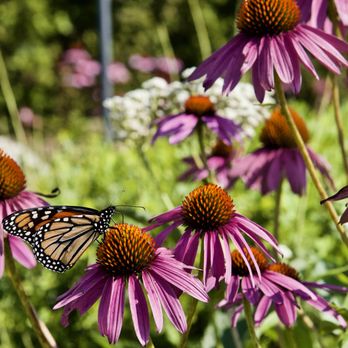


Lurie gardens. I talked with the paid master gardener, leader, and some of the volunteers. Garden is highly managed. They do not have invasive plants. Some weeding required. No chemicals and big sections in planting transition. Monarch butterflies here now. In millennium Park Luri Garden is 2.5 acres comprised of native prairie grasses, perennials, shrubs, and trees. Surrounded by skyscrapers. Who knew? A peaceful natural looking garden in the big sky city. read more




2 years ago
As you make your way through Millennium Park, you'll find tucked away, Lurie Garden. An urban oasis, the garden was full of life and provided a sweet escape from the crowds. It was a nice stroll walking through the different perennials, grasses, and wild flowers that were in full bloom on this summer day. It's a soft contrast to the tall, concrete buildings that surround much of downtown. A definite must-see in Chicago that is absolutely free! read more


Of all the surprises in Chicago, the Lurie Garden is up there near the top. I lived in Chicago for years--10? 11?--before I ever visited the Lurie Garden. I knew it existed, but it is so well hidden in Millennium Park that you could easily miss it or not know it's there. The garden is a 2+ acre native plant garden in the southeast corner of Millennium Park. It has an endowment to maintain its upkeep, and that benefactor is Ann Lurie. In fact, Lurie Garden is part of the largest green roof in the world, as it is over the parking structures below ground. In addition to the beautiful grasses, plants, and flowers, you'll find some wildlife here in the park as well. Butterflies and bees abound, and you'll also see a lot of birds. I saw two different birds just today when I walked over to the park on my lunch hour. I did not see the aggressive redwing blackbirds, thank goodness, as they have been dive-bombing people all along the lakefront. Either I didn't look sufficiently threatening or I stayed far enough away! If you visit the Pritzker Pavilion, the Art Institute, or Millennium Park in general, I think a stop here is a must. Taking the skybridge from Maggie Daley park, you simply need to take a left after stepping of the bridge and you'll be heading into the garden. There's lots of seating here and so much to see. read more


Had the chance to explore Lurie Garden on a Thursday afternoon. It was awesome to get lost in the flora of the park. Great monuments to see and the stark comparison from the business buildings to the season flowers there. It started to drizzle and get windy, so do wear layers to avoid getting a head cold. Beautiful place to unplug from your electronics. read more


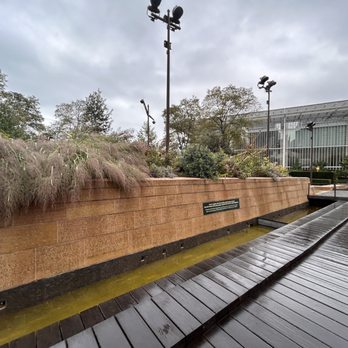
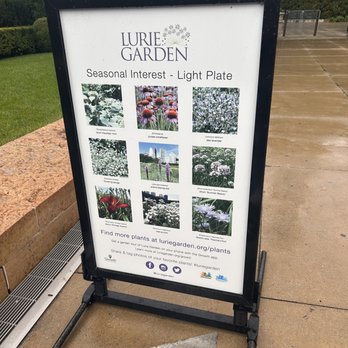


Another good thing in Grant Park is this cool garden. It also seems to be a maze. Lurie Garden is pretty fun to walk around in even if you don't like flowers and that kind of stuff. Easy to get lost. This is located near lots of other attractions so it's a fun way to get between these. It seems there's a lot of gardens around here. People thinking that would be correct about it. That's because there's a whole lot especially in Grant Park. Here is just one of the gardens. It's immediately close to the Grant Park Rose Garden and these kind of blend together. A difference between these is that this one has more than roses. There's so much color and then there's a maze too. Benches are throughout the garden in case you get tired trying to get out. The garden also has pretty good smells. Best time is in summer when the flowers have bloomed. It has quite a bit of flowers. This is a nice place for hanging out and wandering. read more


3 years ago
Visited this past August on a beautiful Chicago afternoon. I love urban gardens, and Lurie Garden was popping! Just outside downtown, the garden was an oasis in an incredibly busy part of town. Located steps away from Millennium Park and Cloud Gate, it was relatively empty when we visited. Millennium Park was packed on one side, and there were thousands of people at lollapalooza on the other side. We didn't get a chance to visit on our trip last week, but I'm sure as the weather gets colder, this part of town slows down a bit. As far as urban gardens go, this is one of the best I've had the pleasure of visiting. read more


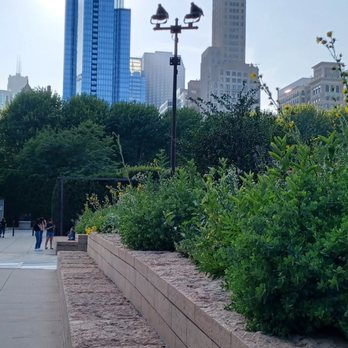


I found a secret garden in Chicago. Well maybe not so secret but it felt that way. The motto for the city of Chicago is Urbs in Horto, Latin for City in a Garden. You will actually find many gardens of various sizes throughout the city of Chicago. The Lurie Garden is a three acre garden located on the roof deck of the Millennium Park parking garage across the street from the Chicago Art Institute. It is one of the world's largest green roofs. Lightweight geofoam lies underneath the soil. The garage itself was built on top of a former railroad yard and parking lot. The garden is part of Millennium Park and is named after Ann H. Lurie who along with her husband Robert made a $10 million endowment gift from their foundation in order to maintain the garden. Opened on July 16, 2004, it was designed by GGN (Gustafson Guthrie Nichol), a Seattle based architecture firm and Robert Israel, a noted lighting and set designer who set the placement of the paths and designed the shape of the flower beds. The garden was built at a cost of 13.2 million dollars to celebrate the second millennium. Lurie Garden has won the Award of Excellence from the American Society of Landscape Architects. The garden is composed of perennials, bulbs, grasses, shrubs and trees. There are four main components to the garden, the shoulder hedge, the dark plate, the light plate, and the seam boardwalk. The garden is made of two plates separated by two hedges. The dark plate inspired by marsh ecologies and is made of shade loving plants represents Chicago's history. Look for ferns, shrubs, trees including black locusts, redbuds, and cherries. The light plate made of sun dependent perennials arranged in planting blocks. It represents Chicago's future and is reminiscent of the sunny open plains of the Midwest. Poet Carl Sandburg called Chicago "City of Big Shoulders" and the shoulders he referred to are represented by a 15 foot hedge that protects the garden on two sides setting apart the garden from the rest of Millennium Park. The diagonal seam boardwalk running through the garden represents the Lake Michigan seawall that divides Grant Park. Dutch gardener Piet Oudolf designed the flower beds in the garden using 26,000 perennial plants in 250 varieties native to the prairie. The garden has attracted several animal species, 27 species of birds, and butterflies and bees. The garden also has ornamental and prairie grasses. The garden does not use pesticides or fertilizers. For the most color, plan to visit June through fall. It is a four season garden that changes throughout the year so you can experience something different each season. Admission to the garden is free and it often hosts guided walks, lectures, demonstrations, and festivals. I love how this oasis of nature is framed by the skyscrapers of Chicago. It is definitely worth a visit if you are in the city. read more
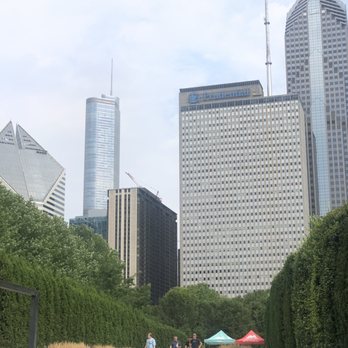



Great little getaway from the hustle and bustle. Bring a book, find a little nook, and relax in this luscious city hideaway. I wouldn't say this is a "must see" Chicago spot, but it's attached to Millennium Park (where the bean is) so why not take a stroll through if you have a minute. It's very wide spread and has a nice variety of flowers, trees, bushes, etc. If you're into horticulture I'm sure you'll appreciate the seasonal plants and info graphics. Lurie Garden is free to roam and has security guards around the area to maintain safety and comfort. They do host events here every so often, though, so maybe check that schedule before making a long trek out to ensure it's open to the public on that day. I'd advise Ubering or walking rather than driving just due to heavy traffic in the area and lack of parking, though they do have paid garages and street options nearby. Ideal morning: Stroll down to Fairgrounds coffee and grab an oat milk latte. Take a walk through Millennium Park, meander through the gardens, get cozy on a bench and read a book! read more
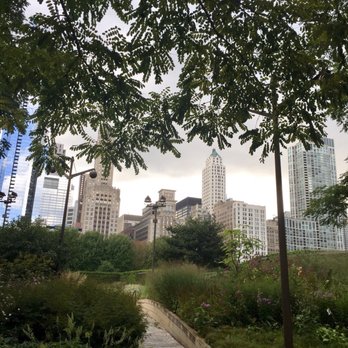


Wow its amazing that there is a nice garden in the middle of Downtown. Yes it is located inside the massive Millennium Park. A few steps to the Cloud Gate. Its not like a big garden that takes a long time to get through. It is small but it has some fabulous greens/plants to check out. Depending on the season, there are different flowers to enjoy. Great for pictures. Such beautiful scenery. Chicago people are so lucky. read more


Hands down, this garden was my favorite-EST part of my visit to MiLLennium Park. If you were to ask me personaLLy- there is no other pLace that is more beautifuL, reLaxing, simpLy fuLL of coLor & Life!! I couLd easiLy get Lost in the Lurie Garden for hours just taking photos and gawking over the beautifuL Chicago skyscrapers|skyLine. This is the perfect spot for anyone who needs a break from aLL the hustLe and bustLe. Grab some Lunch, escape in a reaLLy good book [or two], and have a romantic stroLL with your significant other. DefiniteLy a must visit. read more


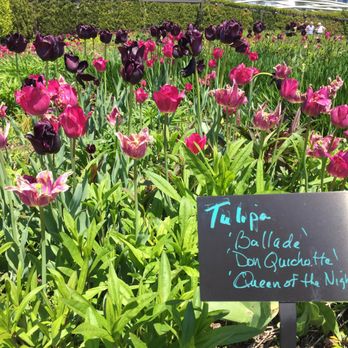


I'm in Millennium park pretty often but hadn't seen the Lurie Gardens until this past weekend for the first time ever. It's not gigantic but it's serene you feel like you're still on the prairie even though you're in the downtown of a booming metropolis. It was foggy the day I was there yet still very worthwhile. read more


Lurie Garden is an oasis in Millennium Park, and in the City, itself. If you need a break from the tourists at the Bean, the Art Institute, or you're just wanting to connect with nature after work, Lurie can provide tranquility, stat. I like the focus on Illinois prairie plants, and the paths are secluded and quiet. Security guards do patrol, so you never feel unsafe. Except watch out for red-winged blackbirds, at times they do divebomb the unsuspecting! Dip your toes in the slow-running stream, I do believe it brings good luck. Or at least it's refreshing! Lurie needed it's own Yelp profile, because you can always Check-In, before Checking Out! read more





Lurie Garden is a flower garden located at Millennium Park and across the street from the Art Institute of Chicago. What is striking about this garden is how well manicured this garden is and how the surrounding skyline really accentuates the beauty of it. The garden is full of different types of lowers, though there is no description signage on them. It feels like a peaceful oasis considering the garden is surrounded by skyscraper buildings. And makes for a nice place to stroll through while you are visiting Millennium Park. The Cloud Bean and Crown Fountain are more interesting aesthetically and visually. But if you are looking for a place to enjoy natural beauty at Millennium Park, check out Lurie Garden for its nice flower garden. read more


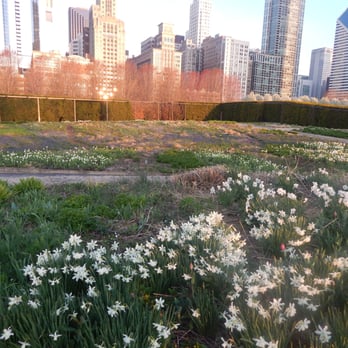
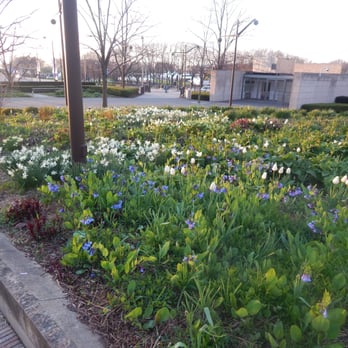


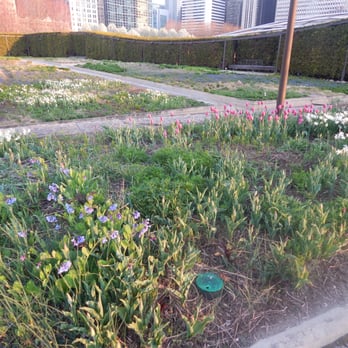

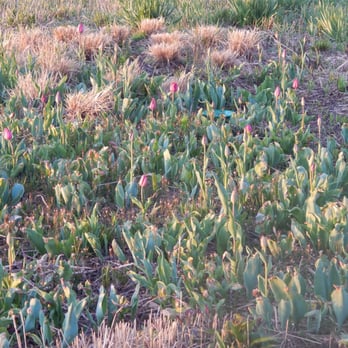

7 years ago
I found this place through yelp & was so grateful! It was my favorite place along with the Chicago Art Institute when I visited Chicago in late Sep. This park is located between the Cloud Gate & the museum. I loved the boardwalk pathway, greens/ plants and the skyline. So peaceful & lovely. read more


The Lurie Garden is a cool little garden that is at the end of Millennium Park off Monroe Street. It was built in 2004 and according to records this garden cost $13.2M to build and has a fund set aside in the amount of $10M to maintain this gardens upkeep. This has been covered by Ann Lurie, who the garden is named after. Thanks to The Ann and Robert H. Lurie Foundation, this garden would not be possible. This is a great place to visit and walk around. I find it very peaceful here and definitely a great place to relax and read a book, have a picnic or take pictures. I noticed that a few people come here with their family and have professional pictures taken using the backdrop of the garden. It makes for a great picture. If you are in Chicago and love strolling through gardens, this is a great place to stop. [Review #318] (Seventieth Eighth Review of 2015) read more


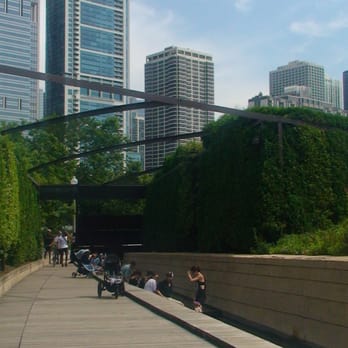


5 years ago
Beautiful spot right next to Cloudgate and significantly less crowded. They have a lovely herb garden and a lot of walking paths. We were lucky enough to catch a dance group perform through it as well. Great spot read more


I'm surprised there's only one review for Lurie Garden to date. As packed as I've seen it in the summer, I'd think there'd be a few people who've cooled their feet in the wish pond who'd have come here to express their delight! I've never dipped a toe there, but I can tell you...those people look content. I'm content just looking at them! It's an interesting sight - to see a line of folks, pants legs rolled up or tan legs stretched out, feet dangling in the water...each person facing a smooth block wall. (Jeanine H. has a good photo of the wish pond/wall) In the summertime, the garden is bursting with unruly but still well contained flowers, Illinois prairie plants and greenery. Nature! After the first frost, things die off pretty quickly. I happened through the garden (note, you are walking along mostly on concrete though there are paths of wood chips in select areas. This is a true "city garden," people, bordered by some pretty busy roads.) Anyway, I happened through in the Fall when certain dead plants were being removed and I appreciated the care that the groundskeepers displayed. Yes, it is the more "classically lovely" garden in the summertime, but the harsher months still present their own aesthetic that I find both thought-provoking and photo-worthy. Regardless the season, I always prefer to cut through the garden than to walk Michigan Ave if I'm on foot between say...the Art Institute and Wildberry Cafe. Cut-through, linger, stop n smell the roses, snap a photo, dip a toe, make a wish. read more


10 years ago
I don't think Lurie Garden is intended to be a main attraction, but my boyfriend and I stumbled upon it anyways on our way to Millennium Park. It's definitely a peaceful part of Chicago compared to Millennium Park, but I wouldn't go out of my way to see it. My favorite part was the "river" that many people would use to cool their legs off in the heat. It's much more beautiful than the display of flowers in my opinion, but absolutely take a look around if you're already walking around that area! read more


8 years ago
The garden has expanded so much over the years to showcase a large variety. Beautiful flowers, great scenery. This is the perfect backdrop for a photo shoot!! There are some seating areas to have a cute date or maybe a picnic. read more


Arrived to this garden after viewing the millennium park. Not too much of a flower fan but this garden is simply beautiful. They have a small fountain on the side to dip your feet in and take a break from the heat. I enjoyed the different variety of flowers and pants available to view and take photos in. I hate bugs/bees which were around the flowers but the beauty was worth the annoyance of the bugs. Although I enjoyed the view I don't think I would return cause it seemed like a first time experience/enjoyment, unless they hosted a specific event. read more


A fabulous, magnificent, and beautiful garden in the heart of downtown Chicago is worth more than any wonder which one can build. Just a small hideaway with steps away from the famous Cloud Gate, it could lead to a whole new world that anyone could hardly imagine. There was a small stream for the visitor to rest the feet and relax and float in water. Although Millenium Park is a must go place in Chicago, Lurie Garden is no entirely any less than that. read more


My sister came here for her wedding pictures because she was aiming for a pretty immediate surrounding with the Skyline in the background. I think she had like 4-5 different spots in this 5-acre garden where she was able to take pictures. So yes, this garden makes a great scenery in your pictures, and you should do your photo shoot here too! Why? Because after taking your pictures here, you can walk to other parts of Millennium park such as the "Cloud Gate" to take pictures there as well! Heck if you got the energy to walk around in your dress, you can walk 10 minute to Buckingham Fountain and take pictures there too!!!! read more


11 years ago

12 years ago

The Lurie garden is hidden in the Millennial Park. I stumbled upon this beautiful garden by accident when I was on my way to the bean. It is completely surrounded by greenery and is a good place to go to when trying to get away from the hustle and bustle of the big city. The view in this small garden is so pretty as there were many blooming flowers. Great place to relax and enjoy the outdoors! read more


12 years ago

11 years ago

11 years ago

13 years ago

10 years ago

12 years ago