Cancel

    Open app

    Search

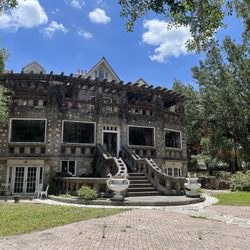
    L.B. Brown House Photos

    Recommended Reviews - L.B. Brown House

    Your trust is our priority, so businesses can't pay to alter or remove their reviews. Learn more about reviews.
    Yelp app icon
    Browse more easily on the app
    Review Feed Illustration

    3 years ago

    Helpful 0
    Thanks 0
    Love this 0
    Oh no 0
    Photo of Ariel W.
    4395
    5907
    103710

    5 years ago

    Helpful 72
    Thanks 0
    Love this 73
    Oh no 0

    3 years ago

    Helpful 0
    Thanks 0
    Love this 0
    Oh no 0

    4 years ago

    Helpful 0
    Thanks 0
    Love this 0
    Oh no 0

    Verify this business for free

    Get access to customer & competitor insights.

    Verify this business

    Polk County History Center - Polk County History Museum / Old Polk County Courthouse, Bartow

    Polk County History Center

    4.7(10 reviews)
    0.6 mi

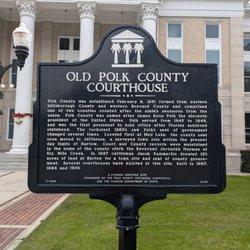
    Closed on the Monday when I was passing through Bartow but I got to at least enjoy the outside of…read morethis massive structure that used to be the Polk County Courthouse and is now the History Center. The new Justice Center towers above, across the street. There is a historical marker out front that provides some history. It reads, "Polk County was established February 8, 1861 formed from eastern Hillsborough County and western Brevard County and comprised one of two counties created after the state's secession from the union. Polk County was named after James Knox Polk the eleventh president of the United States. Polk served from 1845 to 1849, and was the first president to hold office after Florida achieved statehood. The turbulent 1860's saw Polk's seat of government changed several times. Located first at Mud Lake, the county seat soon moved to Jefferson, a surveyed town site within the present day limits of Bartow. Court and County records were maintained in the home of the county clerk the Reverend Jeremiah Hayman at Six Mile Creek. In 1867 cattleman Jacob Summerlin donated 120 acres of land at Bartow for a town site and seat of county government. Several courthouses have existed at this site, built in 1867, 1884 and 1909." It is marker number F-549 and was erected in 2005 by the Polk County Historical Commission and the Florida Department of State. The building was designed by Edward Columbus Hosford with contributions from Francis J. Kennard in a Classical Revival composition. The style is unmistakable: a symmetrical facade, strong classical massing, and a clock tower rising above the roofline. A series of earlier courthouses stood on this same ground, beginning with an 1867 structure, then an 1884 replacement, and finally the 1909 building that survives today. The facade's classical detailing, the clock tower, and the building's balanced proportions all reflect a period when counties across the South were asserting their permanence through monumental architecture. Inside, the building now houses the Polk County History Center, and the county offers regular architectural tours that highlight the structure's Neo‑Classical features and the stories behind its construction. Just not on Monday. [Review 1612 of 2025 - 2189 in Florida - 25160 overall]

    For starters it is FREE to walk through the entire museum. Interesting historical data about a lot…read moreof locations in central Florida. Want to know how Davenport got started as a town? Dinosaur bones in central Florida? What effect did the railroad have on the area as it headed to Tampa? You also have plenty of areas where you can sit down to rest if the walking wears you down. Get ready to spend at least an hour or more to take in the exhibits.

    Photos
    Polk County History Center - Polk County History Museum / Old Polk County Courthouse, Bartow

    Polk County History Museum / Old Polk County Courthouse, Bartow

    Polk County History Center - Polk County History Museum / Old Polk County Courthouse, Bartow

    Polk County History Museum / Old Polk County Courthouse, Bartow

    Polk County History Center - Polk County History Museum / Old Polk County Courthouse, Bartow

    See all

    Polk County History Museum / Old Polk County Courthouse, Bartow

    Oak Hill Cemetery

    Oak Hill Cemetery

    5.0(1 review)
    2.1 mi

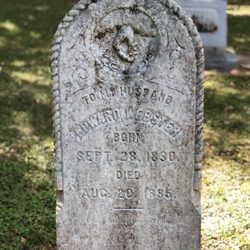
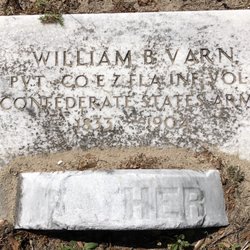
    Founded in 1854 by pioneer families on public land, the two acre Oak Hill Cemetery was the first…read morecemetery in Bartow. Bartow is a town located in Polk County in Central Florida. The cemetery is located on the 300 block of West Parker Street. In 1880 the cemetery came into private ownership and it was formerly plated in 1885. The 500 graves are situated in an east/west orientation. It is an example of a traditional graveyard whose design was developed in the mid to late 1800's. The oldest markers were hand carved while newer markers were made commercially. The 1860 grave of William Owen is believed to be the oldest in the cemetery. On February 12, 2003, the cemetery was added to the National Register of Historic Places. The cemetery is known for containing the remains of 42 of Confederate soldiers, including Evander McIver Law (1836-1920), who founded the South Florida military Academy. At the time of his death, he was the longest living Confederate Major General. There is one Union soldier buried here, James Shediger who married a southern woman from Bartow. There are also WWI veterans. Other notable burials include Jacob Summerlin (1820-1893) , known as the King of the Crackers and believed to be the first child born in Florida after it was ceded by Spain. He donated the land that was vital to the founding of Bartow as the County Seat. His marker depicts the symbol of the Masons. Also here is Henry McKenzie (1885-1974) who served in the Florida legislature for 38 years. Oak Hill Cemetery was not on city property and could not be enlarged because it was too close to downtown so in 1890 Bartow purchased the land for the larger Wildwood Cemetery. Oak Hill provides a historic and genealogy record of the earliest residents of Bartow. It is the oldest man made structure in Bartow and it is maintained by the city. The cemetery is a stop on the Polk County Heritage Trail which highlights the places that were instrumental to the history and development of Polk County. The Polk County History Center offers free tours of Oak Hill Tours on the first Saturday of the month November - April. The tour starts at the History Center with a short walk of approximately one mile to include historic landmarks along the route to the cemetery. For more information, contact (863) 534-4386.

    Photos
    Oak Hill Cemetery - The broken link on this headstone represents life removed by the hand of heaven.

    The broken link on this headstone represents life removed by the hand of heaven.

    Oak Hill Cemetery
    Oak Hill Cemetery

    See all

    Historic Kissengen Spring

    Historic Kissengen Spring

    5.0(1 review)
    4.8 mi

    This historical marker about Kissengen Spring is located in Mossaic Peace River Park across from…read morethe restrooms. Once located about a mile north of the park, Kissengen Spring was a natural flowing spring outside the town of Bartow, the county seat of Polk County. Sadly it no longer exists. Floridians love their springs. There is something so tranquil about their cold crystalline waters. Many Native People thought of the waters as being sacred and having healing properties. They established villages near the springs. One such natural spring used to exist n Polk County at the basin of the Peace River. It was originally named DeLeon Springs after famed Spanish Fountain of Youth explorer, Ponce DeLeon. In 1883 the springs were purchased by medical doctors named Huddleston. They wanted to turn the springs into the kind of spas and therapy facilities you see in Europe. The name "Kissengen Springs" was taken from the baths in Bad Kissengen in Bavaria, Germany. The spring produced more than 20 million gallons of water a day that discharged into the Peace River and it became a natural attraction to the people of southern Polk County. People with ailments would seek the spring where they enjoyed picnicking, boating, and swimming. There was a pavilion for parties and dancing. In the 1930's political rallies were held here. After WWII soldiers came to the spring to recuperate. In the 1950's the spring stopped due to phosphate mining in the area. Mossaic Peace River Park is on the land that used to be the phosphate mine. The springs of Florida are such a treasured resource that is truly terrible to learn about the destruction of one. There is a moving song about the demise of the spring. https://youtu.be/J5GWp2x6xik The song is performed by Dennis Mader, a member of People for Protecting Peace River.

    L.B. Brown House - landmarks - Updated May 2026

    Loading...
    Loading...
    Loading...