Services - Kosciuszko park
Kosciuszko park Photos


You might also consider


More like Kosciuszko park
Recommended Reviews - Kosciuszko park
Start your review...



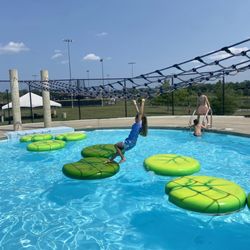
Well used and lovely park, see Jerry's review for one of the best historical summaries I've read on Yelp. Those of us from Chicago are familiar with the Polish war hero, and this beautiful park is an appropriate tribute in a town that owes much to our Polish immigrants. It's a big park, and it's pretty well maintained though the County has trouble staffing lifeguards for the pool so it's often closed. There are no Polish restaurants around here but nearby is an Eastern European grocery store if you want to pack a picnic or there are many good Mexican restaurants near by to get take out for al fresco dining. read more

General Thaddeus Kosciuszko was born in Poland on the lower end of the upper class which placed him in military training. He was trained in military engineering but he was also a passionate man who loved liberty. When the American Revolutionary War broke out, the 30 year old Kosciuszko came to the colonies to help out. He spent six years as part of the Continental Army, working as an engineer to fortify American facilities and also fought on the line. He befriended Thomas Jefferson. At the end of the Revolutionary War, the grateful Americans gave him a plot of land in Ohio and named him a General. He returned to Poland but left word that upon his death, his American holdings should be sold and the proceeds used to free and educate slaves. (That was a pretty radical concept in the 18th Century!) As Poland was an inviting target for invading armies, Kosciuszko returned to the Polish army and fought to repulse the invading Russians in 1792. The Polish king surrendered, Kosciuszko was wounded and captured. He was exiled in 1796 and was never able to return to his homeland. A hero in both America and Poland, Thaddeus Kosciuszko was a central figure in Polish communities all over the world. A statue of him can be found in any city with a large Polish community, and Milwaukee was no exception. A collection was made to raise funds to commission Gaetano Trentanove to create a statue of the Polish hero. Gaetano Trentanove was born in Florence, Italy on February 21, 1858. By way of Chicago's 1893 Columbian Exposition, Trentanove wound up in Milwaukee where he had a studio and taught at the Layton School of Art. Trentanove statues can be found around the world but also in Milwaukee's Wahl Park, Oshkosh and Lancaster, Wisconsin. In 1903, Trentanove's statue of Kosciuszko was cast in Florence and shipped to Milwaukee in two pieces - the horse and Kosciuszko, to be reunited in Lincoln Avenue Park, in the center of the Polish community of Milwaukee's south side. (The park was renamed in honor of General Kosciuszko about the same time the monument was placed here.) The years have passed, the community has changed from Polish to Hispanic, but Kosciuszko remains. The statue was showing its age. Patina hid many details, damage was causing deterioration, his spurs were broken off and his scabbard was missing. The monument was in need of some serious restoration help. A group was formed to that end, called the "Restore the Kosciuszko Monument." The group documented the statue and collected the funds needed to restore the statue. The monument underwent a thorough restoration in 2013. The bronze statue was removed and taken to a specialist in Ohio, where the patina was removed, repairs were made and missing parts were recreated. The missing scabbard was located. Meanwhile, the pedestal was cleaned and polished, in anticipation of the return of General Kosciuszko. See: http://www.rkmmilwaukee.org/ for the story of the restoration. Incidentally, most people pronounce his name as "kozz-ee-ESS-ko" but my Polish friends taught me long ago to call him "ka-ZHOOSH-ko" which I still endeavor to do. read more


Big wonderful park on Milwaukee's South Side. With very active community programs I often see efforts to get people involved here. A major feature are its ponds and famous staute dedicated to Kosciuszko (recently removed for repairs and restoration I heard). Aquatic center. read more


More info about Kosciuszko park
10TH St And Lincoln Ave
Milwaukee, WI 53215
Historic Mitchell Street
Directions
Hours
Outdoor Amenities
Other Amenities