John P. Donnelly House Photos



More like John P. Donnelly House
Recommended Reviews - John P. Donnelly House
Start your review...



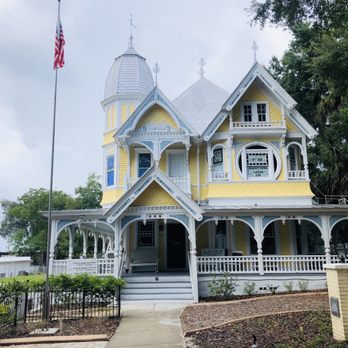
In 1879 John P. Donnelly came to Mount Dora from Pittsburgh Pennsylvania. At the time it was a popular winter destination for wealthy northerners. Donnelly has made his fortune in real estate and citrus business ventures. In 1881 he married local resident Annie McDonald Stone. Annie was a divorced single mom who ran the boarding house Donnelly was staying in and she also happened to be the daughter of his boss. In 1893 Donnelly had this gorgeous Queen Anne style house built as a gift to his wife. The plans for the house were chosen from 59 plans in the Cottage Souvenir No. 2 book sold by Tennessee architect George Franklin Barber. It is estimated Barber sold 20,000 plans in his career. The yellow and white Victorian house with stained glass windows was dubbed the Gingerbread House. The original property was a city block in size and included a barn and tenants house. Mount Dora was granted it's first charter in 1910 and Captain John Philip Donnelly became it's first mayor. At that time the population of Mt. Dora was 371 people. Donnelly was also one of the founders of the yacht club. The couple lived in the house until Annie's death in 1908. In 1924 Donnelly sold a corner of his property to the city for $45,000 to be turned into Donnelly Park. John P. Donnelly died in 1930. After his death the house was purchased by another prominent Mount Dora citizen, D. F. Gorman. After Gorman died the house was sold to the masons. Today more than 13,000 residents call Mt. Dora home. The Donnelly home was listed on the U.S. National Register of Historic Places on April 4, 1975. It is one of the most photographed buildings in the city. It is now owned by a Masonic temple, Mount Dora lodge #238 F & AM. To pay for the upkeep of the house the masons rent out the first floor for private events. A visit to Mount Dora would not be complete without a visit to this magnificent and historic home. read more