Interstate H-3: John A. Burns Freeway Photos


More like Interstate H-3: John A. Burns Freeway
Recommended Reviews - Interstate H-3: John A. Burns Freeway
Start your review...


Reviews With Photos


One of the most beautiful sceneries on Oahu. I know that this Interstate Highway took years to complete and is the most expensive highway every. I feel really sad about all the land that had to be disturbed to make this highway, but I am thankful that we can enjoy the beauty of these mountains and lush valleys. It really does help to cutback back on travel time if your headed in either direction. The only struggle is the winds that are usually present and coming from the beautiful Windward side it can be confusing on which exit to take depending on where you are headed. But all in all a beautiful drive.


One of the best scenic drives on the island. I never once felt like I would get bored with the views and magical rainbows and waterfalls of Kaneohe. Whenever my bf picks me up and we drive through the H-3, it is always a treat to be the passenger. LOVE GOING THROUGH THIS FREEWAY!!!!!!!!!!!!!!!!!!! Even when it's cloudy and the clouds are below by the freeway, it feels like you are in San Francisco or Seattle. The mist of the clouds takes you back thousands of miles away from the islands. The temperatures will drop to the 50s or 60s. When it's sunny and there are rainbows, the song It's a wonderful world just on replay in my mind because it's a beautiful place. Nature is a beautiful thing for making Hawaii a one of a kind place to live, eat, and play at. When it rains hard on the Windward side, the waterfalls make it so incredible to view and take pictures of the rain. You literally feel like you don't need to hike a waterfall hike just to see the waterfall when there several waterfalls outside your car windows. Save your sweat and nice shoes!!!! Take a drive to the Windward side and you won't regret it, rain or sunshine, you will be amazed with the views and the aloha spirit.


Although I have lived in Hawaii most of my life, I have never driven from town to the Kaneohe side of the island via the H-3 until today. I'm certain my my stupid GPS said exit 1D but it should have been 1C. Anyway it was a beautiful day and I was thoroughly impressed by the amazing views from the H-3 freeway. The views going over towards Kaneohe are amazing. Coming back to town not so much. My only major complaint about this highway is that once you enter on the town side there is no exit for people to get off the freeway by mistake for 10 miles. So basically I had to drive all the way to Kaneohe before turning around. On the way back, it was slow going because one lane was closed for tunnel maintenance. One day somebody will have to explain to me why this cannot be done at night. I mean it's dark in the tunnel anyway, right?


To review an interstate is weird, yes. However, this isn't just any interstate, it has AMAZING views! We love taking this route to Kaneohe or Kailua just to enjoy the scenery. The view of Kaneohe Bay is breath taking! The beautiful, PICTURE PERFECT water tones are what make Hawaii the most desired vacation spot as well as places to live! Aren't we lucky to live in Hawaii?! :) Do note that this freeway doesn't have an exit so if you accidentally take it, you are on for a beautiful, about 15 minute drive before you can exit and turn around to go back towards your appropriate destination. The traffic is usually light which is always a plus too. On a fun side, the kids love to hold their breath through the tunnel as a game.


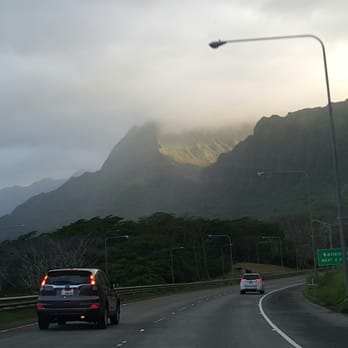
I am so glad they built this freeway after so much controversy. I rather drive from leeward to kaneohe and back than the likelike (for first time visitors, it's pronounced lee-keh lee-keh, not like-like) or pali highway. It's much faster, lit at night, direct to the H-2, and more lanes. Plus the drive is very scenic, especially after it rains because of the waterfalls within the mountains' crevaces. As you drive toward the windward side, it overlooks kaneohe and driving toward leeward you see the mountain close-up. Sometimes the clouds hang low so you pass through a light "fog". Only drawback is no reception on certain cell phone providers within certain portions of the H-3 from the tunnel to a mile before the H-2 on the leeward side. There are emergency phone boxes here and there, but it may take a walk to get to it.


A must drive when visiting the island of Oahu!!! Simply put...this road is just breathtaking. A simple drive on this road gives you the true feel of Hawaii. All you need is a car and/or some other type of transportation. The road never disappoints. It doesn't matter if it's sunny, overcast or pouring down raining...you are in for a treat. When the waterfalls are running it is the most amazing sight. In any case, the best ride in my opinion for the best views is to get on the H-3 eastbound. You see the mountains in front of you, then you go through the tunnel and the amazing view of Kaneohe Bay awaits you with all the vibrant colors of the water and surrounding mountains and vegetation...it's just a "wow" moment. You will get a great view of the Stairway to Heaven (Haiku Stairs). If you continue on the H-3 close to the Marine Base there is a lookout...it's a stop you should make if you are in the area. Then, of course, the H-3 stops just before the Marine Base. I have been on this stretch of road dozens and dozens of times but I am rarely able to check-in because I lose my connection. Don't be alarmed...it's the mountains after all!


Since its opening to the public in late 1997, Oahu residents and tourist have enjoyed the natural splendor of tropical beauty from this Interstate Freeway. It's quite an architectural and engineering accomplishment to still preserve and incorporate Oahu's natural scenery, flora and fauna. The project had been delayed or criticized by several preservation groups. The delays caused design and construction budgets to swell to $1.3 Billion making it one of the most expensive Interstate Highways ever built. It sat unused for many years (over 30 years) before it was finally opened. The question, what was or is the purpose of an interstate freeway on Oahu? Does it only serve as a defense access for military applications? By definition, an Interstate Highway System is a system that links interstate highways and defense access highways. Okay, so, over the years since this freeway's conception, this island has seen less relevance for military applications. Overriding the "irrelevance" for, yet, in addition to military application is the benefit of improved transportation safety and capacity for the public! I distinctly remember taking part in the 10-K run over the H-3. This year, on Mothers' Day, May 11th, marks the the 17th anniversary of the first-ever opening run. I still have the commemorative t-shirt and tunnel tile from this event. It was a "fun run"...well, I was a lot younger and ran a lot more, then. Over the past 17 years, I've been able to travel the Trans-Koolau route safely, quickly and effortlessly while reveling in Hawaii's tropical splendor.


I must say, this is probably one of the most beautiful freeways in the state. Driving eastbound towards the mammoth Tetsuo Harano Tunnels, I am always delighted by the marvelous views of kukui nut trees and an expansive blanket of lush greenery. Exiting the tunnels you need to cram your neck to view the staggering Ha'iku Stairs (i.e. Stairway to Heaven). Also laid out before you is a stellar view of Kane'ohe Bay that will inspire any ocean lover at heart to want to join the multitude of boats anchored near the popular sandbar. Just remember when heading west side after exiting the Hospital Rock Tunnels, to pay attention to the stupendous views of the Ko'olau Mountain Range, their chiseled formations and if you're lucky enough, waterfalls cascading the jagged cliffs. Orders for a freeway was granted as early as 1960. However, it was only until the 1980s, amidst huge protest, that construction began. In 1986, U.S. Senator Daniel Inouye, under the Regan Administration, had the H-3 exempted from most environmental laws, successfully skirting protests. All of this added to the already existing controversy as the original site intended was through Moanalua Valley. However, the Damon family (Moanalua Valley land owners) established the Moanalua Gardens Foundation and successfully blocked construction by declaring Pohaku ka Luahine (a Hawaiian petroglyph stone) as immovable. Interesting facts: One anecdote relates to the elevated section passing through Ha'iku Valley. In this valley, the viaduct passed beneath the antenna of a United States Coast Guard radio transmission facility. It was thought that the energy field from the antenna could interfere with heart pacemakers--a potential detriment to drivers and passengers on the roadway. A giant metal cage was designed to surround the roadway through the valley. Before H-3 was opened, the Coast Guard closed their transmitting facility, obviating the need for the cage. Although the full cage was never built, buried within the roadway was the bottom of the cage. HDOT decided to remove this steel mesh (at considerable expense) prior to opening of the freeway to minimize inconvenience to the motoring public at some later time. H-3 is one of the most expensive Interstate Highways ever built, on a cost per mile basis. Its final cost was $1.3 billion, or approximately $80 million per mile. So enjoy the view, you've paid for it!! #Yelp 365: 104/365
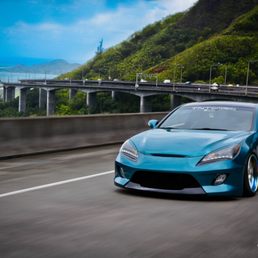

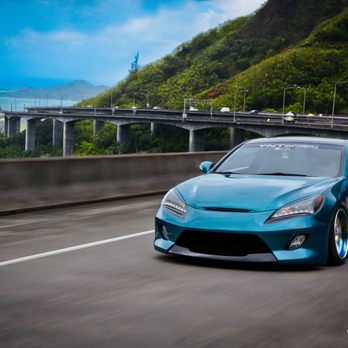
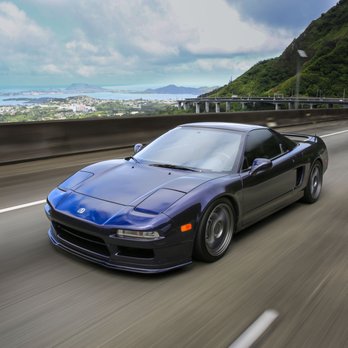
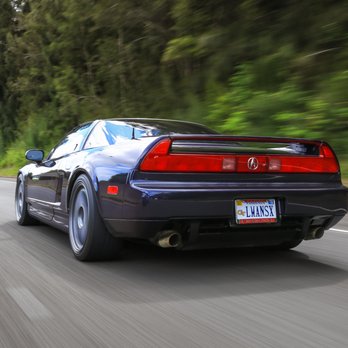
One of my favorite drives in Oahu. If you're coming from town, look right after the tunnels and you'll see stairway to heaven. I used to take all my rolling shot photography here.


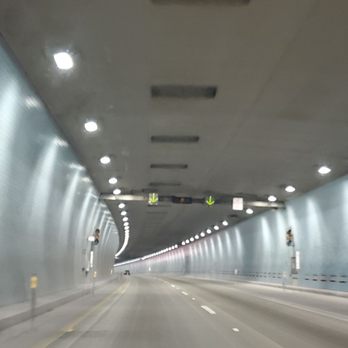
I remember when the H-3 was just completed and it was open to the public for a fun run/walk. At that time, it was beautiful and I enjoyed the cool breezes. It was kind of exciting because there were Hawaiian protesters wanting to protect the land. .. I'm quite sure that all of the rules and regulations/building codes were followed as Federal funding was used for the construction. The memory of the walk was etched into my brain because of the intensly painful shin splints I suffered later! Now that I live on the Windward side, I appreciate the H-3 because I use it often to go to the airport, Waikele Outlets, Mililani, etc. My coworkers say that before the H-3 was built, getting to work was difficult from the Leeward side. We all like the tile inside the tunnel. ..it has a faded blue design. Very calming and peaceful! It is still as clean and beautiful as the time many years ago when I walked its length!


Best tunnel on this island! Nice views, but easy to get going over 70 on the down hill. Always HPD bike patrol waiting on bottom of hill


While this isn't a huge or major freeway, it probably is THE most picturesque in the US. There are up close views of lush foliage, gorgeous ocean and coastline views (too bad you can't stop to take pics,) and is home to the longest tunnels in Hawaii. It's the fastest of three roadways connecting the windward side of the island (north) to the leeward side (south.) It's also boasts the highest speed limit in all of the state, a whopping 60 mph lol.


Always the best way to start your day by driving over the Ko'olau and having the gorgeous sun great you good morning! Also props to HDOT for changing all the lights in the tunnel. Definitely appreciate the brighter, less ugly orange tint :)


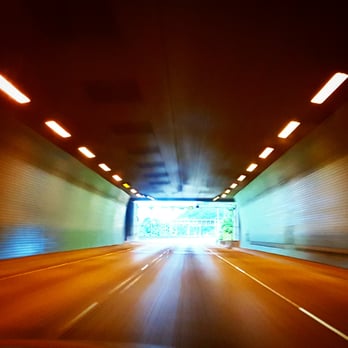
Coming out of the H-3 tunnel towards Kaneohe this is the view you see, This is one of the 3 tunnels to get through the east side . Pali Tunnel, Like Like and the H-3. Personally I like taking the H-3 it's more scenic once you exit the tunnel. read more


John A. Burns Freeway, more commonly known by the locals as"H-3" is one of 3 highways that were authorized by the Statehood Act in 1960. Although H-3 was built as a defense highway to provide a more direct route between Pearl Harbor and the Marine Base, H-3 is better known for it's breathtaking views of the Hālawa Valley and the ocean. Part of the construction of H-3 includes the Trans-Koolau tunnels. Imo, the most popular tunnel amongst them is the Hālawa bound tunnel, which is the longest tunnel in Hawai'i at 5,165 feet! See if you can hold your breath from the entrance of this tunnel till you exit IF you're not the driver lol Due to various legal complications that included concerns of disrupting Hawaiian sacred lands, H-3 took about 37 years to complete. And the original budget of $250 million ended up costing a whopping $1.3 billion instead! Fun Fact: H-3 was named after the second governor of Hawai'i :) So if you're in the area, I do recommend taking a drive (worth 1.3 billion!) on the H-3. I'm from Hawai'i. But every time I take this drive, the view is nothing less than breathtaking! read more
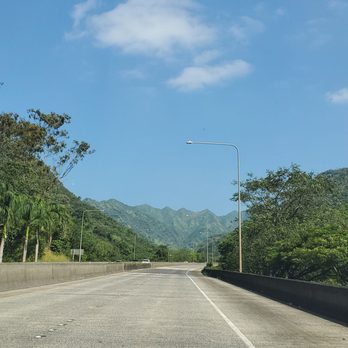


One of the most beautiful sceneries on Oahu. I know that this Interstate Highway took years to complete and is the most expensive highway every. I feel really sad about all the land that had to be disturbed to make this highway, but I am thankful that we can enjoy the beauty of these mountains and lush valleys. It really does help to cutback back on travel time if your headed in either direction. The only struggle is the winds that are usually present and coming from the beautiful Windward side it can be confusing on which exit to take depending on where you are headed. But all in all a beautiful drive. read more
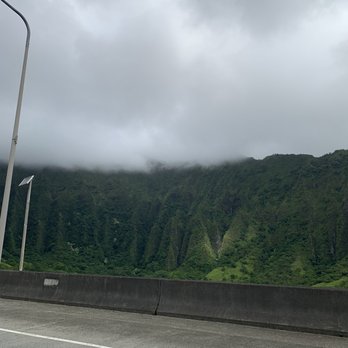

One of the best scenic drives on the island. I never once felt like I would get bored with the views and magical rainbows and waterfalls of Kaneohe. Whenever my bf picks me up and we drive through the H-3, it is always a treat to be the passenger. LOVE GOING THROUGH THIS FREEWAY!!!!!!!!!!!!!!!!!!! Even when it's cloudy and the clouds are below by the freeway, it feels like you are in San Francisco or Seattle. The mist of the clouds takes you back thousands of miles away from the islands. The temperatures will drop to the 50s or 60s. When it's sunny and there are rainbows, the song It's a wonderful world just on replay in my mind because it's a beautiful place. Nature is a beautiful thing for making Hawaii a one of a kind place to live, eat, and play at. When it rains hard on the Windward side, the waterfalls make it so incredible to view and take pictures of the rain. You literally feel like you don't need to hike a waterfall hike just to see the waterfall when there several waterfalls outside your car windows. Save your sweat and nice shoes!!!! Take a drive to the Windward side and you won't regret it, rain or sunshine, you will be amazed with the views and the aloha spirit. read more


Although I have lived in Hawaii most of my life, I have never driven from town to the Kaneohe side of the island via the H-3 until today. I'm certain my my stupid GPS said exit 1D but it should have been 1C. Anyway it was a beautiful day and I was thoroughly impressed by the amazing views from the H-3 freeway. The views going over towards Kaneohe are amazing. Coming back to town not so much. My only major complaint about this highway is that once you enter on the town side there is no exit for people to get off the freeway by mistake for 10 miles. So basically I had to drive all the way to Kaneohe before turning around. On the way back, it was slow going because one lane was closed for tunnel maintenance. One day somebody will have to explain to me why this cannot be done at night. I mean it's dark in the tunnel anyway, right? read more
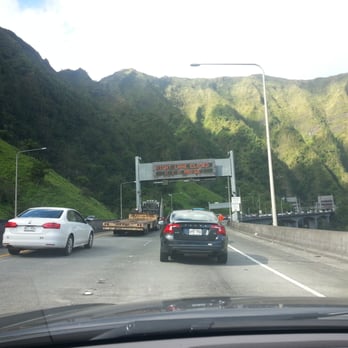


To review an interstate is weird, yes. However, this isn't just any interstate, it has AMAZING views! We love taking this route to Kaneohe or Kailua just to enjoy the scenery. The view of Kaneohe Bay is breath taking! The beautiful, PICTURE PERFECT water tones are what make Hawaii the most desired vacation spot as well as places to live! Aren't we lucky to live in Hawaii?! :) Do note that this freeway doesn't have an exit so if you accidentally take it, you are on for a beautiful, about 15 minute drive before you can exit and turn around to go back towards your appropriate destination. The traffic is usually light which is always a plus too. On a fun side, the kids love to hold their breath through the tunnel as a game. read more


I am so glad they built this freeway after so much controversy. I rather drive from leeward to kaneohe and back than the likelike (for first time visitors, it's pronounced lee-keh lee-keh, not like-like) or pali highway. It's much faster, lit at night, direct to the H-2, and more lanes. Plus the drive is very scenic, especially after it rains because of the waterfalls within the mountains' crevaces. As you drive toward the windward side, it overlooks kaneohe and driving toward leeward you see the mountain close-up. Sometimes the clouds hang low so you pass through a light "fog". Only drawback is no reception on certain cell phone providers within certain portions of the H-3 from the tunnel to a mile before the H-2 on the leeward side. There are emergency phone boxes here and there, but it may take a walk to get to it. read more




11 years ago
A must drive when visiting the island of Oahu!!! Simply put...this road is just breathtaking. A simple drive on this road gives you the true feel of Hawaii. All you need is a car and/or some other type of transportation. The road never disappoints. It doesn't matter if it's sunny, overcast or pouring down raining...you are in for a treat. When the waterfalls are running it is the most amazing sight. In any case, the best ride in my opinion for the best views is to get on the H-3 eastbound. You see the mountains in front of you, then you go through the tunnel and the amazing view of Kaneohe Bay awaits you with all the vibrant colors of the water and surrounding mountains and vegetation...it's just a "wow" moment. You will get a great view of the Stairway to Heaven (Haiku Stairs). If you continue on the H-3 close to the Marine Base there is a lookout...it's a stop you should make if you are in the area. Then, of course, the H-3 stops just before the Marine Base. I have been on this stretch of road dozens and dozens of times but I am rarely able to check-in because I lose my connection. Don't be alarmed...it's the mountains after all! read more


Since its opening to the public in late 1997, Oahu residents and tourist have enjoyed the natural splendor of tropical beauty from this Interstate Freeway. It's quite an architectural and engineering accomplishment to still preserve and incorporate Oahu's natural scenery, flora and fauna. The project had been delayed or criticized by several preservation groups. The delays caused design and construction budgets to swell to $1.3 Billion making it one of the most expensive Interstate Highways ever built. It sat unused for many years (over 30 years) before it was finally opened. The question, what was or is the purpose of an interstate freeway on Oahu? Does it only serve as a defense access for military applications? By definition, an Interstate Highway System is a system that links interstate highways and defense access highways. Okay, so, over the years since this freeway's conception, this island has seen less relevance for military applications. Overriding the "irrelevance" for, yet, in addition to military application is the benefit of improved transportation safety and capacity for the public! I distinctly remember taking part in the 10-K run over the H-3. This year, on Mothers' Day, May 11th, marks the the 17th anniversary of the first-ever opening run. I still have the commemorative t-shirt and tunnel tile from this event. It was a "fun run"...well, I was a lot younger and ran a lot more, then. Over the past 17 years, I've been able to travel the Trans-Koolau route safely, quickly and effortlessly while reveling in Hawaii's tropical splendor. read more


I must say, this is probably one of the most beautiful freeways in the state. Driving eastbound towards the mammoth Tetsuo Harano Tunnels, I am always delighted by the marvelous views of kukui nut trees and an expansive blanket of lush greenery. Exiting the tunnels you need to cram your neck to view the staggering Ha'iku Stairs (i.e. Stairway to Heaven). Also laid out before you is a stellar view of Kane'ohe Bay that will inspire any ocean lover at heart to want to join the multitude of boats anchored near the popular sandbar. Just remember when heading west side after exiting the Hospital Rock Tunnels, to pay attention to the stupendous views of the Ko'olau Mountain Range, their chiseled formations and if you're lucky enough, waterfalls cascading the jagged cliffs. Orders for a freeway was granted as early as 1960. However, it was only until the 1980s, amidst huge protest, that construction began. In 1986, U.S. Senator Daniel Inouye, under the Regan Administration, had the H-3 exempted from most environmental laws, successfully skirting protests. All of this added to the already existing controversy as the original site intended was through Moanalua Valley. However, the Damon family (Moanalua Valley land owners) established the Moanalua Gardens Foundation and successfully blocked construction by declaring Pohaku ka Luahine (a Hawaiian petroglyph stone) as immovable. Interesting facts: One anecdote relates to the elevated section passing through Ha'iku Valley. In this valley, the viaduct passed beneath the antenna of a United States Coast Guard radio transmission facility. It was thought that the energy field from the antenna could interfere with heart pacemakers--a potential detriment to drivers and passengers on the roadway. A giant metal cage was designed to surround the roadway through the valley. Before H-3 was opened, the Coast Guard closed their transmitting facility, obviating the need for the cage. Although the full cage was never built, buried within the roadway was the bottom of the cage. HDOT decided to remove this steel mesh (at considerable expense) prior to opening of the freeway to minimize inconvenience to the motoring public at some later time. H-3 is one of the most expensive Interstate Highways ever built, on a cost per mile basis. Its final cost was $1.3 billion, or approximately $80 million per mile. So enjoy the view, you've paid for it!! #Yelp 365: 104/365 read more





I remember when the H-3 was just completed and it was open to the public for a fun run/walk. At that time, it was beautiful and I enjoyed the cool breezes. It was kind of exciting because there were Hawaiian protesters wanting to protect the land. .. I'm quite sure that all of the rules and regulations/building codes were followed as Federal funding was used for the construction. The memory of the walk was etched into my brain because of the intensly painful shin splints I suffered later! Now that I live on the Windward side, I appreciate the H-3 because I use it often to go to the airport, Waikele Outlets, Mililani, etc. My coworkers say that before the H-3 was built, getting to work was difficult from the Leeward side. We all like the tile inside the tunnel. ..it has a faded blue design. Very calming and peaceful! It is still as clean and beautiful as the time many years ago when I walked its length! read more


8 years ago

15 years ago
Best tunnel on this island! Nice views, but easy to get going over 70 on the down hill. Always HPD bike patrol waiting on bottom of hill read more


While this isn't a huge or major freeway, it probably is THE most picturesque in the US. There are up close views of lush foliage, gorgeous ocean and coastline views (too bad you can't stop to take pics,) and is home to the longest tunnels in Hawaii. It's the fastest of three roadways connecting the windward side of the island (north) to the leeward side (south.) It's also boasts the highest speed limit in all of the state, a whopping 60 mph lol. read more


12 years ago
Always the best way to start your day by driving over the Ko'olau and having the gorgeous sun great you good morning! Also props to HDOT for changing all the lights in the tunnel. Definitely appreciate the brighter, less ugly orange tint :) read more


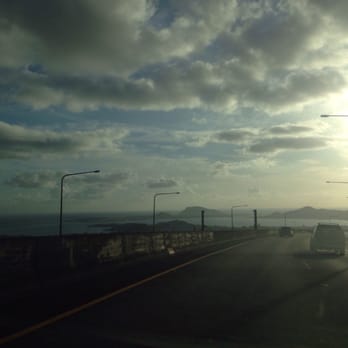
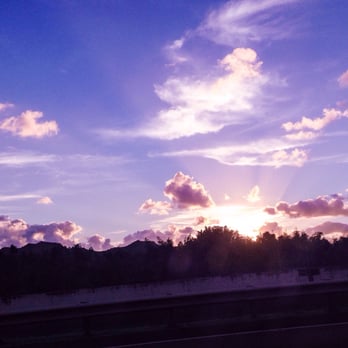

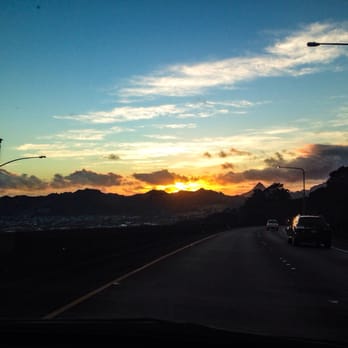


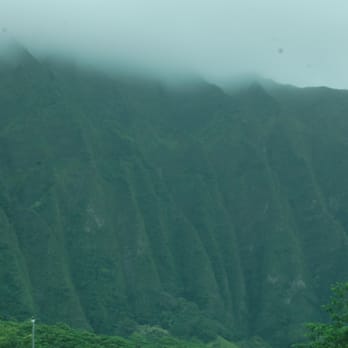
What a beautiful driving route. I'd seen pics of waterfalls on the Koolaus... Got lucky one Saturday when my hike was rained out; drove from Kailua to Honolulu then came back to get pics of the beautiful series of falls. Pretty stunning views read more

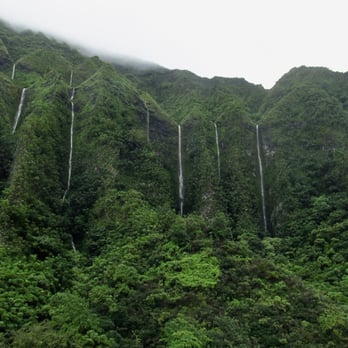


I said in other reviews that the best things in Hawaii are free, and this is one of them. If you want to be awestruck by majestic green mountains, drive Highway 3. We were headed towards Lanikai Beach from Ko Olina, and as we were approaching the Tetsuo Harano bridge we were shocked by how beautiful the green hills were. But, once you get through the tunnel, your breath will be taken away by the towering green mountains rising up on both sides. You'll feel tiny, and you'll be tempted to pull over or worse, accidentally drive off the road because you're staring out the window. Please read the other reviews on this highway as they have very interesting details. Amazing, amazing views. This is a must see. read more


14 years ago
I have to say this is the best scenic road to drive on on the island of Oahu. Not only is it not congested by the Honolulu/Waikiki traffic, it also has the best view on the island. There are a couple of awesome tunnels you drive thru making it a fun ride. I dare you to hold your breathe! I could do it, but I was a swimmer so it was cake to me. The speed limit is 60MPH and there are the usual number of cops on that highway as well. Bikers beware of occasional slippery conditions caused by algae build up. Unlike most of Hawaii's highways, pot holes are limited, specially if you start on the H-3 from the H-2. I recommend taking the H-2 to Like Like and up to the Pali Lookout if you are cruising the island. read more
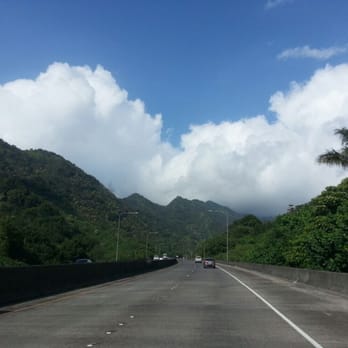

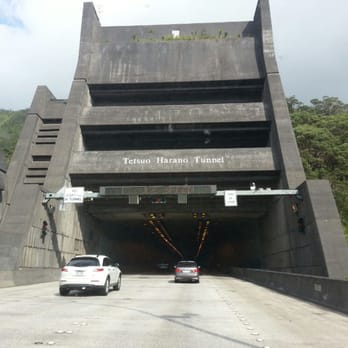


I have to say that driving through the H3 was one of the highlights of our trip. My only regret is that we only drove through one time...I wish we had found a reason to go back. The views are completely breathtaking and as you pass through the tunnel you get overwhelmed by the beautiful mountains. You feel so free driving down...definitely one of the best highways out there! read more


10 years ago
Is always a breathtaking everytime I drive by it. Specially when it rains the rainbow always shows up. Specially when there is a double rainbow. read more


10 years ago
Fastest way home. I wish people would remember that the left lane is a passing lane so get the f $ck out of the left lane if cars need to pass you on the right lane. ..move your ass on the right if your just cruising or content with traveling at the same speed as the large semis that are keeping up with you or worst passing your ass.... read more


11 years ago


7 years ago


8 years ago


8 years ago


9 years ago

11 years ago
Page 1 of 2