Intermountain Bird Observatory
Intermountain Bird Observatory Photos


You might also consider


More like Intermountain Bird Observatory
Recommended Reviews - Intermountain Bird Observatory
Start your review...



11 years ago
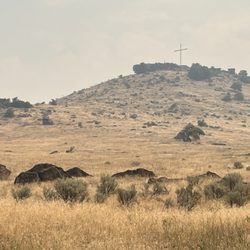
Located on Lucky Peak, the dicey drive up on pretty treacherous road was so worth it when we got to the top to observe and talk with the BSU students as they caught and tagged small migratory birds and raptors for this non profit, school of graduate studies effort. This area has one of the largest fall raptor migrations in the West and the students do raptor catch, banding and release. They also do net catch, banding and release of songbirds. And the same at night for owls. It is remarkable to have the opportunity to observe all this. Fitting for Review 1000. OPEN: To the public roughly mid July through end October. GETTING THERE: The trickiest part. Be sure to look at directions page on the web site. Your GPS won't get the job done for you. http://ibo.boisestate.edu/visit/#directions DICEY DRIVE: The road was repaired some last fall. Our visit was before those repairs were made. It was a treacherous drive along deep ruts in some parts. One of the guys in the car is the most expert driver I know and even he was concerned. Hopefully the repairs have helped. But plan on a four wheel drive vehicle and slow going! I understand the program offers rides at some times to a few people. Contact them for details. No H2O or LOO: There is no water. You'll need to bring your own. You'll also want to know that there is no Loo but for one pit toilet downhill of the site. IT'S COLDER AT ELEVATION: Lucky Peak elevation is high and you'll want to hang out for a while (be sure to stay for the raptor catch and release) so a jacket is a good idea. MORE OR FEWER PEOPLE: The four adults in our party thought a September Sunday early morning would be a good time to go to avoid crowds. HA! There was a grade school group with parents and teacher in tow that had camped there overnight (a brave lot, remember no water or bathrooms in the mix) and so there were a lot of people present to enjoy the setting, the birds and the grad students as they answered eager questions. If you want to plan a daytime field trip for a group or an overnight stay, you'll need to use the contact info on this Yelp page or at their web page to schedule with them. DATA COLLECTION: While we might advise a weekday excursion when the kids are in school if you're looking for connecting with the quiet Zen of the location, the kids were part of the fun as they were eager to hold and release the birds after the grad students took the ones they caught to weigh them, tag them and record them in the paper record keeping book. That was fun in itself, in this day of automated everything, to see scientists like these grad students keeping uber-detailed paper records. They use the data to identify migration routes, wintering areas, breeding areas, and mortality factors. HANDS-ON: I took the opportunity to release some of the smaller songbirds from my palm when offered the chance to do that. I passed on the chance to hold and release a raptor given absence of raptor gloves to wear to handle him or her. (Those talons are sharp!) But my friend was brave enough to do this and she described the experience of releasing that magnificent bird truly awe inspiring. ACCESSIBILITY: This location is more accessible to people with limited mobility than one might expect it to be. The surfaces at the site are relatively hard packed and the slopes between accessible entry parking and the bird activity site are doable with help. I have MS so had first hand experience with using same. I think wheelchair users might find it doable too. However, the Loo is not accessible. The raptor catch and release site was not walkable for me up a steep slope. They suggested I drive up, although vehicles are not typically allowed at the raptor ridge, to be able to participate like everyone else. Lovely! PARKING: Parking is outside a locked gate near the Loo. Park there and walk up. For people needing accessible parking or for those in pre-approved overnight groups, contact them in advance and they'll tell you the protocol to have the gate unlocked so you can drive up and park closer. read more


More info about Intermountain Bird Observatory
Boise, ID 83701
Directions
(208) 426-2223
Call Now
Hours
Other Amenities