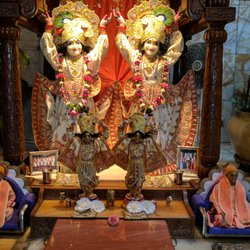
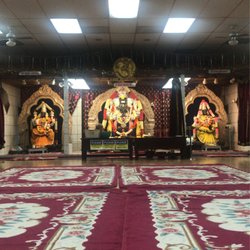
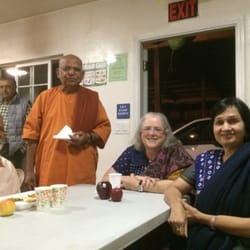
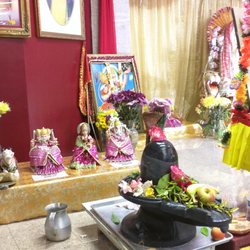
Hare Krishna Temple Photos


More like Hare Krishna Temple
Recommended Reviews - Hare Krishna Temple
Start your review...


Reviews With Photos
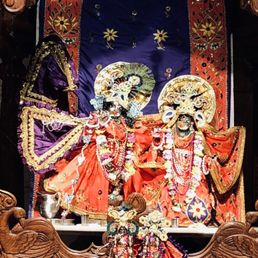

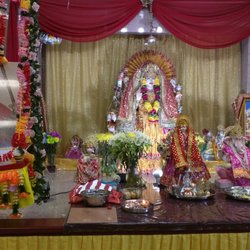
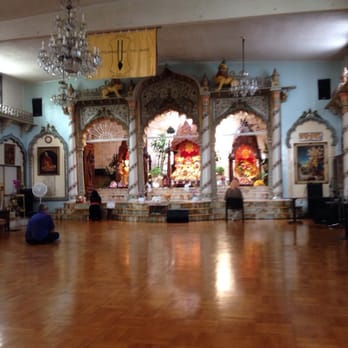
Beautiful temple and very nice devotees. My fiancé and I frequent the New Dvaraka Hare Krishna/ISKCON temple in LA we are from but have visited here many times in the last few weeks as we have been visiting the area. Prasadam is served here 3 times daily to assist the homeless community so it is good to donate as one can to temples that do so much good for the community so we donate cash and or food each visit. The temple is older and not as fancy as ours in LA but so beautiful nonetheless with a peaceful energy especially on slower days. Sunday's are very busy as with most temples but Darshan here is always a wonderful blessing.

1 year ago

5 years ago
I loved this Hare Krishna Hindu temple. I heard about it from the owner of the vegetarian restaurant, Govinda, in Eugene OR. So glad that I finally came here for the Pooja and dinner of kitchari, dahl, paneer curry, and watermelon. I ate the watermelon first because fruit gets digested quicker. Then everything else. Finally the prasadam which was shira and raisins. So delicious! I liked that the menu was vegetarian and that there was no cruelty to animals. So much better than the Buddhist temple in Palo Alto that has a crab fest (never hear of Buddhists killing a living being before...I used to volunteer at a Buddhist kitchen in the Atlanta area and meat or seafood were never, ever on the menu at the World Peace Cafe Kitchen in Sandy Springs. The next time, I come here, I'm going to bring a couple of $20 bills to make a donation. Truly enjoyed this spiritual experience. A real boost to my mental health and happiness in very trying times (wildfire smoke and the pandemic). Overall though, God has been very kind. read more


Hari Bol! I spent over three years abroad in India over eight winters. Much of this time was spent doing intensive studies of yoga & meditation yet also traveled quite extensively around the subcontinent of India. Although my time there will always be a part of me I'm feeling more rooted these days making the Bay Area my home. One thing I miss about my time abroad in India was the experience of going to temples there. So it is nice to have a temple experience right here at the Krishna temple in Berkeley. The best time to experience going to the Krishna temple is Sundays when there is an Arati & Kirtan at 5pm followed by a Bhagavad Gita talk at 6pm followed by the Prasadam Feast at 7pm & concluding w/ another Arati & Kirtan after the Prasadam Feast at 7:30pm. The temple closes at 9pm. If you don't know your Bhajans from your Govinda, don't worry. Simply show up for the Prasadam Feast at 7pm & experience the Arati & Kirtan after which involves chanting & dancing. There are even instruments that you can use to participate. The Prasadam Feast is quite lovely. It is a $3 suggested donation & is a nourishing sattvic wholesome vegetarian meal. No eggs are used yet there might be dairy in some of the dishes so be sure to inquiry w/ the food servers asking whether or not the food has dairy if you want a vegan meal. There is rice, dhal, curry, poori, & mango juice. It varies week to week yet the curry is either aloo gobi or potatoes w/ cauliflower & sometimes might include paneer which is cheese & sometimes not so be sure to inquiry if you want vegan. This is probably the most affordable & nourishing food you will find for just $3 in the SF Bay Area. Definitely worth experiencing at least once. There are also numerous festivals that occur here worth checking out as well. Radhe Radhe! read more


16 years ago

8 years ago
Beautiful temple and very nice devotees. My fiancé and I frequent the New Dvaraka Hare Krishna/ISKCON temple in LA we are from but have visited here many times in the last few weeks as we have been visiting the area. Prasadam is served here 3 times daily to assist the homeless community so it is good to donate as one can to temples that do so much good for the community so we donate cash and or food each visit. The temple is older and not as fancy as ours in LA but so beautiful nonetheless with a peaceful energy especially on slower days. Sunday's are very busy as with most temples but Darshan here is always a wonderful blessing. read more


12 years ago
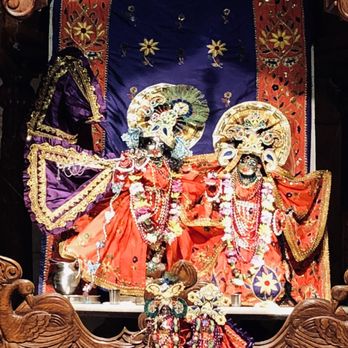
Every time we come to this sacred place, we feel so blessed and full of energy. Chanting Hare Krishna........Hare Rama.... read more

11 years ago

9 years ago

22 years ago

11 years ago


15 years ago

14 years ago
18 years ago

14 years ago

14 years ago

9 years ago
13 years ago
13 years ago
16 years ago